Overview of Tap Water Sources in Wisconsin
In Wisconsin, tap water originates from surface water and groundwater. The state boasts over 15,000 lakes and major rivers like the Wisconsin, Fox, and Mississippi Rivers. These contribute significantly to the water supply. Yet, tap water quality varies based on source and location.
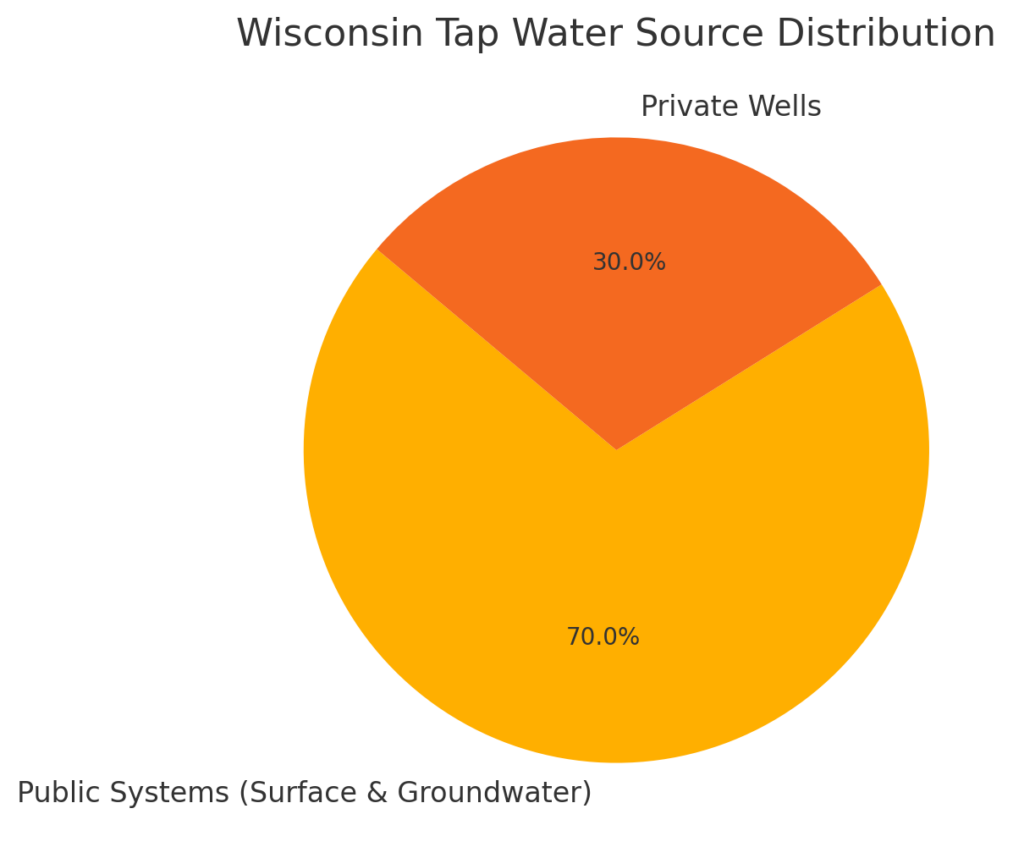
About 70% of Wisconsinites get their drinking water from a public water system. These systems serve at least 15 connections or 25 individuals daily for 60 days annually. Public systems must test for contaminants regularly under the Safe Drinking Water Act to ensure water safety.
Public Water Systems
Public water systems in Wisconsin face strict testing requirements. For instance, community systems must test for fluoride regularly. Fluoride levels can be checked online. Manganese testing is required every nine years for community systems. High manganese levels can lead to "do not drink" orders, affecting sensitive groups like those over 50 and infants under six months.
Public systems may issue notices for water quality issues. If PFAS levels exceed health guidelines, a public notice is required. Boil water notices are issued when water is unsafe for drinking or food preparation. "Do not drink" notices indicate water is unsafe for drinking but safe for washing hands and showering. "Do not use" notices, though rare, mean water is unsafe for any contact.
Private Wells
In rural Wisconsin, many rely on private wells for drinking water. These wells tap into groundwater sources like aquifers. While private wells offer an alternative, they can be contaminated by agricultural runoff, septic failures, and natural substances.
Nitrate contamination is a major concern for private well owners in Wisconsin. Nitrates can enter groundwater through agricultural practices. High nitrate levels in drinking water pose health risks, including methemoglobinemia, or "blue baby syndrome," in infants. Regular well water testing is critical to monitor nitrate levels and ensure water safety.
Contaminant | Source | Potential Health Effects |
Nitrates | Agricultural runoff, septic systems | Methemoglobinemia in infants |
Bacteria | Agricultural runoff, septic systems | Gastrointestinal illnesses |
Arsenic | Naturally occurring in bedrock | Skin damage, circulatory problems, cancer risk |
Radium | Naturally occurring in deep sandstone aquifers | Increased risk of bone cancer |
Other contaminants affecting private wells in Wisconsin include bacteria from agricultural runoff and septic failures. Arsenic is naturally present in northeastern regions, and radium levels are high in deep sandstone aquifers. Private well owners must test their water regularly and use appropriate treatments like reverse osmosis systems, UV purifiers, or activated carbon filters.
Water Treatment Processes in Wisconsin
Wisconsin employs a variety of water treatment methods to ensure the safety and quality of its drinking water. These processes are designed to remove contaminants, improve taste and odor, and meet the stringent standards set by the Environmental Protection Agency (EPA).
The Wisconsin Department of Natural Resources (DNR) oversees the state’s drinking water quality. It works closely with public water systems to maintain compliance with federal and state regulations. Approximately 70% of Wisconsin residents receive their drinking water from public systems, while 30% rely on private wells.

Disinfection Methods
Disinfection is a critical step in the water treatment process. It eliminates harmful microorganisms that can cause waterborne illnesses. In Wisconsin, two primary disinfection methods are commonly used:
- Ozone disinfection: Ozone, a powerful oxidant, is used to inactivate bacteria, viruses, and protozoa. This method is highly effective and does not leave residual disinfectant in the water.
- Chlorination: Chlorine is added to the water to kill pathogens and provide residual disinfection throughout the distribution system. While chlorine is an effective disinfectant, it can react with organic matter to form disinfection byproducts, which are regulated by the EPA.
Filtration Techniques
Filtration is another essential process in water treatment. It removes suspended particles, organic matter, and other contaminants from the water. Wisconsin uses biologically active filtration. This method utilizes a layer of microorganisms on the filter media to break down organic matter and remove contaminants, resulting in improved water quality and reduced disinfection byproduct formation.
Corrosion Control Measures
Corrosion control is a critical aspect of water treatment. It addresses the issue of lead and copper leaching from pipes and plumbing fixtures. Wisconsin water utilities implement various strategies to minimize corrosion, such as:
- Adjusting the water’s pH and alkalinity to create a protective scale on pipe surfaces
- Adding corrosion inhibitors, such as orthophosphate, to the water supply
- Replacing lead service lines and encouraging homeowners to replace lead-containing plumbing components
Milwaukee, the largest city in Wisconsin, serves as an example of the state’s approach to water treatment. The city’s drinking water undergoes a multi-step process. This includes ozone disinfection, coagulation, flocculation, sedimentation, biologically active filtration, chlorine disinfection, and lead and copper corrosion control using phosphorus.
Common Contaminants in Wisconsin’s Tap Water
Wisconsin’s tap water meets federal and state guidelines, yet it faces various contaminants that threaten health. Lead pipes and harmful chemicals like PFAS are among the issues residents should know about. It’s vital to stay informed about the possible problems in drinking water.
Lead

Lead contamination is a major concern in Wisconsin, mainly in older homes with lead pipes. Milwaukee, for instance, has a vast network of lead pipes. The city is working to replace them. By 2023, over 37,000 lead service lines have been replaced or shut off. Yet, at least 134,000 households in the state are served by lead pipes. Lead exposure can cause severe health issues, most critically in children.
Nitrates and Nitrites

Nitrates and nitrites, mainly from agricultural runoff, are common in Wisconsin’s groundwater. The Central Sands region is heavily impacted by nitrate contamination. High nitrate levels in drinking water can cause health problems, including methemoglobinemia in infants, also known as "blue baby syndrome."
Arsenic
Naturally occurring arsenic is present in the groundwater of several Wisconsin counties, including Outagamie and Winnebago. Long-term arsenic exposure in drinking water can lead to skin lesions and various cancers.
Disinfection Byproducts
Disinfection byproducts, such as trihalomethanes and haloacetic acids, form when disinfectants like chlorine react with organic matter. While these chemicals control microbial growth, high levels have been linked to health concerns.
Contaminant | Source | Potential Health Effects |
Lead | Lead pipes, plumbing | Developmental delays, kidney damage |
Nitrates and Nitrites | Agricultural runoff | Methemoglobinemia in infants |
Arsenic | Naturally occurring in groundwater | Skin lesions, increased cancer risk |
Trihalomethanes | Disinfection byproducts | Liver, kidney, and central nervous system problems |
Haloacetic acids | Disinfection byproducts | Increased risk of cancer |
Wisconsin also faces concerns over PFAS, detected in water supplies across the state. The state is investing over $145 million to address PFAS contamination and testing.
Monitoring and Testing of Tap Water Quality in Wisconsin
In Wisconsin, public water systems must test for contaminants regularly and act if levels are too high. The Department of Natural Resources (DNR) manages the Safe Drinking Water Act (SDWA) in the state. In 2023, over 99% of public water systems met quality standards, thanks to $155 million in federal funding for safe drinking water.

Water quality testing is key to ensuring drinking water safety. Public water systems with 15 connections or serving 25 people daily for 60 days must test regularly. They check for fluoride, manganese, and PFAS chemicals. By 2023, over 1,860 systems had tested for PFAS chemicals according to drinking water standards.
If testing shows contaminants above EPA limits, water utilities must act to protect health. This might mean issuing a "boil water," "do not drink," or "do not use" notice. These notices tell consumers how to safely use or avoid using the water until the issue is fixed.
Notice Type | Meaning | Actions Required |
Boil Water | Water is unsafe for drinking and food preparation without boiling | Boil water for at least one minute before consuming or using for food preparation |
Do Not Drink | Water is unsafe for drinking and food preparation | Avoid using water for drinking and food preparation, but may use for handwashing and showering |
Do Not Use | Water is unsafe for all uses | Avoid using water for drinking, food preparation, and washing (rare in Wisconsin) |
Private wells also need water quality testing, though they’re not always regulated. Gov. Tony Evers used $10 million in ARPA funding to help private well owners. Yet, many private wells, like those in Waukesha County, are not tested annually for coliform bacteria and other contaminants.
Compliance with Safe Drinking Water Act Standards
In Wisconsin, tap water is governed by both federal and state laws to ensure it’s safe for drinking. The United States Environmental Protection Agency (EPA) sets drinking water standards and contaminant limits under the Safe Drinking Water Act (SDWA), enacted in 1974. These standards dictate the maximum allowable levels for various substances in public water systems to safeguard public health.
Wisconsin also has its own state water regulations that public water systems must follow. The Wisconsin Department of Natural Resources (DNR) enforces these regulations and monitors water quality across the state. While most public water systems in Wisconsin meet or exceed these standards, contaminants like lead and disinfection byproducts may be present at levels deemed potentially harmful by environmental groups.
EPA Maximum Contaminant Levels
The EPA establishes maximum contaminant levels (MCLs) for a wide range of substances in drinking water. These include microorganisms, disinfectants and their byproducts, inorganic and organic chemicals, and radionuclides. These MCLs are legally enforceable standards for all public water systems. Some notable MCLs include:
Contaminant | MCL (mg/L) |
Lead | 0.015 |
Copper | 1.3 |
Nitrate (as N) | 10 |
Arsenic | 0.010 |
Total Trihalomethanes (TTHMs) | 0.080 |
Wisconsin’s Drinking Water Regulations
Wisconsin has adopted the federal drinking water standards set by the EPA and has additional state water regulations to further protect public health. The DNR regularly monitors public water systems for compliance with these standards. In 2019, more than 99% of Wisconsin’s 11,525 public water systems met the federal standards under the SDWA.
Despite the high compliance rate, challenges persist. For instance, about 237 public water systems, mainly mobile home parks, restaurants, and taverns, operate above the nitrate drinking water standard of 10 milligrams per liter. Also, around 10% of private wells sampled in Wisconsin exceed safe nitrate levels in groundwater, with roughly 90% of this contamination coming from agricultural sources.
To tackle these issues, the Wisconsin Groundwater Coordinating Council has called for manure-spreading restrictions in 15 counties. Proposed legislation aims to increase funding for county conservation staff to prevent runoff into water supplies. As federal water laws and state water regulations evolve, Wisconsin remains dedicated to ensuring safe and clean drinking water for its residents.
Tap Water Quality in Major Wisconsin Cities
In Wisconsin, cities like Milwaukee, Madison, and Green Bay depend on urban water systems for safe drinking water. These systems invest heavily in monitoring and treating tap water. They aim to meet state and federal regulations.
Milwaukee

Milwaukee’s tap water comes from Lake Michigan and is treated by Milwaukee Water Works. The utility has greatly improved water quality, starting after the 1993 Cryptosporidium outbreak. In 2021, over 49,000 water quality analyses were conducted. The lead and copper levels were well below EPA limits.
Madison
Madison’s water is treated and monitored by the Madison Water Utility. The utility consistently meets or exceeds water quality standards. In 2021, Madison’s water had no violations for harmful contaminants. It also tests for emerging contaminants through the UCMR program.
Green Bay
The Green Bay Water Utility manages the city’s water, sourced from Lake Michigan. Advanced treatment processes ensure the water’s safety and quality. In 2021, Green Bay’s water met all EPA and state standards, with no violations for lead or copper.
City | Water Source | Lead (ppb) | Copper (ppm) | Total Coliform Bacteria |
Milwaukee | Lake Michigan | 5.0 | 0.23 | 0.00% |
Madison | Groundwater | 0.11 | 0.00% | |
Green Bay | Lake Michigan | 3.2 | 0.19 | 0.00% |
While tap water in these cities is generally safe, about 5.8 million Wisconsinites risk drinking contaminated water. Lead, nitrate, and disease-causing bacteria are among the contaminants. It’s vital to keep improving urban water systems for the future.
Potential Health Risks Associated with Contaminated Tap Water
Drinking contaminated tap water can cause a range of health problems, from short-term illnesses to chronic diseases. Waterborne illnesses are often caused by harmful microbes like bacteria, viruses, and parasites. These can lead to symptoms like diarrhea, vomiting, and stomach cramps. In Wisconsin, between 2007 and 2010, about 18% of 3,868 private wells tested positive for coliform bacteria. This could have exposed around 169,200 households to disease-causing pathogens.
Chronic exposure to harmful chemicals, such as PFAS, lead, and disinfection byproducts, can lead to long-term health issues. Lead in drinking water can be a significant source of exposure, with infants being the most vulnerable. They can get 40% to 60% of their total lead exposure from drinking water. The presence of certain contaminants in tap water can also increase cancer risk.

Vulnerable populations, like infants, pregnant women, and those with weakened immune systems, are at higher risk from contaminated tap water. For instance, infants under 6 months old can suffer from methemoglobinemia, or "blue-baby syndrome," if they drink water with high nitrate levels. In Wisconsin, over 40,000 private wells and about 300 public water systems have nitrate levels above the health standard.
Contaminant | Health Risk | Affected Population |
Microbial contaminants (e.g., coliform bacteria) | Waterborne illnesses (diarrhea, vomiting, stomach cramps) | General population |
Lead | Developmental delays, learning difficulties, and other chronic health issues | Infants, children, and pregnant women |
Nitrates | Methemoglobinemia ("blue-baby syndrome") | Infants under 6 months old |
To reduce the risk of contaminated tap water, regular testing and monitoring of public water systems and private wells are essential. Implementing effective water treatment processes and maintaining water infrastructure are also key. These steps can help ensure the safety of Wisconsin’s drinking water.
Consumer Confidence Reports and Water Quality Information
Wisconsin residents rely on consumer confidence reports and annual water quality reports to stay informed about the safety and purity of their tap water. These reports, issued by public water systems, provide critical information. They detail the source of the water, detected contaminants, and any violations. By accessing and interpreting these reports, consumers can make informed decisions about their drinking water.
Accessing annual water quality reports is simple. They are available on water utility websites or can be requested directly from the provider. These reports contain a wealth of data, including the levels of various contaminants tested, such as lead, copper, arsenic, nitrates, and disinfection byproducts. Understanding how to interpret these water test results is key to ensuring the safety of your tap water.
Key Findings from Recent Water Quality Reports
Recent water quality reports from Wisconsin reveal important insights into the state of tap water. Here are some notable findings:
- Lead 90th Percentile: 2.2 ppb (EPA standard: 15.0 ppb)
- Copper 90th Percentile: 21 ppb (EPA standard: 1300 ppb)
- Arsenic detected at a maximum level of 4.5 ppb (MCL: 10 ppb)
- Nitrate levels reached a maximum of 1.8 ppm (MCL: 10 ppm)
- Total Trihalomethanes (TTHM): 16.0 ppb (MCL: 80 ppb)
- Haloacetic Acids (HAA5): 3.3 ppb (MCL: 60 ppb)
- PFAS (PFBS and PFOS) detected at 0.72 ppt and 1.30 ppt, respectively (below health advisory levels)
Understanding Contaminant Levels and Health Standards
When interpreting water test results, it’s essential to compare detected contaminant levels with the corresponding health standards set by the Environmental Protection Agency (EPA) and the Wisconsin Department of Natural Resources (DNR). These standards, such as Maximum Contaminant Levels (MCLs) and Maximum Contaminant Level Goals (MCLGs), help assess the safety of drinking water.
Contaminant | MCLG | MCL |
Lead | 0 ppb | 15 ppb |
Copper | 1.3 ppm | 1.3 ppm |
Total Dissolved Solids | – | 500 ppm |
PFOA and PFOS (PFAS) | – | 70 ppt |
By comparing detected levels with these standards, consumers can determine whether their tap water meets safety requirements. If contaminant levels exceed the MCLs, public water systems must issue public notices and take corrective actions to ensure the safety of the drinking water supply.
Stay informed about the quality of your tap water by regularly reviewing consumer confidence reports and annual water quality reports. Understanding how to interpret water test results empowers you to make informed decisions about your drinking water and protect the health of your family.
Measures to Improve Tap Water Quality at Home
In Wisconsin, public water systems aim to deliver safe drinking water. Yet, homeowners can enhance their tap water quality further. Installing certified home water filters and practicing regular tap flushing can significantly reduce exposure to contaminants like lead, PFAS, and disinfection byproducts.

Water Filtration Systems
Installing a certified water filtration system is a key step to better tap water quality. Activated carbon filters and reverse osmosis systems are among the most effective options. These systems can effectively lower contaminant levels, including:
- Lead
- PFAS (Per- and polyfluoroalkyl substances)
- Disinfection byproducts, such as HAA5, HAA9, and TTHM
- Nitrates and nitrites
- Arsenic
When selecting a water filtration system, ensure it has filter certifications from organizations like NSF International or the Water Quality Association. These certifications confirm the system’s effectiveness in removing specific contaminants.
Flushing Taps and Plumbing

Regular tap flushing is another effective method to enhance tap water quality. This involves running cold water through your taps for several minutes before use. It helps to remove stagnant water that may contain higher contaminant levels.
To reduce lead exposure, follow these tips:
- Use cold water for cooking and drinking
- Flush taps for at least 30 seconds to 2 minutes before use
- Regularly clean faucet aerators to remove debris
By combining certified home water filters with regular tap flushing, Wisconsin residents can ensure their drinking water quality meets high standards. This goes beyond what public water systems provide.
Alternatives to Tap Water Consumption
Concerns about tap water quality in Wisconsin lead some to seek alternatives. Bottled water and water delivery services are popular choices. They promise cleaner, healthier water, but require careful consideration.
While bottled water is regulated by the FDA, it may not face the same scrutiny as tap water. The EPA and state agencies oversee tap water. The environmental impact of plastic bottles is also significant, contributing to waste and pollution.
Bottled Water

Choosing bottled water? Research the source and quality thoroughly. Look for brands that disclose their water sources, treatment methods, and testing results. Some bottled water is tap water in disguise. Opt for brands with strict quality standards and regular contaminant testing.
Water Delivery Services
Water delivery options offer a sustainable, cost-effective alternative. These services provide large, reusable containers of purified water. Some offer home water dispensers for a continuous supply of filtered water. Ensure the service’s water sources, treatment, and certifications meet your standards.
The choice to switch from tap water is personal and should be well-informed. Bottled water and water delivery services can offer peace of mind. But consider the costs, environmental impact, and quality before making a change. Stay informed to ensure access to safe, clean water, whether from the tap or an alternative.
Efforts to Maintain and Improve Wisconsin’s Water Infrastructure
Wisconsin is dedicated to keeping its water infrastructure safe and reliable. The state supports municipalities in upgrading their systems. This includes wastewater treatment, collection, and public drinking water systems. The Clean Water Fund Program (CWFP) and the Safe Drinking Water Loan Program (SDWLP) offer subsidized loans for these critical water infrastructure investments.
Municipalities across Wisconsin are focusing on main replacement projects, with a major emphasis on removing lead service lines. From 2018 to 2023, they replaced or turned off 37,000 lead service lines. This is the most progress in five years, compared to the last two decades. Yet, about 134,000 households in the state are connected to lead service lines, highlighting the ongoing need for efforts and funding.
Wisconsin is also investing in treatment plant upgrades to tackle emerging contaminants like PFAS. The state has set aside $125 million for 2023-25 and proposes an additional $145 million for 2025-27. These funds will aid in sampling, testing, and remediation efforts. They will also help municipal drinking water systems and private well owners dealing with PFAS contamination.
To enhance its water infrastructure, Wisconsin is adopting asset management strategies. This approach aims to optimize the performance and longevity of its water systems. By regularly monitoring, maintaining, and replacing key components, municipalities can reduce the risk of service disruptions. This ensures the consistent delivery of safe drinking water to communities.
Program | Purpose | Funding |
Clean Water Fund Program (CWFP) | Subsidized loans for wastewater treatment and collection system infrastructure projects | 2.200% interest rate for loans ≤ 20 years |
Safe Drinking Water Loan Program (SDWLP) | Subsidized loans for public drinking water system and infrastructure projects | Funding available for lead service line replacements |
PFAS Community Grant Program | Assistance for municipal drinking water systems affected by PFAS contamination | $96.4 million allocated |
Despite significant progress, ongoing investment and support are vital. Wisconsin’s approach, including financial aid, regulatory compliance, and proactive maintenance, shows its dedication. It aims to provide safe and reliable drinking water to its residents for generations.
The Importance of Source Water Protection in Wisconsin
Protecting Wisconsin’s drinking water sources is essential for maintaining its quality and safety. Source water assessments are key in identifying contamination risks to water bodies like Lake Michigan and groundwater. By addressing these risks, we ensure our water resources are safe for future generations.
Watershed Management
Effective watershed protection is vital for Wisconsin’s water quality. In Fiscal Year 2023, NRCS funding helped implement soil health practices on 10,076 acres of cropland. Also, 3,562 acres of agricultural irrigation water management were supported by NRCS funding. Local County Land Conservation Departments offer funding for practices like cover crops and wetland restorations to improve water quality.
Pollution Prevention Strategies
Preventing pollution at its source is critical for Wisconsin’s water protection. Reducing agricultural runoff, managing stormwater, and preventing PFAS contamination are key. The Wisconsin Department of Natural Resources (WI DNR) offers the Well Compensation Grant Program for failing septic systems and wells. Federal programs like the Environmental Quality Incentives Program (EQIP) support various water quality practices for farm and forest owners.
- Cover crops
- Rotational grazing
- Nutrient management
- Buffer strips
Preventing algal bloom formation is also vital. The Wisconsin Department of Agriculture, Trade, and Consumer Protection (DATCP) monitors pesticides and nitrates in our water. By managing nutrient levels, we reduce the risk of harmful algal blooms that can harm water quality and public health.
Tap Water Quality Wisconsin: A Comprehensive Overview
Wisconsin’s tap water is generally safe, but it’s vital for consumers to be aware of possible contaminants. The state offers resources like the Wisconsin Well Testing Access Program (WellTAP) and the Private Well Toolkit. These tools help residents understand and tackle water quality issues. They provide free testing, fact sheets on contaminants in multiple languages, and advice on reducing PFAS in drinking water.
In major cities like Milwaukee, tap water comes from Lake Michigan. Milwaukee Water Works tests for over 500 contaminants and publishes annual reports. This transparency is for its nearly 1 million residents. While some contaminants are detected at levels higher than the Environmental Working Group (EWG) suggests, they are within EPA limits. The city has spent over $508 million on water treatment and testing infrastructure, showing its dedication to safe drinking water.
Wisconsin also focuses on protecting tap water sources through watershed management and pollution prevention. The Wisconsin Department of Natural Resources (DNR) has a well compensation grant program for eligible landowners, renters, and business owners. By understanding water sources, treatment, and quality monitoring, Wisconsinites can ensure clean drinking water for future generations. Consumers can find drinking water guides and resources to stay informed and make health-conscious decisions.
FAQ
Is tap water in Wisconsin safe to drink?
Most drinking water in Wisconsin is safe. Yet, it’s vital to understand your water’s quality and follow any recommendations from your water system. Regular testing ensures compliance with safety standards.
What are the main sources of drinking water in Wisconsin?
About 70% of Wisconsinites rely on public water systems, regulated by the Safe Drinking Water Act. Private wells also serve as a drinking water source for some residents.
How is tap water treated in Wisconsin?
Wisconsin’s water treatment includes ozone disinfection, coagulation, and sedimentation. It also involves biologically active filtration, chlorine disinfection, and corrosion control using phosphorus. These steps meet EPA requirements but may introduce some byproducts.
What are some common contaminants found in Wisconsin’s tap water?
Wisconsin’s tap water often contains lead from service lines and plumbing. It also has nitrates and nitrites from agricultural runoff, arsenic, and disinfection byproducts like trihalomethanes and haloacetic acids.
How often is tap water quality monitored in Wisconsin?
Public water systems in Wisconsin test for contaminants regularly. For instance, Milwaukee Water Works tests over 500 contaminants and publishes results in its annual report.
Does Wisconsin’s tap water meet Safe Drinking Water Act standards?
Wisconsin’s tap water generally meets federal and state guidelines. Yet, some contaminants like disinfection byproducts and lead may exceed safe levels. The EPA sets maximum contaminant levels, and Wisconsin follows its own regulations.
How can I find out about the quality of my tap water?
Public water systems must provide annual reports detailing water sources, contaminants, health effects, and violations. These reports are available online or by request. Understanding this data helps consumers make informed choices.
What can I do to improve the quality of my tap water at home?
Installing a certified water filtration system can reduce contaminants like lead and PFAS. Flushing taps and using cold water for cooking and drinking also minimizes lead exposure.
Are there alternatives to drinking tap water in Wisconsin?
Some opt for bottled water or water delivery services. Yet, it’s key to research the source and quality of this water. Bottled water can be pricey and contribute to plastic waste.
What is being done to maintain and improve Wisconsin’s water infrastructure?
Cities like Milwaukee are investing in replacing lead service lines and upgrading treatment plants. Asset management strategies are also being implemented. Continued funding is necessary to address aging infrastructure and emerging contaminants.