Understanding Alkaline Water and Its Benefits
Alkaline water has become increasingly popular for its health benefits. It has a pH level between 8.0 and 9.0, making it less acidic than regular water. This unique characteristic is thought to offer several health advantages, attracting those who prioritize wellness. Proponents of alkaline water claim that it can enhance hydration, improve metabolism, and even help neutralize acid in the bloodstream. Many enthusiasts assert that the advantages of alkaline water can lead to increased energy levels and improved digestion. As a result, it has found a large following among health-conscious individuals seeking to optimize their well-being. Despite the growing popularity of alkaline water, it’s important to note that scientific consensus is still developing. Some alkaline water research findings suggest that while it may offer certain benefits, more rigorous studies are needed to validate many of the claims made by its supporters. As consumers navigate the landscape of health products, understanding the evidence behind alkaline water can help them make informed choices about their hydration options.
What Makes Alkaline Water Unique?
Alkaline water stands out due to its higher hydroxide ion (OH-) concentration compared to hydrogen ions (H+). This ionic imbalance results in a pH value above 7.0. Most commercial alkaline waters have a pH between 8.0 and 9.0, with some reaching even higher levels.
Alkaline water also undergoes ionization, a process enhanced by an ionized alkaline water machine. This not only boosts its alkalinity but also infuses it with beneficial minerals. This process improves taste and extends its shelf life, keeping it fresher for longer than regular water.
Alkaline Minerals and Their Benefits
Alkaline water is notable for its mineral content. Brands often add minerals like calcium, magnesium, and potassium. These minerals provide numerous health benefits:
- Calcium: Crucial for strong bones and teeth, it also supports muscle function, nerve signaling, and blood clotting.
- Magnesium: Essential for energy production, protein synthesis, and muscle and nerve function. It also aids heart health and regulates blood sugar.
- Potassium: An electrolyte that maintains fluid balance, it’s vital for heart function, muscle contraction, and digestive health.
The table below compares the mineral content of alkaline water with regular drinking water:
| Mineral | Alkaline Water (mg/L) | Regular Water (mg/L) |
|---|---|---|
| Calcium | 20-80 | 5-30 |
| Magnesium | 10-50 | 2-20 |
| Potassium | 5-30 | 1-10 |
Drinking alkaline water enriched with these minerals can support various health aspects, from bone strength to heart function. Yet, it’s critical to remember that alkaline water should complement a balanced diet, not replace it as the sole mineral source.
Factors Affecting the Shelf Life of Alkaline Water
Several key factors influence the shelf life of alkaline water. Understanding these can help maximize its freshness and effectiveness. This knowledge ensures you benefit fully from its unique properties.
Storage Conditions
Proper storage is critical for preserving alkaline water’s freshness. It should be kept in a cool, dark place, away from sunlight. Sunlight and heat can lower its pH level. Glass or high-quality, BPA-free plastic bottles are best for storage. Under ideal conditions, alkaline water can stay fresh for about 1-2 weeks.
pH Level
The pH level of alkaline water significantly affects its shelf life and effectiveness. Commercial brands usually have a pH between 8.0 and 9.0, ideal for hydration and well-being. Yet, exposure to air can decrease the pH over time. Regular pH testing with strips is advised, more so for longer storage periods.
Mineral Content
The minerals added during alkalinization also impact shelf life. Minerals like calcium, magnesium, and potassium enhance alkalinity and health benefits. Over time, these minerals can settle, affecting taste and properties. Gentle agitation before use can redistribute minerals and preserve quality.
Treatment Method
The method of creating alkaline water influences its shelf life and storage needs. Common methods include:
- Ionization: Water is split into acidic and alkaline streams using electromagnetic plates.
- Mineral addition: Natural minerals like calcium and magnesium are added to increase pH.
- Reverse osmosis: Water is filtered to remove impurities before minerals are added.
Each method affects pH stability and mineral content differently, impacting shelf life. Ionized water, for instance, may have a shorter shelf life than mineral-added water.
By considering these factors and following proper storage, you can keep alkaline water fresh and effective. Consume it within 1-2 weeks of opening for best results. Always prioritize proper storage to maintain its quality and freshness.
Proper Storage Techniques for Alkaline Water
Storing alkaline water correctly is vital to keep its quality and benefits intact. Its pH level, usually between 8 and 9, demands specific storage conditions. This ensures it remains effective and safe for drinking. By following the right storage methods, you can extend the shelf life of alkaline water and enjoy its benefits longer.
To store alkaline water effectively, use high-quality containers such as:
- Glass bottles
- BPA-free hard plastic bottles
- Vacuum-sealed stainless steel containers
These containers prevent chemical leaching and preserve the water’s alkalinity. Glass is the best choice, as it doesn’t interact with the water. It can keep the pH level stable for up to two weeks when stored properly. If plastic is used, make sure it’s BPA-free to avoid harmful chemical contamination.
It’s important to keep alkaline water away from direct sunlight and heat. Light and heat can lower its pH level, reducing its effectiveness. Store the containers in a cool, dark place to maintain a stable temperature and preserve the water’s alkalinity.
Refrigeration can also extend the shelf life of alkaline water. Keeping it at a low temperature slows down degradation and maintains freshness. But, freezing alkaline water is not recommended. It can alter its structure and lower pH levels once thawed.
| Storage Method | Shelf Life | Key Points |
|---|---|---|
| Glass Bottles | Up to 2 weeks | Preferred choice, prevents chemical leaching |
| BPA-free Plastic Bottles | 1-2 weeks | Acceptable, but may have some chemical interaction |
| Vacuum-Sealed Stainless Steel | Up to 2 weeks | Prevents air exposure, maintains temperature |
| Refrigeration | Few days to few weeks | Prolongs shelf life, slows down degradation |
To keep alkaline water fresh and effective, consume it within 1-2 weeks under ideal conditions. Regular pH testing with pH strips can monitor alkalinity levels. If the water tastes flat or shows a significant pH drop, it’s time to replace it with fresh water.
By following these storage techniques and being mindful of the best before date, you can maximize the benefits of alkaline water. Whether you buy it or make it at home, proper storage is essential to maintain its quality and effectiveness.
The Recommended Shelf Life of Alkaline Water
Understanding the shelf life of alkaline water is key to enjoying its health benefits. Alkaline water, with a pH of 8.0 to 9.0, can last 1-2 weeks when stored correctly. For the best taste and to avoid bacterial growth, it’s wise to drink it within 2-3 days after opening.

The longevity of alkaline water depends on storage conditions and container type. Sealed and kept in a cool, dark spot, it stays fresh for a week. Light and heat can decrease its pH, reducing its effectiveness. Air exposure also lowers alkalinity due to carbon dioxide absorption, forming carbonic acid.
Guidelines for Consuming Stored Alkaline Water
To maximize your stored alkaline water’s benefits, follow these tips:
- Drink opened alkaline water within 2-3 days for the best taste
- Keep it in a cool, dark place to avoid sunlight and heat
- Use glass or BPA-free plastic to prevent chemical contamination
- Freezing can alter its structure and lower pH once thawed
Signs of Degradation in Alkaline Water
Alkaline water’s quality can decline over time, even if it doesn’t expire. Look out for these signs:
| Sign of Degradation | Description |
|---|---|
| Cloudiness | The water appears cloudy or hazy |
| Flat taste | The water loses its crisp, fresh taste |
| Significant drop in pH level | The pH level drops below 8.0, indicating a loss of alkalinity |
While degraded alkaline water is safe to drink, it may not offer the same health benefits as fresh water. To enjoy the alkaline water potability period and drink it within the alkaline water drink by date, focus on proper storage and watch for signs of degradation.
Does Alkaline Water Expire?
Alkaline water, celebrated for its health benefits, doesn’t truly expire. Yet, its pH and potency can wane with time, influenced by storage, initial pH, and mineral content. Typically, its pH ranges from 8.0 to 9.0. Keeping it in optimal conditions is vital to preserve its quality and freshness.
Under ideal storage, alkaline water can retain its pH for 1-2 weeks. It’s best to drink it within a week for maximum benefits. Storing it in a glass can extend this period to two weeks. Yet, light, heat, and air exposure can lower its pH, reducing its effectiveness.
| Storage Condition | Impact on Alkaline Water |
|---|---|
| Exposure to light and heat | Lowers pH level and diminishes effectiveness |
| Air exposure | Decreases alkalinity due to absorption of carbon dioxide |
| Glass container | Maintains pH level for up to two weeks |
| Plastic container (BPA-free) | Prevents chemical leaching that could affect water quality |
It’s wise to regularly check the pH levels, more so if stored for a long time. Signs of decline include a flat taste or a significant pH drop, showing reduced alkalinity. Freezing is not advised as it can change its structure and lower pH upon thawing.
To maintain alkaline water’s quality and safety, buy from trusted sources and store it correctly. Glass or BPA-free plastic containers help avoid chemical contamination. While alkaline water remains safe to drink beyond its shelf life, its taste and effectiveness may decrease. Timely consumption and proper storage are essential to enjoy its full benefits.
The Impact of Container Material on Alkaline Water Storage
The container you choose for alkaline water storage greatly affects its quality and longevity. Alkaline water, with a pH between 8.0 and 9.0, must be kept alkaline to retain its health benefits. It can last 1-2 weeks when properly stored, but once opened, it should be consumed within 2-3 days for optimal freshness.
Glass vs. Plastic Containers
Glass containers are ideal for alkaline water storage, as they rarely leach chemicals. Glass, being inert, doesn’t react with alkaline minerals, preserving the water’s pH and purity. Alkaline water stored in glass can retain its pH for up to two weeks.
For those without glass options, BPA-free plastic containers are a viable alternative. Yet, many alkaline waters are packaged in plastic, which may contain BPA or other harmful chemicals. To avoid this, choose high-quality, BPA-free plastic containers designed for alkaline water storage.
Avoiding Metal Containers
Metal containers, like those made of reactive metals like aluminum, should be avoided for alkaline water storage. These can alter the water’s pH and introduce harmful substances. The interaction between metal and alkaline minerals can cause a chemical reaction, lowering the pH and reducing the water’s effectiveness.
Benefits of Vacuum-Sealed Bottles
Vacuum-sealed bottles are a top choice for alkaline water storage, as they prevent air exposure and maintain temperature. Air can decrease alkalinity by allowing carbon dioxide absorption, forming carbonic acid and lowering pH. Vacuum-sealed bottles minimize this effect, extending the alkaline water storage duration.
They also help keep the water’s temperature stable, which is key for quality preservation. Light and heat can lower alkaline water’s pH, reducing its effectiveness. Storing in vacuum-sealed bottles in a cool, dark place prolongs alkaline water’s shelf life.
Storing Alkaline Water at Home: Best Practices
To keep alkaline water fresh, proper storage is key. Store it in a cool, dark spot, away from sunlight and heat. Light and heat can decrease its pH, reducing its effectiveness.
Preventing air exposure is vital for maintaining alkaline water quality. Use a tightly sealed container to keep air out, which helps prevent pH drops due to carbon dioxide absorption. Refrigeration isn’t required but can extend its shelf life by keeping the temperature stable.
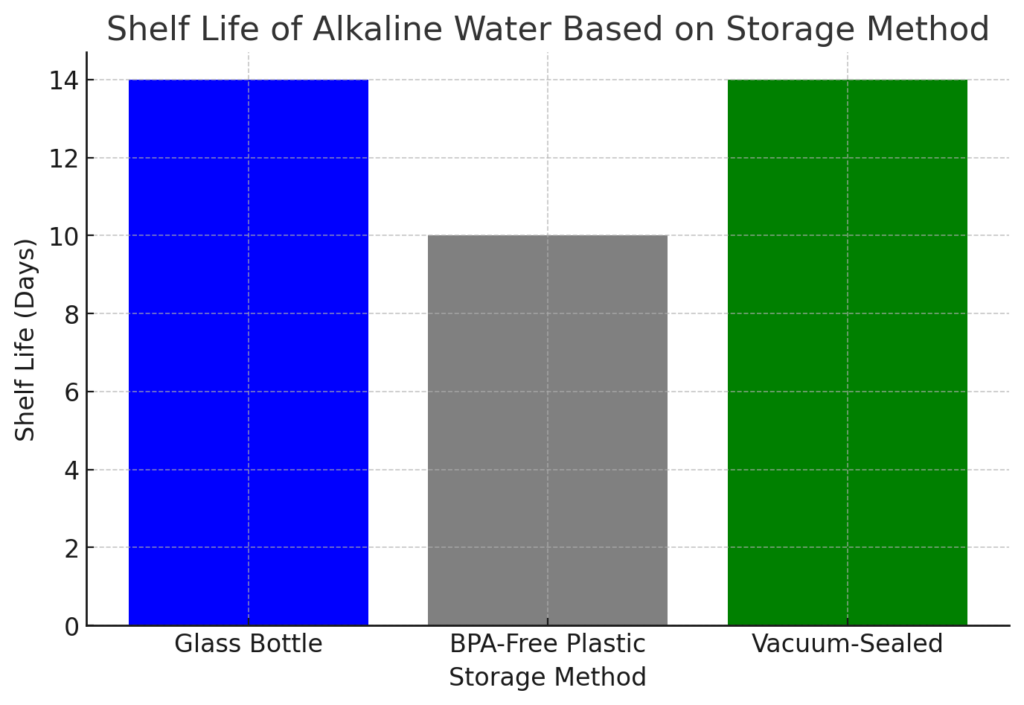
Choose glass or BPA-free plastic bottles for storage. Glass containers can keep alkaline water’s pH stable for up to two weeks. Opt for BPA-free plastic to avoid chemical leaching into the water.
| Container Type | Shelf Life | Recommended Storage |
|---|---|---|
| Glass | Up to 2 weeks | Cool, dark place; sealed tightly |
| BPA-free Plastic | 1-2 weeks | Cool, dark place; sealed tightly |
| Regular Plastic (non-BPA-free) | Not recommended | Potential leaching of chemicals |
Alkaline water doesn’t technically expire, but its pH can decrease over time. Proper storage can extend its shelf life to 1-2 weeks. Once opened, it’s best to consume it within 2-3 days for optimal freshness and benefits.
Adopting these storage best practices ensures your alkaline water remains fresh and effective. This way, you can continue to enjoy its health benefits.
Transporting Alkaline Water Safely
Keeping alkaline water fresh and effective on the go requires careful transport and storage. Alkaline water, with a pH of 8 to 9, offers health benefits but is sensitive to light, heat, and air. To keep your alkaline water effective and beneficial during transport, follow these tips:
Portable Storage Solutions
Choosing the right portable storage is key for safe alkaline water transport. Look for airtight, insulated bottles that keep the water’s temperature and prevent air exposure. Vacuum-sealed bottles are ideal for keeping water fresh and preventing contamination. Glass bottles are better than plastic, as they maintain pH levels for up to two weeks.
Keeping Alkaline Water Away from Direct Sunlight
It’s vital to shield alkaline water from direct sunlight when outdoors. Sunlight and heat can lower its pH, reducing its effectiveness. Store it in a shaded area or bag to protect it. This simple step helps preserve your alkaline water’s quality and freshness during transport.
| Storage Method | Shelf Life | pH Maintenance |
|---|---|---|
| Vacuum-sealed bottles | 1-2 weeks | Excellent |
| Glass containers | Up to 2 weeks | Good |
| Plastic bottles (BPA-free) | 3-5 days | Fair |
By adhering to these guidelines, your bottled alkaline water stays fresh and effective, even when you’re traveling. Drink it within the recommended time to enjoy its health benefits fully. With proper storage and sunlight protection, you can enjoy alkaline water’s hydrating and pH-balancing effects anywhere.
Monitoring the pH Level of Stored Alkaline Water
Storing alkaline water for a long time requires constant pH level monitoring. Alkaline water’s pH ranges from 8 to 9, higher than the neutral 7. Yet, light, heat, and air can lower its pH, reducing its health benefits.

To check the pH of stored alkaline water, use pH strips for regular tests. This is vital, mainly if the water has been stored for a while or in uncertain conditions. A significant pH drop suggests exposure to air, light, or heat, indicating it’s time to use the water quickly or for non-drinking purposes. Regular pH checks are key to maintaining the quality and effectiveness of stored alkaline water.
Here’s a table outlining the recommended pH levels for alkaline water storage duration:
| Storage Duration | Recommended pH Level |
|---|---|
| 1-3 days | 8.5-9.5 |
| 4-7 days | 8.0-9.0 |
| 8-14 days | 7.5-8.5 |
| Over 14 days | Consider consuming or discarding |
For optimal storage, keep alkaline water in a glass container, away from sunlight. Refrigeration helps by keeping the temperature stable. If the water tastes flat or the pH has dropped a lot, it’s lost its alkalinity and should be used or thrown away.
Remember, regular pH level testing is essential, more so for long-term stored alkaline water. By monitoring pH levels and using proper storage methods, you can keep your alkaline water effective and beneficial for drinking.

Comparing the Shelf Life of Bottled and Ionized Alkaline Water
Choosing between bottled and ionized alkaline water is a common dilemma. Both types promise hydration and wellness benefits. Yet, they vary in storage needs and longevity.
Differences in Storage Requirements
Bottled alkaline water comes in plastic, which might contain BPA or other harmful substances. Heat or sunlight can degrade its alkalinity and minerals. In contrast, ionized alkaline water is made through electrolysis and stored in glass or high-quality plastic. This reduces the risk of water quality degradation.
For optimal freshness, store alkaline water in a cool, dark place. Refrigerated alkaline water can last from days to weeks, depending on storage conditions. Once opened, it’s best to drink it within 2-3 days for the best taste and health benefits.
Impact of Plastic Bottles on Water Quality
The shelf life of bottled alkaline water varies by brand and source. Many are packaged in plastic, which can leach harmful chemicals into the water. This can reduce the water’s quality and diminish its health benefits.
Ionized alkaline water, on the other hand, is stored in glass or high-quality plastic. The ionization process uses platinum or titanium electrodes to create water with a pH above 7.0. This enriches the water with minerals like calcium, magnesium, and potassium, supporting hydration and health.
While bottled alkaline water may last longer due to preservatives, ionized water is best consumed fresh. Properly stored, ionized alkaline water can last 1-2 weeks. Its pH level can change, though, if exposed to heat or sunlight.
Alkaline Water and Hydration: How Storage Affects Its Benefits
Alkaline water, with its pH level between 8. 0 and 9. 0, has become popular for hydration benefits. It contains more alkaline minerals like calcium, magnesium, and potassium. These minerals may improve blood viscosity, kidney function, and hydration compared to regular water. Yet, the hydration benefits of alkaline water depend on proper storage. Moreover, it’s essential to consider the impact of alkaline water on pets, as its properties may not be suitable for all animals. Research on dogs and alkaline water safety suggests that while some dogs may enjoy and tolerate it well, others might experience digestive issues. Therefore, pet owners should consult with their veterinarians before introducing alkaline water into their dogs’ diets, ensuring their furry friends remain both hydrated and healthy.
Storing alkaline water correctly in a cool, dark place is key. It should be consumed within a week for best results. Alkaline water can keep its pH level for 1-2 weeks under ideal conditions. But, consuming it within a week is recommended to preserve its benefits. Light, heat, and air can decrease its pH level, reducing its effectiveness.
Regular pH testing with strips is advised to check the alkaline water’s pH level. A significant drop in pH or a flat taste indicates degradation. To avoid this, store it in glass containers for up to two weeks. Vacuum-sealed bottles also help by minimizing air exposure and preserving alkalinity.
While alkaline water may offer hydration benefits, scientific evidence is limited. Some studies hint at antioxidant properties, but more research is needed. Despite this, when stored and consumed correctly, alkaline water can enhance hydration and overall well-being. One popular method for those interested in experiencing the potential benefits of alkaline water is through DIY alkaline water preparation. This allows individuals to manipulate the pH levels of their drinking water at home, often using common ingredients like baking soda or lemon. However, it’s important to balance the use of these ingredients to avoid consuming excessive amounts, which could lead to unwanted health effects. Monitoring the alkalinity levels in drinking water is essential, as it can vary significantly based on the ingredients used. Properly adjusting these levels can help individuals tailor their hydration to their specific health needs. However, consulting with a healthcare professional before making significant changes to one’s diet or hydration routine is advisable.
To maximize the hydration benefits of alkaline water, be mindful of the best before date and store it in a manner that preserves its alkalinity. By doing so, you can ensure that your body receives the optimal hydration support that alkaline water has to offer.
Selecting a High-Quality Water Ionizer for Fresh Alkaline Water
Choosing a top-notch water ionizer is key to getting a steady flow of fresh, health-boosting alkaline water. These devices use electrolysis to create water that’s full of negatively charged ions. This makes the water more alkaline, which can offer several health benefits. The quality of the ionizer depends on the materials used for its electrodes, such as platinum or titanium.
Factors to Consider When Choosing a Water Ionizer
When picking a water ionizer, think about these important points:
- Quality of materials (e.g., platinum-coated titanium electrodes)
- Filtration capabilities
- pH range (alkaline water typically has a pH level between 8 and 9)
- Durability and longevity of the device
- Cost (water ionizers can vary widely in price, highlighting the need for a quality device for long-term benefits)
Recommended Water Ionizer Products
Brands like Tyent are known for their high-quality ionizers. These devices can adjust the pH of the water and have advanced filtration for better taste and health benefits. Here are some top models to consider:
| Model | Features | Price Range |
|---|---|---|
| Tyent UCE-13 Plus | 13 platinum-coated titanium plates, dual filtration, pH range 1.7-12.0 | $2,500 – $3,000 |
| Tyent Alkaline H2 HYBRID | Hydrogen boost technology, 360-degree spin spout, pH range 1.7-12.0 | $2,000 – $2,500 |
| Tyent UCE-11 Turbo | 11 platinum-coated titanium plates, multi-stage filtration, pH range 1.7-12.0 | $2,000 – $2,500 |
| Tyent ACE-13 TURBO | 13 solid/mesh hybrid plates, dual filtration, pH range 1.7-12.0 | $2,500 – $3,000 |
Investing in a quality water ionizer ensures a steady supply of fresh alkaline water. Storing this water in glass or BPA-free containers in a cool, dark place can keep its pH level stable. This way, you can enjoy the water’s health benefits for up to 1-2 weeks.
Tips for Maximizing the Freshness of Stored Alkaline Water
Alkaline water, with its pH range of 8 to 9, offers several health benefits. To keep it fresh, proper storage is key. Stored correctly, alkaline water can last 1-2 weeks. Yet, for the best taste and health benefits, it’s best to drink it within a week.
To ensure your alkaline water stays fresh, follow these tips:
- Keep it in a cool, dark spot, away from sunlight. Sunlight and heat can lower its pH and reduce its health benefits.
- Choose glass or BPA-free plastic containers to prevent chemical contamination.
- Drink it within 2-3 days after opening to avoid bacterial growth and maintain freshness.
- Use pH strips regularly, if stored for a long time, to check for any pH level changes.
- Vacuum-sealed bottles help keep air out, preserving the water’s pH during transport and storage.
While alkaline water can stay fresh for 1-2 weeks, its benefits are most pronounced in the first few days. The initial quality of the water and your health also play a role. If it tastes flat or the pH has dropped a lot, it’s likely degraded. Though safe, it’s best to drink it fresh.
Adopting these storage tips ensures you reap the most from alkaline water’s health benefits. It’s rich in minerals like calcium, magnesium, and potassium. These are vital for strong bones, muscle function, and blood pressure regulation. Drink it in moderation to avoid pH imbalances. Consider a high-quality water ionizer for consistent pH and more antioxidants than bottled alkaline water. Many individuals have reported improvements in hydration levels and overall wellness after incorporating alkaline water into their diets. However, it’s essential to consult healthcare experts on alkaline water to ensure it aligns with your personal health needs. They can provide guidance on appropriate consumption levels and any potential interactions with existing health conditions.
The Role of Proper Storage in Maintaining Alkaline Water’s Health Benefits
Proper storage is key to keeping alkaline water’s health benefits, with a pH of 8.0 to 9.0. Stored correctly, it retains its pH, minerals, and antioxidants for 1-2 weeks. This can enhance hydration, balance, and overall health. Alkaline water contains minerals like calcium, magnesium, and potassium, boosting its health benefits. Yet, it’s best to drink opened alkaline water within 2-3 days for the best taste.
Storing alkaline water improperly can reduce its pH and lose its beneficial properties. Sunlight can strip it of alkalinity and minerals, reducing its effectiveness. To preserve its quality, store it in high-quality containers like plastic, glass, or stainless steel. Glass containers can keep alkaline water’s pH stable for up to two weeks. Sealing it tightly helps prevent alkalinity loss due to air exposure.
It’s wise to regularly check the pH levels, more so if stored for a long time. A flat taste and a significant pH drop indicate degradation. By focusing on proper storage and timely consumption, you can maximize its health benefits. Alkaline water’s pH can decrease over time, reducing its effectiveness. So, maintaining proper storage is vital for its health benefits, such as better hydration, detoxification, and skin health.
FAQ
How long does alkaline water stay fresh?
Alkaline water, when stored in a sealed container in a cool, dark place, can last about 1-2 weeks. For the best taste and health benefits, it’s recommended to drink it within 2-3 days after opening.
What factors affect the shelf life of alkaline water?
Several factors impact alkaline water’s shelf life. These include storage conditions, pH level, mineral content, and the method used to treat the water. Keeping it in a high-quality container, away from sunlight, in a cool, dark place, helps maintain its freshness.
What is the best way to store alkaline water?
For effective storage, use a high-quality hard plastic, glass, or vacuum stainless container. Direct sunlight and heat should be avoided. Always seal the container tightly to prevent air from entering and reducing the water’s alkalinity.
Does alkaline water expire?
Alkaline water doesn’t technically expire, but its pH level and health benefits can decrease over time. While it remains safe to drink beyond its recommended shelf life, its effectiveness and taste may decline.
What type of container is best for storing alkaline water?
Glass containers are ideal for storing alkaline water as they are less likely to leach chemicals. BPA-free plastic containers are a safe alternative. Vacuum-sealed bottles are excellent for maintaining freshness and preventing air exposure, which can decrease alkalinity.
How can I monitor the pH level of stored alkaline water?
Use pH strips for periodic testing to ensure stored alkaline water maintains its desired pH level. A significant drop in pH may indicate prolonged exposure to air, light, or heat, suggesting quick consumption or alternative uses.
What are some tips for maximizing the freshness of stored alkaline water?
To keep stored alkaline water fresh, store it in a cool, dark place. Use glass or BPA-free plastic containers and avoid direct sunlight. Consume within 1-2 weeks and check for signs of spoilage. Vacuum-sealed bottles and regular pH monitoring can also ensure optimal freshness.
How does proper storage affect the health benefits of alkaline water?
Proper storage is critical for preserving alkaline water’s health benefits. When stored correctly, it can maintain its higher pH level, alkaline mineral content, and antioxidant properties. These may support improved hydration, acid-base balance, and overall well-being.