Iron and Its Presence in New York’s Groundwater
- Published:
- Updated: November 30, 2024
Listen to this article
Summary
Iron in New York’s groundwater, influenced by geology and human activities, can cause aesthetic, practical, and potential health issues. Understanding sources, testing methods, and treatment options is crucial for managing its presence.
- Sources: Natural geology, mining activities, soil composition.
- Health and Aesthetic Issues: Hemochromatosis, metallic taste, staining, plumbing damage.
- Treatment Methods: Oxidation and filtration, ion exchange, aeration.

New York is one of the biggest water sources in New York, especially in rural areas and small towns. But it is not easy to keep this valuable commodity clean because some minerals found in nature such as iron make it unusable. Iron is a vital mineral to our bodies, but too much iron in water can have all sorts of side effects, from cosmetic to health-related.
Iron in Groundwater: An Introduction
Iron occurs in the crust and is common in groundwater – it depends on geology. It exists naturally in soil, rock and dissolved oxygen. Iron is mostly present in the form of ferrous iron that is neo-colourless and soluble. But when left to oxidise in the air, it becomes ferric iron — insoluble and reddish-brown — giving rise to the iron colour of iron water.
Water doesn’t always harm because iron is present. Iron, after all, is an essential mineral for the human body. But even large quantities will turn the water metallic, contaminate clothes and plumbing, and encourage iron bacteria to multiply, adding yet another layer of water contaminants.
The Geology of New York and its Role in Iron Presence

New York State has a diverse geology, which affects the quality of its groundwater. Between the metamorphic rocks of the Adirondack Mountains, the sedimentary rock walls of the Catskills and the glacial soils that cover most of the state, New York’s geology is what controls how much iron is in its groundwater.
Iron was present in New York’s groundwater because of the bedrock and soil. The iron in the rocks and soil is leached from the minerals by natural means – by rain or from the passage of water in the soil. Even more anthropogenic sources like mines may cause high levels of iron in groundwater.
Testing for Iron in Groundwater
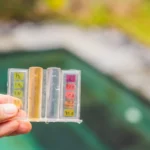
Iron in groundwater is pretty straightforward to test, generally it consists of collecting water samples for testing at the lab. It could be atomic absorption spectrophotometry or colorimetric technique used to calculate iron concentration. It’s important to check groundwater – especially private wells – frequently to make sure that iron levels don’t go too high.
You also need to identify the type of iron (ferrous or ferric) because this can affect the treatment approach. Not to be left out, though, are other factors such as pH, minerals or contamination that can alter the way iron behaves in water, and should be taken into account when testing.
Health Implications of Iron in Drinking Water
The mineral iron is one of the most basic for human beings, and it’s essential to so many bodily processes, from oxygen delivery to DNA production. Drinking water containing some iron, can help you get enough iron daily. But a lot of iron can cause health issues like hemochromatosis, which is when your body has an abnormal amount of iron.
In contrast, there are bacteria that love irony. Usually, these iron bacteria aren’t actually pathogenic, but can be unsightly (such as unusual tastes or odours) and can even rust pipes.
Aesthetic and Practical Problems of Iron in Groundwater
Iron in groundwater can be an eye- and utility-related issue, but there are also some cosmetic and functional challenges:
‘Metal taste or rusty color in water.
Dirt on plumbing, laundry and dishes.
Piping obstructions and malfunction of water-using equipment caused by iron deposits.
All of these problems are major disruptions and added expenses for home owners and business owners. And sometimes they even require water treatment facilities to treat the water for iron.
What are the different methods used for iron removal from water?
Removal of iron can be accomplished in various ways if the iron levels in the groundwater are high. The choice of method usually depends on the type of iron, the pH of the water, and any other contaminants.
Methods for iron removal include:
Oxidation followed by filtration: This is the most commonly used method and it converts ferrous iron that is soluble to ferric iron that is insoluble, and removed by filtration.
Ion exchange: Like a water softener, an ion exchange system can work on ferrous iron.
Condensation: Add air to the water, and the soluble iron will oxidize and be removed.
Case Studies of Iron in New York’s Groundwater
The Adirondacks and the Catskills, because of their geological history, are some of the places in New York where the iron concentration in groundwater is high. The US Geological Survey for example found, for instance, in Saratoga County that 11 per cent of well water samples exceeded the secondary maximum contaminant limit.
These are examples of why it is critical to have frequent water testing and preventative measures taken in places where groundwater has iron concentrations high. Households and particularly those that depend on private wells should know how they’re water quality and take the necessary steps to make it safe and pleasant to drink.
Policies and Regulations Concerning Iron in Groundwater in New York
In the US, the Environmental Protection Agency (EPA) considers iron to be a second-harm. That’s to say that it is an ugly or technical nuisance in water, but not necessarily a health risk to humans at most typical concentrations. The EPA suggests less than 0.3 milligrams per liter of iron in drinking water for aesthetic purposes.
The State of New York takes up these federal regulations. Yet there are no requirements for secondary contaminants, and so testing and treatment are largely left to private homeowners, especially if they are using their own wells. This justifies further public education on what could be wrong with iron in groundwater, and the importance of testing water regularly and treating it accordingly.
Conclusion: Managing Iron in New York’s Groundwater
Effective iron management of New York’s groundwater requires regular testing, knowledge of local geology and the right treatment techniques. Awareness of iron’s effects and how to check your water on a regular basis needs to be educated and promoted to the public. With the right mitigation measures and awareness, homeowners can have clean water and save their residents from the discomfort and medical hazards associated with high iron concentrations.
Share this on social media:
Facebook
Twitter
LinkedIn