How to Test and Treat Copper in Drinking Water: A Practical Guide
- Published:
- Updated: December 31, 2024
Listen to this article
Summary
Testing and treating copper in drinking water is essential for maintaining health:
- Understanding the Source: Copper often enters water through corroded household plumbing, highlighting the importance of regular testing.
- Legal Limits and Testing Methods: Organizations like the EPA set guidelines for safe copper levels, with testing available through home kits or professional labs.
- Treatment Options and Prevention: Methods like reverse osmosis and distillation can effectively remove copper, while maintaining plumbing and adjusting water pH helps prevent contamination.

Copper is a trace mineral that’s necessary for the body. It is used in red blood cell production, immune system, and nerve function. But there are harmful health effects from too much of it. If copper is in excess in your drinking water, it can cause nausea, stomach cramps, or more severe conditions like kidney and liver failure.
Copper in drinking water can also be excessive as acidic water corrodes copper pipes and fixtures. So copper households must be especially vigilant when it comes to copper contamination in the water supply.
Understanding the Source of Copper in Water
Copper is usually introduced into water via copper-corroded household plumbing fixtures. How much corrosion there is is dependent on the chemistry of the water, and generally the acidic water will have more corrosion. In some instances, copper can be natural as well — copper-rich rocks and soil, say, that contact the water source.
But the most important thing to keep in mind is that the copper in your water doesn’t always signal something bigger. But most of the time, it’s your plumbing system. Knowing the source can guide treatment and prevention.
Legal Limits and Health Guidelines for Copper in Drinking Water

Several organizations set guidelines for the maximum acceptable concentration of copper in drinking water. For example, the United States Environmental Protection Agency (EPA) has set the action level for copper at 1.3 milligrams per liter (mg/L). The World Health Organization also sets a similar guideline value.
- If your water tests above this level, it doesn’t necessarily mean it will cause health problems. However, you should take action to reduce the copper concentration.
- Always consult with a local health department or a water quality professional if you’re concerned about copper levels in your drinking water.
What are the methods for testing copper in drinking water?
Copper and heavy metal water test is done with home test kits or a lab test. You can buy home testing kits online or at DIY stores. They’re a quick and easy way to get results but may not be as precise as the official tests.
Costlier and more time-consuming, but professional lab tests give you more accurate, detailed results. These tests usually ask you to send a sample of water into a lab for analysis. You may want to have water testing companies help you with the instructions or even take samples for you if you don’t know how.
Interpreting Test Results
You get your test results, now it is time to understand them. If you have less than the EPA’s action point of 1.3 mg/L of copper in your water, your water is considered copper-safe.
But if the copper level is equal to or higher than the action level, you need to do something to get it down. And even if you don’t feel like you have any disease, too much copper can be problematic in the long run.
Ways to Remove Copper from Drinking Water
If your water is copper-rich, here are a few options to clean it up:
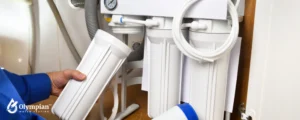
Reverse Osmosis: A process where the water is forced through a semi-permeable membrane and copper and other impurities are extracted.
Distillation: This is done by heating water and siphoning the steam, this removes copper and other impurities.
Activated Carbon Filters: Activated carbon filters filter copper from water flow but need to be changed often for them to function properly.
Just remember, there are pros and cons to all these approaches and it’s up to you which option is right for you. Seek advice from a water treatment expert before making any decision.
Maintaining Your Plumbing to Prevent Copper Contamination
Copper will never be contaminated if your home plumbing is properly maintained. Be sure to check your pipes frequently for corrosion, and replace any old copper pipes or fixtures that are discolored so you don’t end up with copper leaking into your water supply.
One other preventative tip is to reduce the pH of your water if it is too acidic as acids rust copper pipes. Then inject a neutralising filter or chemical feed pump to displace the water’s acidity. Best to contact a water treatment expert to determine which is right for you.
When to Seek Professional Help
Home testing and a lot of preventive work can be done by yourself, but sometimes you need professional assistance. : If your blood work consistently tests high for copper or you’ve tried treatments but nothing changes, call in an expert.
Water treatment professionals can do a fuller water analysis and determine the best treatment solution for you. The same licensed plumber can also diagnose and fix whatever problem your plumbing system may be causing.
Share this on social media:
Facebook
Twitter
LinkedIn