Gross Alpha and Beta Activity in Water: Assessing Total Radioactivity Levels
- Published:
- Updated: December 14, 2024
Listen to this article
Summary
Assessing radioactivity levels in water involves understanding alpha and beta particles:
- Particle Properties: Alpha particles, larger but less penetrating, contrast with beta particles, smaller and with greater penetration depth.
- Health and Environmental Risks: Ingestion of these particles through contaminated water poses health risks for humans and disrupts aquatic ecosystems.
- Regulatory Standards and Methodology: Stringent regulations guide testing methods, ensuring compliance and accurate interpretation of results.

Water, as the basic source of life, must be as good as possible to keep people alive. But there are also very serious health problems caused by radioactive elements in water. Gross alpha and beta activity measurements are the primary way of measuring water total radioactivity. These analyses take the alpha and beta particles emitted by radioactive matter and gives an overall measure of the radioactivity, which can be used to diagnose water safety and quality.
The Science Behind Alpha and Beta Particles
Alpha and beta particles are ionising radiation from unstable atomic nuclei. They are different in size, charge and penetrating power. Alpha particles are much bigger and positronically charged, but they can’t get very deep into things such as human skin. Beta particles, however, are smaller, they can be positive or negative and penetrate deeper.
Alpha and beta particles come from the natural radioactive decay of some elements. Radium and uranium, for instance, are famous for leaking alpha particles; strontium-90 emits beta particles. They enter water through natural geology, manufacturing processes or even as part of nuclear accident fallout.
The Risks: Understanding the Consequences of Radioactive Contamination

Particles of alpha and beta are harmful if ingested by water that is contaminated. Alpha particles are especially dangerous if they’re eaten or breathed in, since they can wreck cells and DNA within the body. The deeper that beta particles penetrate, the greater their health risks, not least cancer.
Beyond humans, radioactive contamination also impacts marine life. Higher alpha and beta particles in the water can affect aquatic organisms, affecting the food chain and species. Not to mention that irrigated water can lead to soil degradation and crop loss, creating an environmental cascade.
Legal Framework and Regulations
The US Environmental Protection Agency (EPA) enforces strict limits on radioactive levels in water – for gross alpha and beta levels, for example. These are regulations from the Safe Drinking Water Act that protect health by setting contaminant limits.
Globally, organizations such as the World Health Organization (WHO) have protocols for radioactive water contamination. They are the gold standard and most nations use them as national thresholds. These are all rules that must be adhered to in international trade, especially by countries that export agricultural products that depend on water for their survival.
Methodology: How Is Gross Alpha and Beta Activity Measured?
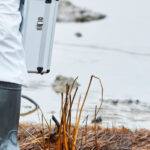
Water is subjected to multiple step processes for alpha and beta radioactivity measurement. Water samples are collected, first, in strict procedures to avoid contamination. These samples are then labelled in a laboratory, either with liquid scintillation counting or gas-flow proportional counting.
What we do with the data is equally important. This detected value is sometimes compared to the regulatory threshold to establish whether the water supply can be used or should be treated. In addition, they can provide the foundations for scientific investigations to gain a picture of how radioactive elements are distributed in waterways over space and time.
Challenges in Measurement and Analysis
There are several problems that could affect measuring alpha and beta in water. These include:
Types of tests sensitivity and specificity: Not all methods will be effective at detecting small amounts of radioactivity or identifying alpha from beta.
Deficiencies of existing techniques: Most methods take time and use sophisticated equipment.
Technologies in the making: Things such as real-time sensors and novel techniques of spectroscopy are in development but not yet here.
Even so, new technology keeps making the job of scientists and analysts even easier and faster. This is critical for identifying action before it’s too late, especially in areas where there is industrial or natural radioactive contamination.
Understanding Test Results
If the numbers of a radioactivity test seem complicated, it isn’t, but you have to to know them so you can do something. When tests test beyond the regulatory maximum of gross alpha and beta activity, immediately action is needed to determine the source of contamination. These could be additional tests, public notices and even partial shut down of water.
If something can’t be done immediately, monitoring and repeat testing might be required. Particularly in locations where water may have percolated into the soil, continual monitoring is needed to avert outbreaks of waterborne illness or chronic illness such as cancer.
Treatment Options for Contaminated Water
Traditional water treatment systems to lower alpha and beta radioactivity in water are reverse osmosis, ion exchange and coagulation-flocculation. They both offer their pros and cons in efficacy, expense and convenience. Reverse osmosis, for instance, is very efficient, but it is costly and a huge drain on the water.
Emerging technologies offer promising alternatives. Proteomic oxidation and nanoparticle-based filtration are studied to capture radioactive particulates more effectively. But there’s also a cost-benefit analysis to assess whether these new solutions make sense economically.
Public Perception and Awareness
Information on the dangers of water radioactivity containing alpha and beta radiation is buried beneath myths and misinformation. Some will downplay the risks – dismissing them as "natural" reasons, others will get it too badly and panic over nothing.
Public opinion is formed by the media. Proper reporting — based on science — can educate the public about the need for frequent water testing, and treatment solutions for contaminated water. It can lead to policy changes and funding for water quality improvements.
Share this on social media:
Facebook
Twitter
LinkedIn

Related Posts