

Understanding Florida’s Drinking Water Landscape
Rainy seasons are key in replenishing underground water systems, ensuring a steady supply to homes across the state. Beneath layers of porous rock, the Biscayne and Floridan Aquifers allow water to flow while potentially picking up pollutants. Given that many residents depend on these aquifers for their daily water needs, it’s vital to implement protective measures.
State officials stress the importance of effective monitoring to safeguard these resources. Maintaining the quality of florida tap water is a top priority for health and safety. Regular testing helps identify signs of pollutants from agricultural runoff or industrial waste. This highlights the necessity of continuous oversight. The Florida aquifers, though essential, are at risk from pollutants that can seep through the porous limestone formations.
Aquifer | Main Feature |
Biscayne | Shallow rock base, high recharge rate |
Floridan | Deeper levels, widely used for public supply |
florida tap water quality: Key Factors to Consider
Assessing drinking water quality involves several critical factors. These include regular testing, awareness of contaminants, and understanding local conditions. These elements are essential for ensuring both safety and taste.
Municipal Water Sources
Many areas depend on municipal water sources, which adhere to the Safe Drinking Water Act. Treatment facilities work diligently to remove high-risk contaminants. Despite this, trace elements can sometimes appear due to aging infrastructure or corroded pipes. Regular monitoring is key to maintaining public trust and driving continuous improvement.
Private Wells in Coastal Communities
Private wells in coastal Florida face specific challenges. Saltwater intrusion is a major concern for wells near the shore. Homeowners or local groups must take responsibility for regular testing and maintenance. Implementing appropriate filtration systems and protective measures is essential. This ensures the quality of tap water, whether it comes from municipal supplies or private wells.
Regional Differences Across the Sunshine State
The geological layers beneath each part of Florida significantly impact florida tap water quality. In the north, deeper aquifers often serve as the source for residential taps. This can reduce exposure to runoff. On the other hand, the south relies on shallower systems, which are more vulnerable to contamination from farmland and urban development.
Population growth in local areas increases demand on shared resources. This surge can put a strain on treatment facilities, leading to water quality differences between neighboring counties or cities. The age of the infrastructure also plays a role, with older pipelines sometimes altering the taste or odor of water after prolonged contact with minerals and dissolved solids.
“Florida’s groundwater resources are vital to both public health and the state’s economy,” notes the Florida Department of Environmental Protection.
Region | Main Aquifer | Key Challenge | Taste Profile |
North Florida | Floridan Aquifer | Hardness and mineral buildup | Mild with mineral hints |
Central Florida | Floridan Aquifer (deeper zones) | Possible sulfur levels | Occasional sulfur notes |
South Florida | Biscayne Aquifer | Runoff contamination risk | Varies by local treatment |
Key Water Testing Methods and Agencie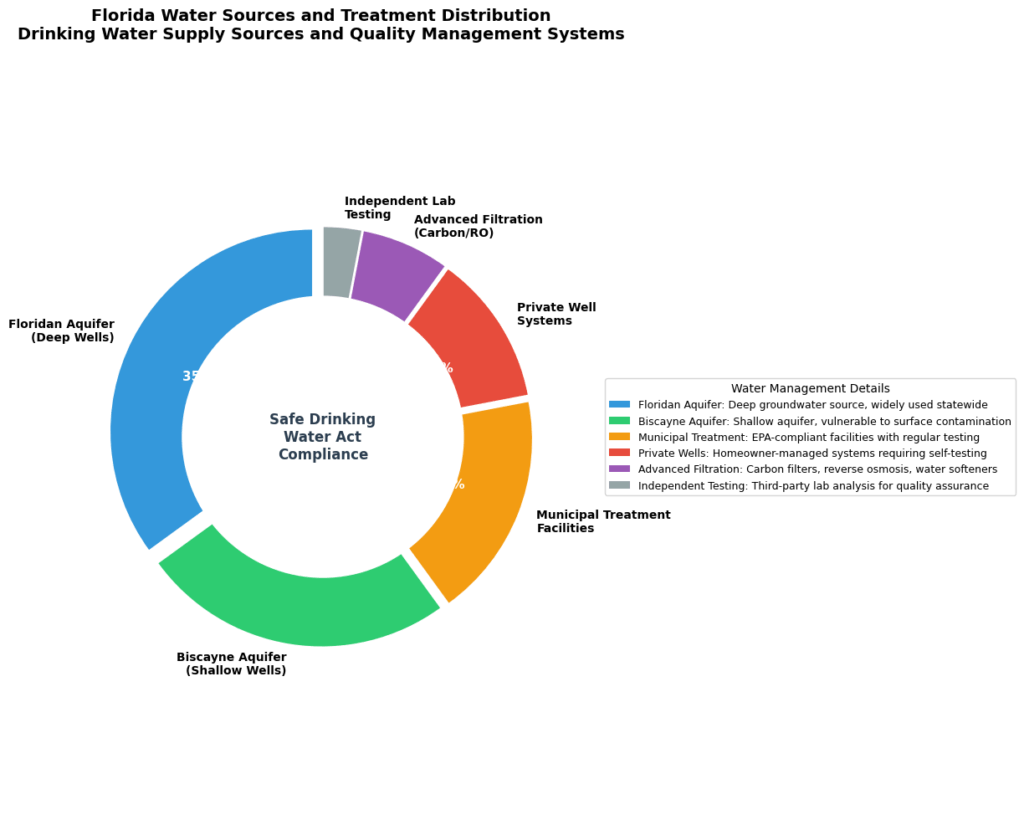
Those who prioritize the safety of their drinking water rely on reliable tests. These tests measure contaminants and chemical levels. This approach fosters trust in the system and provides families with the data they need for peace of mind.
Technicians collect water samples from various locations. They examine metals, bacteria, and other possible hazards. Each step is designed to maintain high standards, avoiding harmful substances that can affect health.
Environmental Protection Agency (EPA) Guidelines
This federal body sets legal frameworks to protect public tap water. EPA guidelines establish safe pollutant limits. They influence state authorities across the nation.
Local Utility Standards
City-based or county-based operators often follow federal rules. Local water utilities produce annual consumer reports. These reports reveal findings from regular testing, keeping the public informed.
Independent Lab Testing Options
Independent facilities provide an additional layer of scrutiny. They help evaluate florida tap water quality in areas without municipal services. This practice uncovers issues linked to runoff or industrial waste.
Common Contaminants to Watch For
Florida’s water supply faces numerous threats, making it critical for those who prioritize clean drinking water to stay informed. Pesticides from farms and lawns find their way into local reservoirs and wells. Sewage overflows introduce viruses and bacteria, compromising the quality of tap water in Florida. Heavy metals like arsenic, barium, chromium, and lead enter through corroded infrastructure or natural deposits.
Industrial activities also contribute to the presence of radioactive elements in certain areas. This intensifies concerns about common water contaminants. Knowing which pollutants are present helps residents make informed decisions about filtration or routine tests. Even small amounts of these substances can pose long-term risks to organs and systems, underscoring the need for continuous monitoring.
Being aware of various sources of contamination, from agricultural runoff to aging pipes, is essential for proactive water safety measures. Proper research and reliable testing methods provide communities with valuable insights into tap water quality. Environmental agencies play a key role in overseeing these efforts, limiting dangers. Yet, vigilant monitoring of common water contaminants remains essential for peace of mind and overall well-being.
Expert Perspectives on Water Treatment
Industry experts across the Sunshine State analyze the evolution of treatments that address chemicals, microorganisms, and other elements in drinking water. This perspective highlights the need for diligent testing and strategic improvements. It keeps the focus on florida tap water quality in diverse communities. Florida tap water quality remains a key priority for environmental advocates seeking safer resources statewide.
Filtration Technologies in Use
Researchers, including Professor Naresh Kumar, note that selecting the right filter can capture an array of pollutants. Sediment and carbon systems are common, yet advanced membranes offer deeper protection. Adopting water filtration methods boosts health by blocking elements that standard treatments may not remove.
Impact of Distribution Systems
Once water leaves the treatment plant, old pipes or corroded systems can introduce unexpected hazards. Specialists observe that leaching metals or bacterial growth may compromise safety. Upgrades and routine inspections help maintain efficiency, supporting those who rely on water filtration methods in their homes.
Comparing Florida Tap Water to Other States
Tap water comparisons across the United States reveal unique challenges in each region. Coastal areas in the Southeast face the issue of saltwater intrusion into shallow wells, necessitating vigilant monitoring of florida tap water quality. States with a history of industrial activities grapple with lead pipes and residues from manufacturing. In the Midwestern states, residents depend on rivers that collect runoff during heavy rains.
Nationwide concerns have shifted focus to chemicals in consumer products and firefighting tools. PFAS compounds, for example, raise safety questions and highlight the need for better filtration. A recent report highlights that many states face these risks, yet local agencies employ varied strategies to mitigate contamination.
Comparing florida tap water quality to other areas highlights the diversity of source waters. Climate changes and evolving regulations continue to influence discussions. Some areas focus on updating distribution systems to address aging infrastructure. Each region strives for a balance between protecting public health and managing costs.
Tips for Ensuring Safe Drinking Water at Home
Residents seeking to safeguard their homes often look for straightforward, year-round solutions. Ensuring tap water quality doesn’t need to be complex. Simple, routine checks can ward off larger problems.
Regular monitoring is key to spotting shifts in florida tap water quality. It guarantees families access to clean drinking water. Devices from companies like One Green Filter provide effective solutions for homes battling frequent hardness or odors.
Regularly Checking for Hardness and pH
Water hardness can lead to scale buildup and strain appliances. Monitoring pH levels might seem daunting, but basic test kits can indicate if water is too acidic or alkaline. This is a critical part of a detailed home water testing regimen.
When to Seek Professional Testing
Experts advise on deeper evaluations, essential for private wells. They can identify emerging chemicals and heavy metals. Regular, annual visits from these professionals add a vital layer of protection.
Test | Purpose | Frequency |
Hardness | Prevent scale buildup and protect appliances | Every 6 months |
pH Level | Ensure balanced acidity and taste | Quarterly |
Contaminant Screening | Check for metals, bacteria, and PFAS | Yearly |
Reflecting on the Importance of Ongoing Water Assessments
The Florida Department of Environmental Protection is dedicated to monitoring the state’s water sources. This effort ensures the safety of those who depend on florida tap water quality. Regular consumer confidence reports detail progress and identify areas needing more support.
Policy updates, like the Infrastructure Investment and Jobs Act, provide additional funding. This support is for service-line replacements and modernizing treatment facilities. Ongoing water monitoring tracks these projects, keeping residents updated on any new contaminants.
Water quality assessments are an ongoing process, not a one-time solution. The path forward requires continuous research, community engagement, and open communication among utility providers. By staying informed and voicing concerns, residents can drive solutions that protect public health statewide.