Corrosivity Testing: Assessing the Risk in Your Drinking Water
- Published:
- Updated: December 14, 2024
Listen to this article
Summary
Clean and safe drinking water is crucial, but corrosive water can pose hidden dangers. Corrosivity testing helps identify risks by analyzing water’s ability to corrode materials. Here’s why it matters:
- Corrosive water can lead to pipe leaks and metal contamination, affecting water quality.
- Factors like pH, temperature, and minerals influence water corrosivity.
- DIY testing kits offer initial insights, but professional assessment is recommended for accurate results.

We should all have access to clean, safe water at home. But sometimes there are unrecognised dangers in our pipes’ water – for example, corrosion. Bad water corrodes pipes, can break the line and cause a leak, or even let harmful metals such as lead in your water. That’s where corrosivity drinking water testing comes in. Its testing can detect dangers before they are apparent by examining how well the water corrodes things. Knowing how corrosive your water is the easiest but most important way to ensure the health and longevity of your plumbing, and in particular, the health of your family.
When Tap Water Turns Toxic: The Science of Corrosion
Water that is corrosive is water that dissolves metals in pipes and fixtures, which poisons the water you consume, cook with, or take a bath in. Water pH is one of the biggest determinants of corrosivity. Low pH water that’s more acidic than pH 7 will likely strip metals such as lead or copper from pipes. Alkaline water, on the other hand, forms scales that can save pipes.
Apart from pH, temperature, alkalinity, dissolved minerals and so on are all factors that influence corrosion rate. The heat can accelerate rust, for instance, and the presence of certain minerals can halt or incite rust. So several elements can interact in intricate ways to influence water’s corrosivity, and they’re all important parameters to be aware of in order to make a risk assessment.
The Alarming Statistics: Corrosivity Across the Globe

The water crisis in Flint, Michigan is just one grim example of the destructive power of corrosive water. Here, a change in water distribution meant highly corrosive water was leaking lead from the old pipes and was creating public health problems such as lead poisoning in children. The examples elsewhere also illustrate that corrosivity is not a localised issue but a global one.
Statistics reveal an unsettling trend. More than 2 billion people consume water laced with faeces, according to the WHO – and that doesn’t relate directly to corrosivity, but it gives an idea of the status of water around the world. This means it is all the more important to address water safety at all levels – including corrosivity – to protect public health.
Not All Metals are Equal: Common Contaminants from Corrosion
Corrosion is the main source of metals that end up in drinking water: lead, copper, iron and manganese. Each poses unique challenges:
Lead: Lead can damage the brain, especially in children.
copper: Too much copper can be bad for your digestive system.
Iron and Manganese: They stain laundry and fixtures but are generally harmless as opposed to lead or copper.
Knowing what the risks are for each metal means specialized remediation is possible. Iron, for instance, might stain your sink but it’s lead that is much more sinister and should be eliminated as soon as possible.
Don't Trust Your Eyes: Why Clear Water May Not Be Safe
Clarity is often mistaken for water purity, but clear water is corrosive too. Microbial corrosion, for example, doesn’t always change the look of the water but it can dramatically affect how corrosive it is. Galvanic corrosion is the same phenomenon whereby two different metals come into contact in a water supply, again not directly changing the clarity but maybe the safety of the water.
So no, crystal clear water isn’t a sign that you are not in good hands. – Using just the eyes can be misleading and can put you at risk for health risks you cannot readily see. The safest way to be sure your drinking water is safe is by testing thoroughly.
The Regulatory Framework: What Does the Law Say?
The EPA in the US sets the MCL for several chemicals in tap water, including metals that corrosion causes in drinking water. State governments enforce these federal regulations, though they can also make higher ones if necessary.
Yet regulation is not always the same in all countries, and so both tap water quality and the effectiveness of reducing corrosivity can be different. This is why you need to know the rules and regulations regarding water quality in your local area, not only to identify risk correctly but also to press for improved levels where necessary.
Do-It-Yourself: Simple Corrosivity Tests for Homeowners
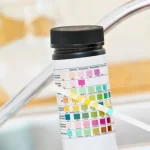
Corosivity is a home test made simple with various DIY kits on the market. The pH strips that these kits come with are often quick and simple tests of your water’s acidity or alkalinity. Defiant though they may be, such tests can provide an early sign to seek more information.
But DIY kits are not perfect. They are less specific than lab water tests, and may not capture all the corrosive influences. So if you think that there’s something wrong with your first tests, ask experts for a better look.
Understanding Test Results: Making Sense of Numbers and Terms
You will have a long list of words and numbers to work with after you’ve gotten your water tested, which is at first daunting. A good example of one of these is the Langlier Saturation Index (LSI), which is a number derived to calculate water’s calcium carbonate stability. The low LSI is that the water is corrosive and the high LSI is that there is scaling.
Understanding these findings correctly is critical for doing the right thing. A negative LSI is cause for immediate correction, but a positive LSI is no reason to neglect things such as pH, temperature and other minerals. It takes an in-depth analysis to make corrective and preventive actions.
Taking Control: Prevention and Treatment Options
Water softeners are another solution that is used to fight against water corrosion. These replace calcium and magnesium ions with sodium ions that don’t make scale. However, this technique comes at a cost, since the water has a higher amount of sodium in it, which is not good for people with some conditions, such as high blood pressure.
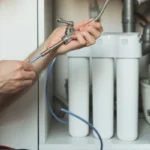
Then there are acid-neutralizing solutions, which are usually affordable and easy to use. These solutions can change the pH of the water, making it less corrosive. There are reverse osmosis systems, too, but they are also expensive to set up and service. There are downsides and merits to each of these approaches.
The Future of Drinking Water: Innovations in Corrosivity Testing
As the technology progresses, so do our methods for safer water. Water quality monitoring at a distance is easier than ever thanks to remote monitoring platforms and IoT devices. These developments are especially welcome for large water distribution networks, where issues need to be identified and fixed at short notice.
Current work in the area is also promising, with technologies such as nanosensors and bio-based corrosion inhibitors promising better, sustainable solutions. In the future, such advances will probably become essential for keeping our water safe to drink.
Share this on social media:
Facebook
Twitter
LinkedIn

Related Posts