Tap Water Safety in Athens
Athens, with nearly one-third of Greece’s population, offers a safe and reliable municipal water supply. The city’s tap water comes from Lake Marathon, undergoing extensive filtration and purification. Regular water quality testing ensures it meets European Union and Greek government standards.
The tap water in Athens is not only safe but also ranks among the best in Europe. A recent study by worldpopulationsreview.com gave Greece a perfect score of 100. This achievement shows the country’s dedication to clean and safe drinking water.
Modern Water Supply Systems
Athens’ water supply system is a modern marvel, using advanced technologies to deliver clean water. The city’s tap water comes from Lake Marathon, a pristine source protected from pollution. It undergoes a multi-stage treatment process to ensure purity.
Regular Water Quality Testing
Regular testing by local authorities and independent labs maintains Athens’ tap water quality. These tests check microbial content, chemical composition, and physical properties. The results are publicly available, giving residents confidence in their drinking water.
Parameter | EU Standard | Athens Tap Water |
E. coli (per 100ml) | 0 | 0 |
Turbidity (NTU) | 1 | 0.2 |
Lead (μg/l) | 10 | 2 |
Chlorine (mg/l) | 0.2-0.5 | 0.3 |
Compliance with European Union Standards
Greece, as a European Union member, follows the 2020 Drinking Water directive. This directive sets quality standards for drinking water across the EU. Athens’ water supply consistently meets or exceeds these standards, showing the city’s commitment to quality.
Drinking Tap Water in Major Greek Cities
In Greece’s bustling urban centers, such as Athens and Thessaloniki, residents and visitors alike can confidently quench their thirst with tap water. These cities boast modern water treatment processes and infrastructure, ensuring a safe and reliable drinking water supply.
Athens and Thessaloniki
Athens, home to nearly one-third of Greece’s population, is renowned for having the cleanest tap water in the country. The city’s water undergoes rigorous testing and treatment to maintain its high quality. Thessaloniki’s tap water has also been evaluated as clean and potable, despite higher limescale levels.
The Greek government and the European Union strictly regulate tap water quality, adhering to the 2020 European Union Drinking Water directive. This directive mandates that pollutant concentrations remain below specific levels for water to be considered safe for consumption. Regular water quality reports in Athens and Thessaloniki demonstrate consistent compliance with these standards.
Comparable Water Quality to Other European Cities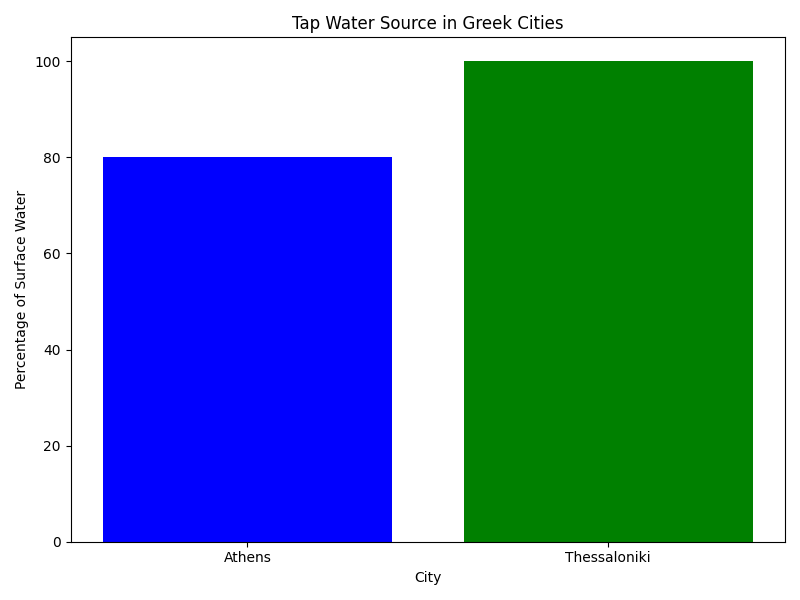
Greece’s commitment to providing safe drinking water has earned it a stellar reputation on the global stage. In a study conducted by worldpopulationsreview.com, Greece was ranked equal first place with nine other European countries, all receiving a perfect score of 100 for drinking water safety. This achievement highlights the comparable quality of tap water in Athens, Thessaloniki, and other major Greek cities to that found in other leading European urban centers.
City | Tap Water Source | Water Hardness |
Athens | 80% surface water | Reasonably soft |
Thessaloniki | Surface water | Hard |
While most locals and tourists in these urban areas drink tap water without issues, it’s essential to stay informed about any occasional advisories related to drinking water safety in Athens or other cities. Such advisories may be issued following heavy rains or in areas with older infrastructure. By staying vigilant and following local guidance, residents and visitors can maintain confidence in the water they consume.
Local Perceptions and Practices
In Athens, locals trust the tap water quality and drink it freely. The city’s water supply systems and regular testing meet European Union standards. This trust is also seen in the hospitality sector, where tap water is commonly served in restaurants and cafes.
A study by worldpopulationreview.com found Greece, along with nine other European countries, scored a perfect 100 for tap water safety. The tap water quality in Athens and Thessaloniki is on par with other European cities. This is due to well-maintained infrastructure and constant monitoring by health authorities.
Locals Drinking Tap Water
Athenians’ trust in tap water is evident in their daily habits. Many carry reusable water bottles, refilling them from taps throughout the day. This not only shows confidence in the water’s safety but also helps reduce plastic waste.
To promote reusable bottles and cut down on plastic, water machines are available nationwide. These machines charge €0.50 per liter, making it an affordable and eco-friendly option. Below is a comparison of water consumption costs and environmental impacts in Athens:
Water Source | Cost per Liter | Environmental Impact |
Tap Water | Free | Minimal |
Water Machine | €0.50 | Low (encourages reusable bottles) |
Single-Use Plastic Bottles | €1.00 – €2.00 | High (contributes to plastic waste) |
Tap Water Served in Restaurants and Cafes
Greek hospitality often includes serving water to guests. In Athens, restaurants and cafes commonly serve tap water. This reflects their confidence in the water’s safety and aligns with the local culture of warmth and generosity.
In tourist-heavy areas, some establishments may serve bottled water instead. This decision is mainly driven by tourists’ preferences and perceptions about tap water quality. By providing bottled water, these businesses aim to meet the needs of their international guests and ensure their satisfaction.
Tap Water in Greek Islands and Rural Areas
In the Greek islands and rural areas, tap water is generally safe to drink. Yet, taste and mineral content can vary due to local sources and treatment methods. For instance, Kefalonia’s tap water quality meets or exceeds EU standards. The Greek Ministry of Health regularly tests for contaminants like E. coli and Fecal Streptococcus, ensuring EU limits are met.
Occasionally, advisories on water quality may be issued, mainly after heavy rains. This can affect the clarity and safety of local water supplies. Rural areas with private wells are more prone to contamination from agricultural runoff and industrial activities. Heavy metals like lead and copper can also leach into the water from old pipes, posing health risks.
Island/Area | Tap Water Quality | Recommended Precautions |
Kefalonia | Meets or exceeds EU standards | None required |
Santorini | Non-drinkable in some areas | Use bottled water |
Rural areas with private wells | Potentially contaminated | Test water regularly, consider filtration |
Boiling tap water for at least one minute can eliminate most microorganisms. Filtering tap water can also remove impurities like particulate matter and heavy metals. This improves taste and safety. Many locals in areas like Kefalonia drink tap water regularly, showing trust in its quality.
The Greek National Public Health Organization (EODY) states that tap water in Greece generally meets international standards. Tap water in major cities like Athens and Thessaloniki is safe to drink. Yet, smaller islands like Santorini may have non-drinkable tap water, requiring bottled water. Visitors should check tap water regulations and follow advisories to stay healthy while exploring Greece’s diverse landscapes.
Variations in Taste and Mineral Content
Tap water in Athens and other major Greek cities is generally safe to drink. Yet, visitors might notice slight taste and mineral content variations. These differences stem from the diverse water sources and treatment processes across the country.
Local Water Sources
Greece’s water supply comes from various sources. These include surface water from rivers and lakes, groundwater from aquifers, and desalinated seawater in some cases. The mineral composition of these sources can differ, affecting the water’s taste and hardness. For instance, water from limestone aquifers may have higher calcium and magnesium levels, making it harder.
In Athens, water treatment processes aim to remove contaminants like heavy metals, chlorine, and VOCs. This ensures the water meets strict safety standards. Despite this, the mineral content can influence the taste, with some preferring bottled water over tap.
Desalinated Seawater on Some Islands
On smaller Greek islands, like Santorini, freshwater scarcity has led to desalinated seawater use. This process removes salt and minerals, making the water safe to drink. Yet, it can result in a taste different from mainland tap water.
While desalinated water is safe, some tourists might prefer bottled water due to taste. Bottled water is widely available and affordable in Greece, costing between €0.50 to €1.00 per liter.
Location | Water Source | Potential Taste Variations |
Athens | Surface water, groundwater | Slight mineral taste |
Santorini | Desalinated seawater | Different taste compared to mainland water |
Rural areas | Local aquifers, springs | Varies based on mineral content |
Despite taste and mineral content variations, travelers can be confident in Greece’s tap water safety. Regular testing and treatment ensure its safety for consumption. By understanding local water sources and treatment processes, visitors can make informed choices about their drinking water preferences in Greece.
Occasional Water Quality Advisories
Tap water in Athens is generally safe, but occasional advisories may occur. These advisories are due to contaminants found during routine testing. The Athens-Clarke County Water and Sewer Department closely monitors water quality. They issue advisories based on EPA standards to protect public health and safety.
The frequency of advisories varies due to environmental and infrastructure factors. Water quality testing in Athens happens monthly, with annual results published. In 2022, Athens met 95% of federal water quality standards. Yet, about 10% of samples may exceed action levels for certain contaminants, leading to advisories.
Impact of Heavy Rains on Water Clarity and Safety
Heavy rains are a major cause of water quality advisories in Athens. Rainwater runoff can introduce contaminants into the water supply. This affects water clarity and safety. In such cases, the Athens-Clarke County Water and Sewer Department issues advisories quickly. They inform residents of risks and provide precautions.
Local Authorities Providing Guidance
When advisories are issued, local authorities in Athens act swiftly. They typically respond within 24 hours of contaminant detection. Residents are advised to follow official channels for updates. They should also report any unusual taste or odor in their water, which may lead to further testing.
The Athens-Clarke County Water and Sewer Department conducts extensive educational programs. These aim to inform residents about water quality reports, tap water regulations, and water purification processes. Over 15,000 households in Athens receive information about water safety and advisories each year.
Bottled Water Alternatives
In Athens and other major Greek cities, tap water is generally safe to drink. Yet, some visitors might prefer bottled water alternatives. Bottled water is widely available, providing a convenient option for those seeking extra assurance or a different taste. In restaurants, you’re often asked if you prefer tap or bottled water. Bottled water usually costs between 1 and 3€ per liter.
For those interested in water purification in Athens, several methods are available. Water filtration pitchers or faucet-mounted filters are popular. They can reduce impurities and enhance the taste of tap water. These systems are affordable and simple to maintain, making them a good choice for both locals and tourists.
Another option is using reusable water bottles filled with purified tap water. Many establishments in Athens offer free water refills, encouraging the use of reusable bottles. Public water fountains throughout the city also provide clean, refreshing water for free.
Bottled Water Prices in Greek Restaurants | Average Cost per Liter |
Low-end Restaurants | 1 – 2€ |
Mid-range Restaurants | 2 – 3€ |
High-end Restaurants | 3 – 5€ |
When dining out in Athens, tap water quality is high, and many locals drink it. Yet, in tourist areas or during peak summer, restaurants might offer bottled water more. By understanding the water purification methods and tap water quality in Athens, travelers can make choices that suit their needs and preferences.
Asking Locals for Up-to-Date Information
For those concerned about tap water quality in Athens and drinking water safety, consulting locals or hotel staff is advisable. They offer the latest and most accurate insights into the tap water’s safety and quality. Their knowledge, gained from living in the area, is invaluable.
In Greece’s cities, including Athens, tap water is deemed safe for consumption, adhering to quality standards. Yet, it’s wise to ask locals, given the importance of health and stomach sensitivity. They share their personal experiences and local water supply knowledge, providing essential guidance.
Even though tap water quality in Athens is generally good, some travelers might choose bottled water for extra caution. This is common among those with sensitive stomachs or solo female travelers. Bottled water is abundant in Greece, adding an extra layer of security for those prioritizing drinking water safety.
When inquiring from locals, consider the following:
- Ask hotel staff or local residents if they regularly drink tap water themselves.
- Inquire about any recent water quality advisories or temporary issues affecting the local water supply.
- Seek recommendations for reliable sources of bottled water if you prefer that option.
By engaging with locals and gathering current information, you can make informed choices about tap water quality in Athens. This ensures your drinking water safety during your visit to this historic and lively city.
Observing Local Drinking Habits
Traveling to Athens offers a chance to learn about tap water quality in Athens by observing local drinking habits. As you wander through the city’s lively restaurants and cafes, notice what locals drink. This can indicate the drinking water safety in Athens.
In many places, Athenians confidently order and drink tap water with their meals. This shows their trust in the tap water quality in Athens. Restaurant and cafe owners ensure their patrons’ safety by serving clean tap water.
Tap Water Consumption in Restaurants and Cafes
Recent studies show a large portion of Athens’ population drinks tap water daily. This acceptance is evident in the city’s bustling dining scene. In popular eateries, locals often drink tap water alongside their meals and drinks.
Not just locals, but also tourists and expats trust the tap water quality in Athens. They value its convenience, cost, and environmental benefits over bottled water.
By following local drinking habits, you help reduce plastic waste and support Athens’ sustainability efforts. The city’s strong water infrastructure and regular testing ensure tap water is safe. This gives you confidence as you stay hydrated during your visit.
In Athens, follow the locals’ lead and try the city’s tap water. Embrace the drinking water safety in Athens and experience the authentic Athenian way by drinking tap water during meals at restaurants and cafes.
Affordable and Widely Available Bottled Water
In Athens and other major Greek cities, tap water is generally safe for drinking. Yet, many prefer the convenience and taste of bottled water. Bottled water is abundant, found in supermarkets, convenience stores, restaurants, and cafes. This ensures you can find the right water purification solution, whether in Athens’s bustling streets or on picturesque islands.
Bottled water in Greece is also affordable. Small bottles cost about €0.50, while larger ones are around €1.00. This makes staying hydrated affordable, unlike coffee, which can cost €3-5 in tourist areas.
For those exploring Greece’s remote areas or its stunning islands, bottled water is a boon. Tap water quality can vary, and taste may differ due to local sources or desalination. Access to affordable bottled water ensures you stay hydrated and enjoy a refreshing drink wherever your journey takes you.
Item | Price Range |
Small Bottle of Water | €0.50 |
Large Bottle of Water | €1.00 |
Coffee in Popular Areas | €3 – €5 |
Soft Drink | As low as €2 |
While tap water in Athens and major cities is safe, bottled water’s convenience, taste, and affordability win many over. Whether exploring Athens’s ancient streets or island-hopping in the Aegean, staying hydrated is easy thanks to Greece’s widespread bottled water availability.
Community Taps and Wells
In Athens and its islands, community taps and wells offer a refreshing alternative to bottled water. These sources tap into the hills and mountains, where rainwater is collected and filtered naturally. Modern water purification in Athens makes tap water safe, but these traditional sources connect us to the land and its history.
Fresh Rainwater Sources
Community taps and wells draw from fresh rainwater, filtered as it moves through soil and rock. This natural process cleanses the water, removing impurities and water contaminants. Yet, water availability can fluctuate with rainfall. For instance, Andros saw 363 mm of rain in 2023, down from its average of 506 mm. Tinos received 299 mm, less than its average of 330 mm.
Historical Use by Hikers, Pilgrims, and Locals
Hikers, pilgrims, and locals have long depended on these water sources. They’ve played a key role in the region’s history and culture. Today, many refill their bottles from these taps, connecting with the past and reducing plastic use.
While the water is generally safe, some might worry about contaminants. Using purification tablets or filters can offer reassurance. It’s vital to remember that regular testing and upkeep ensure these sources remain safe for future generations.
Water Machines Across Greece
In Greece, travelers have more than just tap and bottled water options. Water machines are scattered throughout the country, providing a convenient and affordable way to get clean drinking water. These machines use advanced water treatment and purification techniques, ensuring the water is safe to drink.
Using these machines costs around €.50 per liter, making them a budget-friendly choice. This is great for travelers and locals who want to stay hydrated without the expense of bottled water. It also helps reduce plastic waste, as people can refill their own containers.
Low-Cost Water Refills
The widespread availability of water machines in Greece shows the country’s dedication to accessible drinking water. These machines offer low-cost refills, easing the pressure on local water resources. In Athens and other areas, the water meets quality standards thanks to treatment and purification methods.
Travelers and locals can use these machines to stay hydrated. They are found in both urban and remote areas, providing a reliable source of clean water. Choosing refills over bottled water saves money and reduces environmental impact, benefiting both personal convenience and sustainability in Greece.
FAQ
Is it safe to drink tap water in Athens?
Yes, tap water in Athens is safe, mainly in major cities and tourist spots. The city’s water systems are modern and well-kept. This ensures tap water meets European Union standards.
How often is the tap water tested in Athens?
Tap water in Athens is tested often to keep it safe. It comes from large reservoirs and undergoes strict purification. Greece ranks high in water quality, alongside nine other European countries, according to worldpopulationsreview.com.
Is the tap water quality in Athens comparable to other European cities?
Yes, Athens’ tap water quality is on par with major European cities. This is due to modern infrastructure and regular health monitoring.
Do locals in Athens drink tap water?
Yes, Athenians drink tap water without issues. Greek hospitality often includes serving tap water to guests. It’s common in restaurants and cafes too.
Is tap water safe to drink on the Greek islands and rural areas?
Tap water is usually safe on the islands and in rural areas. But, taste and mineral content can vary due to local sources and treatment. In some remote or older areas, water quality advisories might occur, mainly after heavy rains.
What if I don’t like the taste of tap water in some areas of Greece?
If tap water’s taste doesn’t appeal to you, bottled water is affordable and widely available in Greece. Both locals and tourists often opt for bottled water in such cases.
How can I ensure water safety when traveling in Greece?
For water safety, ask locals or hotel staff. They can give you the latest on tap water quality. In eateries, watch if locals drink tap water. It’s a good sign of its safety.
Are there alternative water sources available in Greece?
Yes, wells and taps for refilling bottles are common on islands and the mainland. This water is fresh rainwater, safe to drink. It’s been used by hikers, pilgrims, and locals for centuries.
Are there water machines available in Greece for refilling bottles?
Yes, water machines are found across Greece. Refilling your bottle costs just €.50 a liter at these machines.