...

Brooklyn Municipal Building

brooklyn municipal building 2

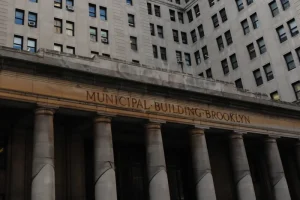
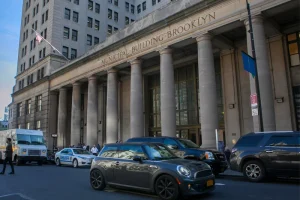
The Brooklyn Municipal Building is located in the southwestern section of the borough, near the intersection of Joralemon and Judicial Streets. It is the centre of many municipal departments, including the City Clerk’s office, where couples apply for and get their marriage certificates.

It is the home of multiple government institutions, including those dealing with construction, rehabilitation, finances, and pollution prevention. The building was initially constructed in the 1930s and, in 2020, renamed in memory of the late Justice Ruth Bader Ginsburg, a Brooklyn native.

History of the Building

Brooklyn’s Justice Ruth Bader Ginsburg Municipal Building dates back to 1924 when it was first erected under a different name. The city’s marriage bureau and the ministries of inspections, corrections, the treasury, disaster risk reduction and management are all headquartered here.

Located at 210 Joralemon Street, its design was the work of McKenzie, Voorhees & Gmelin and cost about $6 million. The Federal District Council authorized the exterior renovation and extensive commercial advertising in July 2012. All four stories and two basement levels were renovated in the same year.

On March 15, 2021, the facility in Brooklyn was officially named after Ruth Bader Ginsburg, a judge at the US Supreme Court. Many influential New Yorkers, including Ruth Bader Ginsburg’s family and Bill de Blasio, were present for the occasion.

In a statement to the city council dated September 20, 2018, Borough President Adams originally proposed the name change by highlighting Ginsburg’s ties to the area. The event to legally title the building took place on March 15, 2021, and was attended by the mayor of New York City.

brooklyn municipal building
brooklyn municipal building 3

Building Renovations

The Brooklyn Municipal Building was initially known as "210 Joralemon Street." It has, since its construction, remained a prominent landmark.

To preserve the structure’s structural integrity and reverse the signs of age damage, the Landmarks Preservation Commission approved the renovation of selected stories of the Brooklyn Municipal Building in 2012. The renovation plan also included designs to add commercial signage. These renovations ended in 2016 and saw much-needed repairs and improvements on the building’s first two floors and the two cellars.

Some interesting requirements were set forth by the preservation commission members explicitly demanding the exclusion of any blade signs and garish printing on any awnings attached to the structure. There were also specific requests to stick to muted color schemes, remaining true to the original design and the age of the building itself.

The final restoration program was based on a comprehensive investigation, design, and construction administration provided by Super Structures, an engineering and architecture services firm specializing in exterior restorations.

The Brooklyn Municipal Building underwent improvements to its facades and setbacks, including pointing, glass, and glazing work; coating structural steel; and repairing limestone masonry cladding that was broken and cracked. All renovations were carried out following Local Law 11 specifications and breathed new life into the classic facade of the building.

Today, the former Brooklyn Municipal Building is a testament to old-world design and engineering.