An Overview of Tankless Water Heating Systems
Tankless water heating systems provide hot water instantly, unlike traditional storage tanks. They are designed to save space, fitting neatly into smaller areas. Bosch offers a range of models, including natural gas and electric options, to meet various household needs.
Energy efficiency is a key benefit of these systems. They heat water only when needed, reducing standby energy loss. This makes them an eco-friendly choice for those looking to cut utility costs and environmental impact.
How Tankless Technology Works
When a faucet is turned on, a burner or heating element warms the water immediately. This ensures a continuous flow of hot water without the need to wait for a tank to refill. It also helps in reducing energy waste and maintaining consistent comfort levels.
The Difference Between Tank and Tankless
Traditional tank heaters continuously heat stored water, using energy all day. In contrast, tankless heaters only activate when hot water is needed. The table below outlines the main differences:
Feature | Tank Heater | Tankless Heater |
Heating Method | Continuous heating of stored supply | Heats water on demand |
Space Needed | Larger footprint | Compact setup |
Energy Usage | Higher standby energy loss | Reduced consumption |
Understanding Bosch’s Approach to Efficiency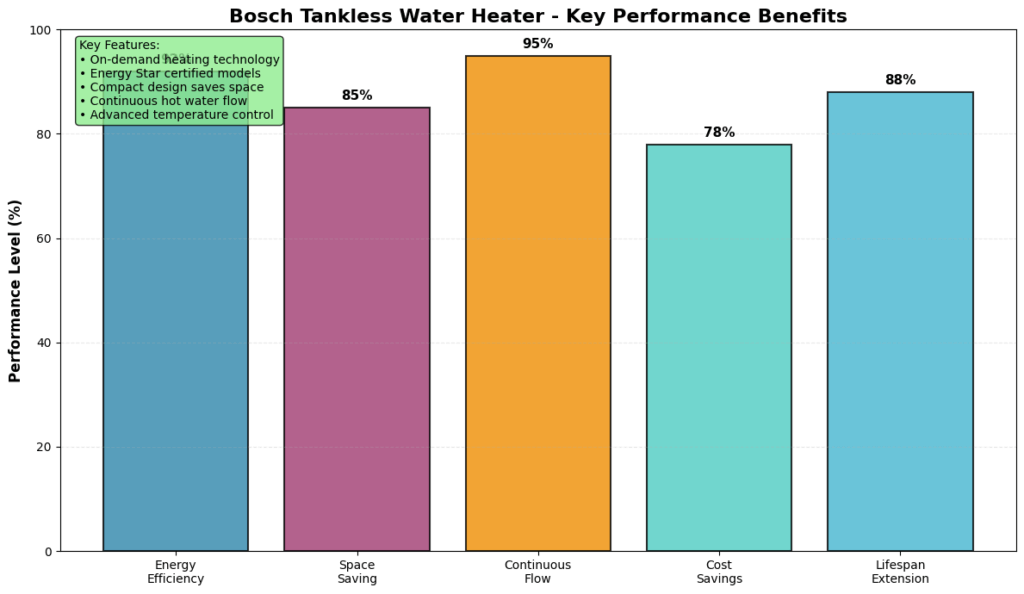
Bosch dedicates substantial resources to research, aiming to enhance energy efficiency, flow management, and user interface. Each Bosch on-demand water heater is designed to maximize warmth output while minimizing waste. These units often incorporate condensing technology and hold Energy Star certifications, leading to reduced utility expenses. Bosch’s engineering team focuses on optimizing temperature control, ensuring water remains consistently at the desired temperature.
Smart sensors and advanced combustion systems are integral in maintaining consistent performance. Bosch’s meticulous attention to detail allows their on-demand water heaters to quickly adjust to changing demands without increasing energy usage. The use of durable materials and efficient interior designs extends the lifespan of each model. This holistic approach to efficiency enables Bosch’s models to seamlessly adapt to various household sizes and usage patterns.
Feature | Function | Efficiency Gain |
Condensing Technology | Reduces heat loss | Improved fuel economy |
Energy Star Rating | Meets strict guidelines | Lower monthly bills |
Smart Sensors | Monitor temperature flow | Consistent hot water |
Key Features to Consider
Tankless water heating units offer design and control elements that enhance daily routines. When selecting the best tankless water heater for your home, assess if it fits  your existing space. Also, ensure it supports reliable hot water flow throughout the day.
Compact Design Features
Models with a streamlined frame save floor area, providing neat installation options. Some products feature top-mounted connections. These simplify the transition from older, bulky storage tanks and reduce renovation needs.
Advanced Temperature Control
Smart settings maintain water temperatures steady during showers, laundry, or dishwashing. Bosch integrates flow sensors that adjust heat output as usage changes. This design ensures consistent warmth, meeting various household demands with minimal fluctuations.
Those looking for the best tankless water heater for their home often find that adaptable control systems offer both comfort and efficiency. Real-time adjustments help preserve energy and enhance user satisfaction.
Feature | Benefit | Impact on Home |
Compact Build | Saves Space | Less clutter in utility areas |
Top-Mounted Connections | Simplified Upgrades | Swift conversion from older units |
Smart Flow Sensors | Stable Temperatures | Fewer hot water fluctuations |
Selecting the Right Model for Your Home
Choosing the right water heating system is about matching capacity to everyday routines. Bosch offers diverse options for different household sizes and habits. This ensures a steady stream of warm water without unnecessary strain on resources.
Sizing for Household Needs
An honest assessment of hot water usage is key to finding the proper heater capacity. The busiest hour might involve back-to-back showers, a running dishwasher, and a quick load of laundry. Calculating these demands reveals whether a gas or electric tankless water heater suits the situation. Flow rate and temperature rise are the guiding metrics for continuous, comfortable water service.
Key Factors in Model Selection
Realistic budgeting and home layout are critical. A smaller residence with fewer fixtures often thrives with an electric tankless water heater. On the other hand, a large home with numerous appliances may benefit from a higher-capacity unit. Checking product specifications ensures each model meets peak demand without overspending. Bosch offers solutions that balance performance, efficiency, and operating costs for various living conditions.
Installation Requirements in the United States
Homeowners looking into natural gas tankless water heaters find that state and local laws dictate the installation. The path for venting can differ, so it’s essential to check the building’s layout and current setup. Before making any significant changes, it’s wise to ensure the gas line can handle the load to maintain efficiency.
Following both national and local standards is key to safety and avoiding delays. Bosch’s designs might make integration easier, but some buildings require more preparation. Planning early involves getting cost estimates, scheduling, and checking for necessary permits.
- Secure proper venting routes
- Verify gas line compatibility
- Confirm building code regulations in your area
- Hire a licensed technician when needed
Starting with the right steps makes installing a natural gas tankless water heater smoother. This approach boosts confidence and can reduce the overall time needed. It ensures households can enjoy hot water on demand with minimal hassle.
Maintenance Tips for Prolonged Lifespan
Regular maintenance is key to keeping any system in top shape. Simple actions can safeguard components and extend the life of a Bosch on-demand water heater. This approach minimizes downtime and ensures consistent performance.
Periodic Cleaning Schedules
Mineral buildup in heat exchangers can reduce efficiency. Flushing lines once or twice a year can remove stubborn deposits. This often leads to stable water temperatures and strong flow. For more on recommended intervals, check out this guide. It’s also wise to consider local water quality reports when choosing cleaning solutions.
Monitoring Performance Indicators
An error code or unexpected temperature drop may indicate a problem. Regularly checking digital readouts helps catch minor issues early. Monitoring flow rate and unusual sounds can prevent costly breakdowns. Don’t forget to check freeze protection features if temperatures drop below freezing.
Common Misconceptions Debunked
Many think tankless units can’t handle a busy household’s needs. Bosch’s larger capacity models prove this wrong. They show how advanced engineering can meet heavy usage with ease. This ensures families have consistent hot water, even during back-to-back showers or dishwashing.
Some believe upkeep is complicated. But, most units only need simple cleaning or occasional descaling. This clears up the myth that specialized expertise is needed for long-term service.
By dispelling these myths, readers learn about the efficiency and reliability of the best tankless water heater for home. Each Bosch unit showcases how sound design and regular maintenance sustain peak performance. Misunderstandings quickly disappear when facts show that tankless technology is ready for modern households seeking lasting comfort.
Energy-Saving Benefits You Can Expect
Homes with on-demand heating systems use less energy by heating water only when needed. This method minimizes standby losses, making living more sustainable. Many families see a significant decrease in utility bills after switching to modern units.
Reducing Monthly Bills
On-demand technology reduces the need to constantly heat stored water, lowering electricity or gas use. This change can lead to substantial savings across the country. High-efficiency systems adjust to demand changes, keeping costs stable throughout the year. Every heated water drop is used, avoiding unnecessary energy expenses.
Optimizing Water Usage
Models like electric tankless water heaters promote mindful water use with precise temperature control and quick delivery. This reduces wasted gallons while waiting for hot water. It offers a balance of convenience and conservation, appealing to homeowners looking for efficient solutions.
What Users Are Saying About Bosch
Users praise the Bosch on-demand water heaters for their consistent performance and sleek designs. They note the heaters’ ability to heat water quickly and maintain a steady flow, meeting the needs of many American homes. The dependable operation makes these heaters a solid choice for families seeking continuous hot water.
Some users express concerns about the complexity of installation, more so for gas models. The initial cost can be a barrier for those with limited budgets. Yet, the extended warranty offered by Bosch provides reassurance. Regular maintenance is also highlighted as essential, as sediment buildup in hard water areas can decrease efficiency over time.
Reliability data indicates that models such as the Bosch 940 ES and Therm 520 HN maintain consistent temperatures without sudden changes. These heaters strike a balance between adaptability and energy savings. Customers emphasize the need to choose a model that aligns with their household’s specific requirements.
- Long-term efficiency enhances overall savings
- Routine maintenance prevents premature issues
- Customer service quality varies by region
Model | Flow Rate (GPM) | Efficiency Rating (EF) | Typical Warranty (Years) | Common Feedback |
Bosch 940 ES | 9.4 | Up to 0.92 | 15 | Steady temp, higher cost |
Bosch Therm 520 HN | 5.3 | Up to 0.82 | 12 | Reliable flow, needs regular checks |
Bosch Tronic 3000 US12 | Varies | Up to 0.98 | 5 | Easy install, some leaks reported |
Comparing Bosch to Other Tankless Brands
Homeowners often wonder if Bosch is the top choice for tankless water heaters. They look at performance, durability, and energy savings. Bosch is known for reliable heating and support, but it faces competition from other well-known brands.
Key Market Competitors
Several manufacturers offer alternatives in heating technology. They aim to provide efficient setup, easy controls, and strong warranties. Here are a few leading competitors:
- Rinnai – Focus on versatile product lines
- Rheem – Known for broad distribution network
- Navien – Favors high-efficiency condensing units
Finding the Right Balance of Price and Features
Choosing the right tankless water heater involves considering cost, lifespan, and maintenance. Bosch’s strong warranties are a big plus for many families.
Brand | Approx. Price Range | Warranty Coverage |
Bosch | $500 – $1200 | Up to 15 years |
Rinnai | $400 – $1300 | Up to 10 years |
Rheem | $450 – $1100 | Up to 12 years |
Navien | $500 – $1400 | Up to 15 years |
Why Choose the bosch tankless hot water heater
The bosch tankless hot water heater is renowned for its consistent performance and cutting-edge design. It delivers hot water instantly, catering perfectly to the needs of active families. This makes it a reliable choice for those seeking a hassle-free solution.
Brand Reputation
Bosch has built a solid reputation over the years by prioritizing quality and customer satisfaction. This history of excellence gives customers confidence in the durability of their products, including the Bosch on-demand water heater.
Warranty and Support
A robust warranty covers essential parts, ensuring long-term peace of mind. The support team is always ready to address technical queries and guide users through maintenance. This commitment to customer support highlights Bosch’s dedication to ensuring a seamless user experience.
Support Feature | Description | Benefit for Users |
Extended Coverage | Longer warranty periods on major components | Reduces worries about unforeseen repairs |
Return & Exchange Policy | Favorable terms for replacements | Protects initial investment |
Expert Assistance | Knowledgeable staff available for product support | Promotes confidence in continuing performance |
Weighing Upfront Costs vs. Long-Term Value
Homeowners often focus on the initial cost when selecting a water heater. A natural gas tankless water heater or an electric tankless water heater might seem pricier than traditional models. Yet, the long-term savings and efficiency can make up for the higher upfront cost.
Investing in on-demand systems can lead to lower energy bills every month. This ongoing savings helps offset the initial investment. The longer lifespan of tankless units also adds to the peace of mind, making them a wise choice for those looking to avoid frequent replacements.
Choosing the right brand is key to maximizing return on investment. Bosch is renowned for its reliability and consistent performance under different conditions. Many see this combination of efficiency and quality as a way to recoup the initial cost. Considering these factors can lead to greater long-term value and satisfaction with the chosen technology.
Making the Final Decision on a Bosch Unit
Choosing a new tankless hot water heater involves several factors. These include climate, budget, and adherence to installation codes. Bosch caters to different needs with its diverse product lines. For instance, Greentherm is ideal for larger households, while Tronic suits smaller spaces.
These systems are known for their reliable performance and advanced temperature control. This ensures a consistent water flow. Many see Bosch as a top contender for the best tankless water heater for home. This is due to its proven technology and strong support.
Before making a final decision, it’s important to consider local climate demands. In colder climates, a higher output range is often necessary to maintain hot water comfort. Bosch systems are designed for energy efficiency and long-term value.
This focus on efficiency makes Bosch units a solid choice for various living conditions. It offers peace of mind and assurance for homeowners.