
Best whole house water softener 2025
- Published:
- Updated: January 17, 2025
Listen to this article
Summary
Selecting the best whole house water softener in 2025 requires careful consideration of factors like regeneration process, system capacity, environmental impact, and integration with existing plumbing. Top systems such as the Futurus AquaMax Pro, HydroSoft Elite 3000, and PureFlow Harmony Plus offer advanced technology, efficiency, and eco-friendly features to meet diverse household needs.
Key Points:
- Futurus AquaMax Pro: Features smart monitoring, demand-initiated regeneration, and advanced ion exchange technology for efficient water softening.
- HydroSoft Elite 3000: Known for its brine recovery system, it reduces waste and offers remote monitoring for convenience and sustainability.
- PureFlow Harmony Plus: A dual-tank system ideal for high-demand households, ensuring continuous softened water even during regeneration, with an eco-conscious design.
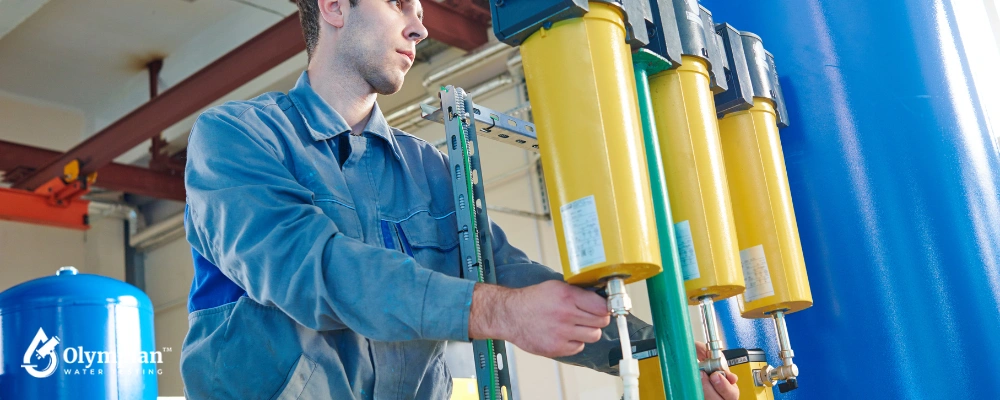
Water softening is a process that involves the removal of calcium, magnesium, and other minerals that contribute to water hardness. Hard water, while not harmful to health, can lead to a myriad of issues such as scale buildup in pipes, reduced efficiency of household appliances, and unsatisfactory cleaning results. The primary mechanism of water softening involves ion exchange, where hardness ions are replaced with sodium or potassium ions, resulting in softened water.
The Chemistry of Hard Water
Hard water is rich in calcium and magnesium ions. These ions interact with soaps and detergents, reducing their effectiveness and leaving behind residues. Understanding this chemical interaction is crucial as it underscores the necessity for water softening solutions, particularly in regions with high mineral content in the water supply.
Impact on Household Systems
Hard water can cause scale buildup in plumbing and appliances, leading to costly repairs and replacements. The scale reduces the efficiency of heating elements, increasing energy consumption and utility bills. Recognizing these impacts helps in appreciating the value water softeners bring to maintaining a home’s infrastructure.
Benefits of Softened Water
Softened water offers numerous benefits, including improved cleaning efficiency and longer-lasting appliances. Clothes and dishes are cleaned more effectively, and personal care products lather better, enhancing their usability. The overall experience of using softened water contributes to a more comfortable and efficient household environment.
The Importance of Water Softening
The necessity for water softening in households arises from both practical and economic perspectives. Hard water can significantly impact the lifespan and efficiency of appliances such as water heaters, dishwashers, and washing machines. By preventing scale accumulation, water softeners enhance appliance longevity and reduce energy consumption. Furthermore, softened water contributes to improved cleaning effectiveness, ensuring that soaps and detergents function optimally.
Economic Benefits
Investing in a water softener system can lead to significant cost savings over time. By reducing the wear and tear on appliances, homeowners save on maintenance and replacement costs. Additionally, the improved efficiency of appliances leads to lower energy bills, offering long-term financial benefits.
Environmental Considerations
Water softeners not only benefit households economically but also have environmental advantages. By improving the efficiency of appliances, less energy is consumed, contributing to a reduction in carbon footprint. Furthermore, modern water softeners are designed to minimize salt and water usage during the regeneration process, making them more environmentally friendly.
Health and Lifestyle Improvements
Softened water enhances the quality of life by improving the feel and appearance of skin and hair. With fewer minerals in the water, there’s less irritation and dryness. This improvement, coupled with the enhanced effectiveness of soaps and shampoos, offers a more pleasant bathing and cleaning experience.
Criteria for Selecting the Best Whole House Water Softener
When evaluating the best whole house water softener systems for 2025, several criteria must be considered to ensure an informed decision:
1. Regeneration Process

The regeneration process is a critical aspect of water softeners, determining the system’s efficiency and longevity. Systems may utilize either time-based or demand-initiated regeneration. Demand-initiated systems are preferable as they regenerate based on actual water usage, optimizing salt and water consumption.
Time-Based vs. Demand-Initiated Systems
Time-based regeneration occurs at preset intervals, which can lead to inefficient use of salt and water if the intervals do not align with actual water usage. In contrast, demand-initiated systems monitor water usage and initiate regeneration only when necessary, leading to more efficient operation and reduced waste.
Brine Tank Management
Proper management of the brine tank is essential for effective regeneration. Ensuring the correct concentration of salt in the brine solution is crucial for the successful removal of hardness ions from the resin. Regular monitoring and maintenance of the brine tank ensure the system operates at peak performance.
Advanced Regeneration Technologies
Emerging technologies in water softening focus on optimizing the regeneration process. Some systems now incorporate AI and smart sensors to predict water usage patterns and initiate regeneration at the most efficient times. This innovation helps in further minimizing resource consumption and enhancing system longevity.
2. Capacity and Size
The capacity of a water softener is determined by the amount of hardness it can remove before regeneration is required. It is essential to select a system with a capacity suited to the household’s water usage and hardness levels, ensuring uninterrupted soft water supply.
Calculating Household Water Needs
Understanding your household’s water usage is key to selecting an appropriately sized water softener. Consider factors such as the number of occupants, water-using appliances, and peak usage times to accurately assess your needs. This calculation helps avoid undersized systems that may require frequent regeneration or oversized systems that waste resources.
Space Considerations
The physical size of a water softener is another critical factor, especially for homes with limited space. Compact systems are available for smaller households, while larger systems can accommodate more significant water demands. Ensuring the chosen system fits comfortably within the designated space is crucial for smooth installation and operation.
Future-Proofing Your Investment
Choosing a water softener with a capacity slightly above current needs can be a strategic decision, especially for growing families or households expecting increased water usage. This foresight ensures the system remains effective as water demands evolve, preventing the need for premature replacement or upgrades.
3. Efficiency and Environmental Impact
Efficiency pertains to the amount of salt and water used during regeneration. Modern systems are designed to minimize environmental impact by reducing waste. Look for certifications such as NSF/ANSI 44 to ensure compliance with efficiency standards.
Water and Salt Usage
Efficient water softeners are designed to use the minimal amount of salt and water necessary for regeneration. Systems with advanced resin technology and optimized flow patterns contribute to reduced resource consumption, making them more sustainable choices for environmentally conscious homeowners.
Certification and Standards
Certifications such as NSF/ANSI 44 provide assurance that a water softener meets industry standards for efficiency and performance. These certifications evaluate factors like water and salt efficiency, ensuring the system operates within established parameters for minimal environmental impact.
Eco-Friendly Innovations
The water softening industry is increasingly focusing on eco-friendly innovations. From using biodegradable materials in system components to developing recycling programs for old units, manufacturers are taking steps to reduce the environmental footprint of water softeners, aligning with global sustainability goals.
4. Integration and Compatibility
A whole house water softener should seamlessly integrate with the existing plumbing system. Compatibility with other water treatment systems, such as filtration units, is also crucial for comprehensive water quality management.
Plumbing System Compatibility
Before installing a water softener, it’s essential to ensure compatibility with your home’s plumbing system. Consider factors such as pipe size and material, as well as the location of the main water line, to ensure a smooth integration process that doesn’t disrupt water flow.
Integration with Filtration Systems
For households requiring additional water treatment, compatibility with filtration systems is vital. A well-integrated system can provide comprehensive water quality management, addressing issues like chlorine taste, sediment, and other contaminants alongside hardness, for a more holistic solution.
Smart Home Integration
Modern water softeners increasingly offer smart home integration capabilities. These systems can connect to home automation platforms, providing users with remote monitoring and control features. This connectivity allows for real-time performance data and alerts, enhancing user convenience and system management.
Top Whole House Water Softener Systems in 2025
1. Futurus AquaMax Pro
The Futurus AquaMax Pro stands out as a leader in water softening technology, incorporating advanced ion exchange mechanisms with smart monitoring systems. Its demand-initiated regeneration ensures efficient operation, while its compact design allows for easy installation in various home settings.
Advanced Ion Exchange Technology
Futurus AquaMax Pro employs cutting-edge ion exchange technology that optimizes the removal of hardness ions. Its resin beads are engineered for higher capacity and efficiency, ensuring prolonged intervals between regenerations and reduced resource usage.
Smart Monitoring Features
The inclusion of smart monitoring features allows homeowners to track system performance and water usage in real-time. This data-driven approach facilitates timely maintenance, enhances operational efficiency, and provides peace of mind by alerting users to potential issues before they escalate.
Installation and User Experience
Designed with user convenience in mind, the Futurus AquaMax Pro offers straightforward installation procedures and a user-friendly interface. Its sleek design fits seamlessly into various home environments, making it an attractive choice for those seeking both functionality and aesthetic appeal.
2. HydroSoft Elite 3000
HydroSoft Elite 3000 is renowned for its high efficiency and low environmental impact. With an innovative brine recovery system, it significantly reduces salt and water usage. Its user-friendly interface and remote monitoring capabilities make it a convenient choice for modern households.
Brine Recovery System
The HydroSoft Elite 3000 features a state-of-the-art brine recovery system that captures and reuses brine, drastically cutting down on salt and water waste. This eco-friendly approach not only reduces operating costs but also aligns with sustainable practices.
Remote Monitoring and Control
Equipped with remote monitoring capabilities, the HydroSoft Elite 3000 allows users to control and adjust settings from their smartphones or tablets. This connectivity ensures that homeowners can manage their water softener with ease, even when away from home, enhancing overall convenience.
User-Centric Design
The HydroSoft Elite 3000 prioritizes user experience with its intuitive interface and clear display. Homeowners can easily navigate settings, access performance data, and receive alerts, making system management straightforward and accessible to all users.
3. PureFlow Harmony Plus
PureFlow Harmony Plus offers a balanced approach to water softening, combining robust performance with eco-friendly features. Its dual-tank design provides continuous soft water, even during regeneration cycles, making it ideal for larger households or those with high water demand.
Dual-Tank System
The dual-tank design of the PureFlow Harmony Plus ensures a continuous supply of softened water, even during regeneration. This feature is particularly beneficial for large families or households with unpredictable water usage patterns, as it guarantees uninterrupted access to soft water.
Eco-Conscious Design
PureFlow Harmony Plus is designed with sustainability in mind, utilizing materials and processes that minimize environmental impact. Its efficient operation reduces water and salt consumption, while the system’s components are crafted from recyclable materials, supporting eco-friendly practices.
Ideal for High-Demand Households
With its robust performance and continuous water supply, PureFlow Harmony Plus is tailored to meet the needs of high-demand households. Whether for large families or homes with multiple water-using appliances, it provides reliable and consistent water softening without compromise.
The Science Behind Water Softening Systems
Ion Exchange Process
At the heart of water softening lies the ion exchange process. This chemical procedure involves exchanging hardness ions (calcium and magnesium) with non-hardness ions (sodium or potassium) using a resin bed. The resin beads, covered with sodium ions, attract and hold the hardness ions as water passes through, effectively softening the water.
Resin Bead Functionality
The resin beads play a crucial role in the ion exchange process. These tiny spheres are coated with sodium ions, which are exchanged with calcium and magnesium ions from the water. The efficiency of the resin beads determines the effectiveness of the softening process, making their quality a key consideration in system selection.
Sodium vs. Potassium Exchange
While sodium is commonly used in ion exchange, potassium is an alternative for those concerned about sodium intake. Potassium-based systems offer similar softening benefits without adding sodium to the water, catering to households with specific dietary or health considerations.
Chemical Reactions and Efficiency
The ion exchange process is a dynamic chemical reaction that must be carefully managed to ensure efficiency. Factors such as flow rate, temperature, and resin saturation levels influence the reaction’s effectiveness, highlighting the importance of selecting a well-engineered system for optimal results.
Regeneration Cycle
Over time, the resin beads become saturated with hardness ions, necessitating regeneration. During regeneration, a brine solution flushes the resin bed, displacing the accumulated calcium and magnesium ions and replenishing the sodium ions. The cycle concludes with a rinse phase, readying the system for continued operation.
Stages of Regeneration
The regeneration cycle consists of multiple stages, including backwashing, brine draw, slow rinse, and fast rinse. Each stage is critical to restoring the resin beads’ capacity and ensuring the system is prepared for the next cycle of water softening. Understanding these stages helps in appreciating the complexity of the system’s operation.
Importance of Proper Regeneration
Proper regeneration is vital for maintaining the efficiency and longevity of a water softener. Incomplete or improper regeneration can lead to reduced softening capacity and increased wear on the system. Regular monitoring and maintenance ensure the regeneration process occurs correctly and efficiently.
Innovations in Regeneration
Recent advancements in regeneration technology focus on optimizing resource use and reducing waste. Innovations such as variable brine concentration and adaptive regeneration cycles contribute to more sustainable practices, enhancing the overall efficiency of water softening systems.
Practical Considerations and Maintenance
Regular Maintenance
To ensure optimal performance, regular maintenance of a water softener is essential. This includes monitoring salt levels, cleaning the brine tank, and periodically inspecting the system for any issues. Most modern systems incorporate alerts and reminders to assist homeowners in maintaining their units effectively.
Salt Level Monitoring
Maintaining the correct salt level in the brine tank is crucial for effective regeneration. Regularly checking and replenishing salt ensures the system operates at peak performance and prevents interruptions in the softening process.
System Inspection and Troubleshooting
Periodic inspection of the water softener helps identify potential issues before they become significant problems. Checking for leaks, ensuring proper valve function, and examining the resin bed are part of routine maintenance that can extend the system’s lifespan and efficiency.
Automated Maintenance Alerts
Many modern water softeners come equipped with automated alerts that notify homeowners of maintenance needs. These alerts help in timely intervention, ensuring the system continues to function optimally without the need for constant manual oversight.
Water Testing and Monitoring
Before and after installing a water softener, conducting comprehensive tap water testing is advisable. This ensures accurate hardness measurement and verifies the effectiveness of the softening process. Continuous monitoring can help in adjusting the system for changes in water quality or usage patterns.
Pre-Installation Water Analysis
Conducting a thorough water analysis before installing a water softener provides a baseline for water hardness and other contaminants. This information is crucial for selecting the appropriate system and setting the correct regeneration parameters.
Post-Installation Effectiveness Verification
After installation, verifying the water softener’s effectiveness ensures that the system is functioning as intended. Regular testing helps confirm that hardness levels are within desired ranges, providing assurance of the system’s performance.
Adjusting for Changing Conditions
Water quality and usage patterns can change over time, necessitating adjustments to the water softener’s settings. Continuous monitoring and periodic testing allow for these adjustments, ensuring the system remains effective and efficient in varying conditions.
Conclusion
Selecting the best whole house water softener system for 2025 involves a nuanced understanding of both technical specifications and household needs. With advancements in technology, today’s systems offer unparalleled efficiency, environmental sustainability, and integration capabilities. By considering factors such as regeneration process, capacity, and environmental impact, homeowners can make informed decisions that enhance their water quality and protect their home investments.
In conclusion, water softening represents a critical component of modern water treatment systems, ensuring not only the longevity of household appliances but also the overall quality of life. As we move forward, continued innovation and commitment to sustainability will undoubtedly shape the future of water softening technology. Through informed selection and proper maintenance, homeowners can enjoy the myriad benefits of softened water, from improved appliance efficiency to enhanced personal care and cleaning experiences.
Share this on social media:
Facebook
Twitter
LinkedIn

Related Posts