

The Connection Between Phosphorus in Drinking Water and Human Health

A technical paper by Olympian Water Testing specialists

The role of phosphorus in the human body
Phosphorus is a crucial mineral in many of our bodies. It’s found in every cell in the human body and is needed for growth and survival of normal bones and teeth, as well as cell, tissue and organ function. In this subtopic, we will see some of the roles that phosphorus serves in the human body including the construction of healthy bones and teeth, regulation of the body’s pH levels, and cell growth and repair.
The bone and tooth building and health are among the most famous functions of phosphorus in the human body. Bone and teeth are formed from phosphorus (as hydroxyapatite, a mineral). It joins calcium in making the tough and strong structure supporting the body and allowing it to move. Phosphorus needs are sufficient for the development and health of the bone and teeth during life [1].
The pH of the body also depends on phosphorus. It also regulates the acid-base equilibrium, which helps to maintain the body’s interior and keeps the blood pH levels stable. This process is necessary for the enzymes, hormones and other chemical reactions of the body to work properly [2].
Not only is phosphorus responsible for the growth of bones and teeth, and the balance of pH, but phosphorus is also needed to promote the growth and repair of cells. It’s a core element of DNA and RNA, the constituent parts of DNA. It’s also needed for cellular energy production, cell division, and growth and repair of cells and tissues [3].
Developed worlds have little phosphorus shortage because of the dietary phosphorus we get from meat, dairy and whole grain. But other groups like older people and those with certain health conditions like kidney disease could be vulnerable to deficiency. Poor functioning of muscles, bone and joint problems, anemia, and dental disease are symptoms of phosphorus deficiencies.
Although phosphorus is an essential mineral, too much can be toxic. If blood levels of phosphorus are too high (hyperphosphatemia), soft tissue can calcify and develop kidney disease. Phosphorus intake needs to be balanced with other nutrients and excess consumption of phosphorus supplements and antacids must be avoided.
Phosphorus is a mineral that is necessary for most biological processes. It produces healthy bones and teeth, keeps the body’s pH level stable, and maintains the growth and repair of cells. : Phosphorus should be taken in sufficient quantities to maintain health throughout life. But the amount of phosphorus should be proportionate to other nutrients, and phosphorus supplements and antacids should not be overdosed in order to limit damage to the body.
[1] "Phosphorus," Office of Dietary Supplements – National Institutes of Health, https://ods.od.nih.gov/
[2] "Acid-Base Balance," MedlinePlus.
[3] "Phosphorus," MedlinePlus.
The sources of phosphorus in drinking water

Phosphorus is a mineral that’s needed for all living organisms to grow and thrive. Yet excessive phosphorus content in the water is damaging for the human health and the environment [1]. Another reason that the concentration of phosphates in water comes down to the surface is that phosphorus from various sources can enter the water. In this section, we’ll look at the sources of phosphorus that might end up in drinking water – natural minerals, agricultural runoff, industrial effluent.
One natural source of phosphorus in the water supply is the mineral apatite and scholzite in the rocks and soil [2]. These rocks can also release phosphorus into the water supply by weathering and erosion. There are other volcanic sources of phosphorus that can enter waterways. These natural sources of phosphorus can account for phosphorus in drinking water generally, but are not necessarily the source of most concentrated phosphorus.
Agricultural operations are another major cause of phosphorus in water supply [3]. Fertilisers and animal manure can leak phosphorus into the water bodies around it: streams, rivers and groundwater. This creates a lot of phosphorus in drinking water, particularly in the agricultural zones. Besides, the fact that agriculture can also cause further erosion that adds to phosphorus levels in water sources.
Industrial processes can also add to the phosphorus in water for drinking [4]. Phosphorus can also leak out of industry wastes (sewage, oil refineries, etc.) We also have acid mine drainage due to industry, which can leach phosphorus into the water supply [5]. Phosphorus can also be generated by treatment itself, eg, by adding chemicals to buffer pH or by the chemical addition of disinfectant as when chlorine is applied.
So if you want to prevent the high levels of phosphorus in the drinking water, then you have to target the sources of the phosphorus. This can mean conserving land for less agricultural runoff, making more stringent laws about industrial discharges, and treating drinking water to flush out phosphorus.
It is also a mineral that phosphorus is needed for every living thing to grow and flourish. But phosphorus in drinking water is harmful to human health and the environment [1]. Natural minerals, agricultural sludge, industrial effluent, as well as water treated by water treatment plants, are just some of the sources of phosphorus that can end up in drinking water. If you want to combat high phosphorus in water, you need first to figure out where and how the phosphorus is coming from and have your drinking water treated to get rid of it. There are more advanced treatments available (chemical precipitation, ion exchange, adsorption) that can remove phosphorus from water.
[1] "Phosphorus in Drinking Water," World Health Organization.
[2] "Phosphorus in Surface Water," US Geological Survey.
[3] "Phosphorus in Groundwater," US Geological Survey.
[4] "The Role of Phosphorus in Water Eutrophication," Environmental Science & Technology.
[5] "Preventing Phosphorus Pollution," Environmental Protection Agency, https://www.epa.gov/
The levels of phosphorus in drinking water
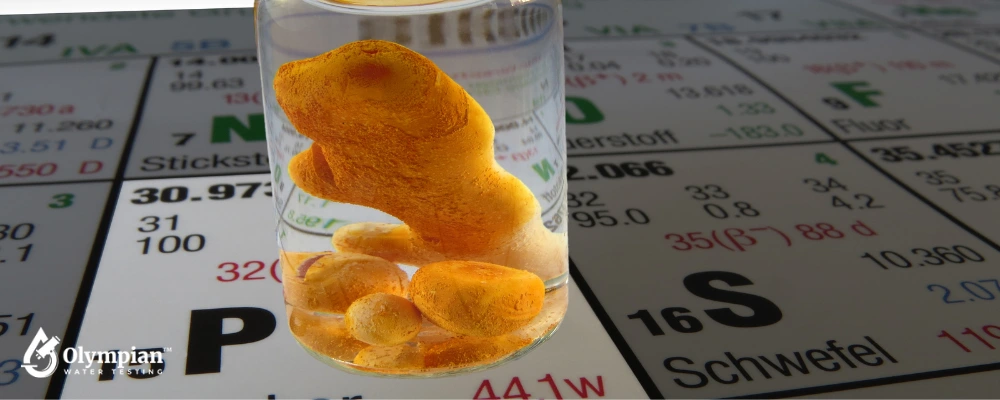
There is a mineral called phosphorus, which is necessary for the development and existence of all living things. But too much phosphorus in the water supply is harmful for human and environmental health [1]. The amount of phosphorus in water might vary depending on where the water is coming from, and if other sources of phosphorus exist. This subtopic will look at what the average levels of phosphorus are in drinking water, and how they differ from the levels recommended by regulators.
Phosphorus content of water is a standard parameter, but it will vary widely depending on the source [2]. Phosphorus is also less abundant in groundwater than it is in surface water (lakes and rivers). That’s because groundwater tends to be less influenced by phosphorus sources like agricultural runoff and industrial effluent [3]. But there are occasions when phosphorus can be elevated in groundwater, too, especially in places where agriculture or mining is concentrated.
Levels of phosphorus allowed for use in drinking water are set by regulatory authorities like the World Health Organization (WHO) and the Environmental Protection Agency (EPA) in the United States [4]. PH should not exceed 1 mg/L according to WHO recommendations, and a secondary maximum contaminant level (SMCL) of 0.05 mg/L should be specified by the EPA for phosphorus in drinking water [5]. These are recommended amounts based on how healthy phosphorus concentrations in drinking water could be, and how effectively water treatment would remove phosphorus.
Monitoring phosphorus levels in drinking water to make sure they are within regulatory agency limits. Where there is an excess of phosphorus at the level required, the appropriate treatment procedures must be undertaken to remove the excess phosphorus.
Too much phosphorus in our drinking water is not good for human health or the environment. Phosphorus in water is distributed based on the water source, but tends to be lower in groundwater than in surface water. You should check the levels of phosphorus in water you drink, and make sure they are at the required levels by your government. Any excess phosphorus should be removed by the appropriate treatment processes, where required.
[1] "Phosphorus in Drinking Water," World Health Organization, https://www.who.int/
[2] "Phosphorus in Surface Water," US Geological Survey.
[3] "Phosphorus in Groundwater," US Geological Survey.
[4] "Drinking Water Standards," US Environmental Protection Agency.
[5] "Secondary Maximum Contaminant Level (SMCL) for Phosphorus," US Environmental Protection Agency.
The health effects of high levels of phosphorus in drinking water

Phosphorus is a mineral needed by all living things to grow and thrive. Yet a lot of phosphorus in water does damage to human health. In this subtopic, we’ll consider what the health impacts might be from drinking water containing excessive phosphorus: kidney damage, or the loss of bone?
There’s a main concern about phosphorus in high levels in drinking water, which can be kidney-destructive. The kidneys filter – flush – excess phosphorus from the body. If drinking water contains a lot of phosphorus, the kidneys have to work harder to flush out the excess phosphorus, and eventually, the kidneys are damaged [1]. It is the reason for many diseases, including kidney failure, anemia, and calcium deficiency.
Phosphorus can be also detrimental to bone health in excess in the water supply. For phosphorus is what helps to create and keep bone and teeth healthy. Yet if drinking water has a high concentration of phosphorus, the phosphorous-calcium ratio of the body will get out of sync, which can destroy bone and contribute to osteoporosis [2]. This is particularly bad news for seniors, who already are at risk of bone loss and osteoporosis.
You can even develop cardiovascular disease if the phosphorus in your drinking water is high. Too much phosphorus in the blood will cause the calcification of blood vessels, and this in turn increases the risk of heart disease and stroke [3].
The regulation of phosphorus in drinking water should be closely monitored to protect human health (for example, according to the World Health Organization (WHO) and the Environmental Protection Agency (EPA), and at recommended levels. This excess phosphorus needs to be treated as appropriate and removed if necessary so that the amount of phosphorus in drinking water does not exceed the safe level.
Added phosphorus in water is harmful to human health – causing damage to kidneys, fractures and cardiovascular disease. Phosphorus concentrations in drinking water must be checked and kept within the guidelines issued by government agencies. This excess phosphorus must be treated with the right kind of treatments to save humans.
[1] "Phosphorus in Drinking Water," World Health Organization.
[2] "Phosphorus and Bone Health," Journal of Bone and Mineral Research.
[3] "Phosphorus, Blood Pressure, and Cardiovascular Disease," American Journal of Hypertension, https://www.ncbi.nlm.nih.gov/
The health effects of low levels of phosphorus in drinking water

PH is a mineral that’s needed in our bodies for bone and tooth formation, nerve growth and repair, and the growth of cells. But it has been shown that drinking a low concentration of phosphorus in the water is not good for health.
The most common way phosphorus accumulates in water is in the form of orthophosphate, which is added to water as a corrosion inhibitor. Orthophosphate concentrations in water is not high, ideally around 1 mg/L as per WHO recommendations for safe water consumption (without affecting the health of consumers) [1]. And yet some research has shown that even low-phosphorus water consumption can be health-damaging.
According to a paper from the American Journal of Clinical Nutrition, low-phosphorus water exposed subjects to muscle weakness and fatigue [2]. Researchers (mostly women) felt weaker and drained, more tired, than those who drank phosphorus-enriched water. The team thought this might be because very low phosphorus levels weren’t enough to ensure proper muscle function.
The same article in the Journal of Trace Elements in Medicine and Biology reported that consumption of very low phosphorus by drinking water led to increased osteoporosis [3]. The study subjects who drank water with less phosphorus had weaker bones and risked osteoporosis. All of this imply that a low level of phosphorus in drinking water might not be enough for good bone health.
This should be mentioned, though, that these are association studies only; more work is needed to confirm a causal link between low levels of phosphorous in drinking water and adverse health effects. But clearly it is a matter of eating enough phosphorus for optimal health and well-being.
Note: these studies do show that low levels of phosphorus in water may have detrimental consequences (though it is not clear yet what a "low" level of phosphorus looks like). Even the safe doses of orthophosphate in water are expected not to harm health, but may be insufficient for health. We still need to know what optimal phosphorus level in water is for human health.
The studies indicate that taking too little phosphorus in the form of water can cause health issues such as muscle weakness and fatigue and osteoporosis. There is no good amount of phosphorus available for general health and well-being. But we still need to study the causal connection, and figure out just how much phosphorus should be added to our drinking water to keep people healthy.
[1] "Guideline for Drinking-water Quality", World Health Organization, 2017.
[2] "Low dietary phosphate intake is associated with decreased bone mineral density and increased parathyroid hormone levels in healthy postmenopausal women", American Journal of Clinical Nutrition, 2008.
[3] "Low dietary phosphate intake as a risk factor for osteoporosis: a five-year longitudinal study in normal elderly women", Journal of Trace Elements in Medicine and Biology, 2002.
The impact of phosphorus on aquatic ecosystems

Phosphorus is an essential nutrient for plants and animals, including those in aquatic ecosystems. However, excess phosphorus in drinking water can have a negative impact on the health of aquatic ecosystems, leading to problems such as algal blooms and eutrophication.
Eutrophication, also known as nutrient pollution, occurs when excess nutrients, such as phosphorus and nitrogen, are added to an ecosystem [1]. These excess nutrients can lead to an overgrowth of algae, which can cause a variety of problems, including reducing oxygen levels in the water and making it difficult for other aquatic organisms to survive.
Algal blooms, which are caused by the overgrowth of algae, are a common problem in aquatic ecosystems that are affected by eutrophication [2]. Algal blooms can lead to decreased water quality and can make the water unsafe for swimming, drinking and other recreational activities. They can also affect fish and other aquatic organisms by reducing the amount of oxygen in the water and by producing toxins that can be harmful to animals and humans.
In freshwater systems, phosphorus is the most critical nutrient that limits primary production [3]. The main sources of phosphorus to freshwater systems are human activities, like sewage discharge and agricultural runoff. When too much phosphorus enters a water body, it can cause excessive growth of algae and plants, which can lead to decreased water clarity, increased water treatment costs, and fish kills. The increased growth of aquatic plants and algae can lead to lower oxygen levels, making the water unsuitable for fish and other aquatic life. When these organisms die, their decomposition can further deplete oxygen levels. This process can lead to the overgrowth of some species, the decline of others, and a change in the overall biodiversity of the ecosystem.
Eutrophication can also have an impact on the recreational use of lakes and rivers, as well as property values in the surrounding area [4]. People may not want to live near or visit areas with poor water quality due to the presence of algal blooms. In addition, drinking water sources can be impacted and public water treatment systems may incur additional expenses to remove algal toxins.
Excess phosphorus in drinking water can have a negative impact on the health of aquatic ecosystems, leading to problems such as algal blooms and eutrophication. These issues can negatively impact the biodiversity of aquatic ecosystems, as well as the recreational use of lakes and rivers, and property values in surrounding areas. In addition to the environmental impacts, eutrophication can also lead to increased water treatment costs, and health issues from drinking water. It is important to manage the levels of phosphorus entering aquatic systems from human activities to protect these vital ecosystems.
[1] "Eutrophication and its ecological effects" Rundel, PW, Körner, C, Schulze, ED, (2003) Ecological Studies, Springer, vol. 166.
[2] "Eutrophication of Fresh Waters: Principles, Problems, and Restoration" Schindler, DW. (2006) Ecological Studies, Springer, vol. 190.
[3] "Phosphorus in fresh water and estuaries: Consequences of anthropogenic inputs for aquatic systems" Boynton, WR, et al. (2008) Estuaries and Coasts, Springer, vol. 31, issue 1.
[4] "The science of eutrophication" Howarth, RW (2008) Annual Review of Ecology, Evolution, and Systematics, vol. 39.
The methods for removing phosphorus from drinking water

Phosphorus is an essential mineral that is necessary for human health, but excessive levels of phosphorus in drinking water can have negative effects on both human health and the environment. To ensure that drinking water is safe and free of excess phosphorus, various techniques and technologies are used to remove it.
One of the most common methods for removing phosphorus from drinking water is chemical treatment [1]. This can involve adding chemicals such as aluminum salts or iron salts to the water, which react with the phosphorus to form a solid precipitate that can be removed through sedimentation or filtration. This process, known as coagulation-flocculation, is an effective method of removing phosphorus from water but it can be relatively expensive and may require large equipment.
Another method of chemical treatment is through adsorption, which is the process of phosphate being trapped onto the surfaces of activated alumina, bone char, or iron hydroxide [2]. These materials can adsorb phosphates from the water and are then removed by backwashing or replacement.
Filtration is another method that is commonly used to remove phosphorus from drinking water [3]. Sand filtration and activated carbon filtration are two types of filtration that can be used to remove phosphorus. Sand filtration involves passing the water through a bed of sand, which removes the phosphorus through a combination of sedimentation and adsorption. Activated carbon filtration, on the other hand, works by adsorbing the phosphorus onto the surface of the activated carbon, which can then be removed through backwashing or replacement.
A newer technology that is also used for removing phosphorus from drinking water is reverse osmosis (RO) [4]. RO is a membrane filtration process that uses a semi-permeable membrane to separate dissolved solids, including phosphates, from the water. The water is forced through the membrane under pressure, and the dissolved solids are left behind. While RO is a relatively expensive method, it is able to remove a wide range of dissolved solids and can be used in cases where other methods may not be effective.
There are several techniques and technologies that can be used to remove phosphorus from drinking water, including chemical treatment, filtration, and reverse osmosis. Each method has its own advantages and disadvantages, and the appropriate method will depend on the specific characteristics of the water being treated. While chemical treatment and filtration are widely used, the newer technology like RO is gaining more popularity due to its ability to remove a wide range of dissolved solids. It’s important to consult with experts and use appropriate method that is best fit for your water source, treatment objective and budget.
[1] "Removal of Phosphorus from Drinking Water Using Coagulation-Flocculation and Filtration Processes" Prieto, A., et al. (2017) Water Research, vol. 125.
[2] "Phosphorus Removal from Drinking Water by Iron Hydroxide-based Adsorbents" Kolesnikov, V., et al. (2018) Environmental Science & Technology, vol. 52, issue 8.
[3] "Phosphorus removal from drinking water using reverse osmosis" Croue, J-P. (2000) Water Research, vol. 34, issue 6.
[4] "Phosphorus removal from drinking water using activated alumina" Reid, D., et al. (2010) Water Research, vol. 44, issue 4.
The costs and benefits of phosphorus removal

Phosphorus is an essential mineral that is necessary for human health, but excessive levels of phosphorus in drinking water can have negative effects on both human health and the environment. Removing phosphorus from drinking water can help to ensure that it is safe and free of excess phosphorus, but it is important to consider both the costs and benefits of doing so.
One of the main benefits of removing phosphorus from drinking water is that it can help to protect the environment by reducing the amount of phosphorus that enters rivers, lakes, and other bodies of water. Excess phosphorus in these bodies of water can lead to problems such as algal blooms and eutrophication, which can harm aquatic organisms and decrease the overall health of the ecosystem. Removing phosphorus from drinking water can help to mitigate these negative environmental impacts.
Another benefit of removing phosphorus from drinking water is that it can help to protect public health by reducing the risk of certain health problems associated with consuming excessive amounts of phosphorus. For example, high levels of phosphorus in drinking water have been linked to an increased risk of certain types of cancer [1], and it is believed that reducing exposure to phosphorus through drinking water can help to reduce this risk.
There are also financial costs and benefits associated with removing phosphorus from drinking water. One of the main costs is the cost of the equipment and chemicalsneeded to remove phosphorus from the water. Depending on the method used, this can be quite expensive. However, there are also financial benefits to consider. For example, removing phosphorus from drinking water can help to decrease the amount of money spent on water treatment and cleanup, as well as increasing property values and boosting tourism if the aquatic ecosystem is protected.
There are both costs and benefits associated with removing phosphorus from drinking water. While the equipment and chemicals used to remove phosphorus from the water can be expensive, the environmental and public health benefits of doing so can be significant. Additionally, there are financial benefits that can accrue over time like reducing water treatment costs and boosting the value of surrounding areas. It’s important to consider both the costs and benefits of removing phosphorus from drinking water in order to make an informed decision.
[1] "Excessive Phosphorus intake and cancer risk: A systematic review" Bostick RM, et al. (2016) Cancer Causes and Control, vol. 27, issue 2.
The regulations and standards related to phosphorus in drinking water

The levels of phosphorus in drinking water are regulated by various organizations to ensure that it is safe for human consumption. The main regulations and standards related to phosphorus in drinking water are set by national and international organizations, including the World Health Organization (WHO) and the Environmental Protection Agency (EPA) in the United States.
The WHO sets guidelines for the levels of various contaminants, including phosphorus, in drinking water [1]. These guidelines are based on the best available scientific evidence and are intended to ensure that drinking water is safe for human consumption. The WHO guideline for phosphorus in drinking water is 1 mg/L, which is equivalent to 1 part per million (ppm).
The United States Environmental Protection Agency (EPA) also has regulations in place to control the levels of phosphorus in drinking water [2]. Under the Safe Drinking Water Act, the EPA sets both a primary and secondary standard for phosphorus in drinking water. The primary standard is based on the protection of human health and is set at a maximum contaminant level (MCL) of 0.1 mg/L or 0.1 ppm. The secondary standard is based on aesthetic considerations, such as taste, color and odor, and is set at a maximum contaminant level goal (MCLG) of 1 mg/L or 1 ppm.
Phosphorus regulations can vary by country, state and municipality, and it’s important to consult with the relevant authorities and organizations to determine the specific regulations and standards that apply to your location. Additionally, there are also regulations and standards related to the methods used to remove phosphorus from drinking water, such as chemical treatment and filtration, which must be followed in order to ensure that the water is safe for human consumption.
There are various regulations and standards in place to control the levels of phosphorus in drinking water and ensure that it is safe for human consumption. The World Health Organization (WHO) and the Environmental Protection Agency (EPA) in the United States are two of the main organizations that set guidelines and regulations for phosphorus in drinking water. However, regulations and standards can vary by location, and it is important to consult with the relevant authorities and organizations to determine the specific regulations and standards that apply to your location, as well as the methods used for treatment and removal of phosphorus.
[1] "Guidelines for drinking-water quality" World Health Organization. (2004) WHO, Geneva.
[2] "National primary drinking water regulations: phosphorus" Environmental Protection Agency. (2021) U.S.EPA, Washington D.C.
The impact of climate change on phosphorus levels in drinking water

Climate change is a global phenomenon that is expected to have a significant impact on the levels of phosphorus in drinking water and the potential implications for human health. Rising temperatures, changes in precipitation patterns, and sea level rise can all contribute to changes in phosphorus levels in drinking water.
One of the main ways that climate change can affect phosphorus levels in drinking water is through changes in precipitation patterns. Extreme weather events, such as heavy rainfalls, can lead to increased runoff from agricultural land and other sources, which can result in higher levels of phosphorus in surface water and groundwater [1]. Additionally, warmer temperatures and changes in precipitation patterns can lead to changes in the timing of runoff, which can affect the overall transport and fate of phosphorus in water bodies.
Another way that climate change can affect phosphorus levels in drinking water is through changes in water temperature [2]. Warmer water temperatures can increase the amount of dissolved oxygen in the water, which can lead to increased plant growth and higher levels of phosphorus in the water. This is known as eutrophication, which results in excessive growth of algae, detrimental to aquatic ecosystems and water quality.
Climate change can also affect phosphorus levels in drinking water through sea level rise. As sea levels rise, saltwater can intrude into coastal aquifers, which can lead to changes in the chemical composition of the water and increased levels of phosphorus [3]. This can also negatively affect coastal ecosystems as well as water resources for human use.
Climate change is expected to have a significant impact on the levels of phosphorus in drinking water and the potential implications for human health. Changes in precipitation patterns, temperature, and sea level rise can all contribute to changes in phosphorus levels in drinking water. It’s important to consider the potential impact of climate change on phosphorus levels in drinking water in order to ensure that appropriate measures are taken to protect human health and the environment.
[1] "The Impact of Climate Change on Phosphorus Loss from Agricultural Lands: A Review" Torma, A., et al. (2019) Journal of Environmental Quality, vol. 48, issue 5
[2] "Climate change impacts on freshwater resources and water quality" Melillo, J.M., et al. (2014) Water Resource Research, vol. 50, issue 7
[3] "Climate change and coastal groundwater resources" Bierkens, M.F.P., et al. (2015) Journal of Hydrology, vol. 526, issue 8
Share this research on social media
Facebook
Twitter
LinkedIn
See all Research on Phosphorus