

Phosphorus Testing Methods, An Overview of Common Analytical Techniques

A technical paper by Olympian Water Testing specialists

Colorimetry
Colorimetry
Phosphorus is a necessary trace for plant growth, as well as most biochemical reactions in living systems. It is found in many ways in soil, water and plant tissue, and its concentration should be precisely measured if it is to know its function in such systems. Colorimetry is one of the most common analyses for phosphorus levels in soil, water and plant tissue.
The basis of colorimetry is that the wavelength of light reflected or reflected from a material is measured. A reagent is added to the sample and it reacts with the phosphorus to produce a complex that catches or transmits light at a certain wavelength. The amount of light received or transmitted is then taken and compared to that of a known standard solution to find the concentration of phosphorus present in the sample.
Reagents for phosphorus measurement, both colorimetric and analytical, have their pros and cons. These are the molybdenum blue method, ascorbic acid method, vanadomolybdophosphoric acid and the colorimetric inorganic phosphorus assay (CASIP).
Molybdenum blue method is an efficient colorimetric technique for total phosphorus determination in water and soil [1]. This is done by reacting phosphorus with a molybdenum blue reagent to produce a complex that reflects light at a particular wavelength. The wavelength of light captured is directly related to the phosphorus content of the sample. Its advantage is that it’s quick and convenient, but the drawback is that it doesn’t target phosphorus itself (meaning it could also pick up other elements that mess up the analysis).
Ascorbic acid is another popular colorimetric measurement of total phosphorus in water and soil samples [2]. It relies on decomposition of phosphorus to a colorimetric phosphate form. This is a very special technique as it’s dedicated to phosphorus and removes all other contaminants. But it’s a very delicate affair with the reagents and takes a while to get the analysis right.
Vanadomolybdophosphoric acid method: The vanadomolybdophosphoric acid method is a colorimetric approach to measure inorganic phosphorus in water samples [3]. It works by combining inorganic phosphorus with vanadomolybdophosphoric acid to produce a complex that is absorbed at a wavelength. The benefit of this approach is that it is only used with inorganic phosphorus, and so it does not come under interference from organic phosphorus. The catch is that it requires very high pH and somewhat advanced process.
Colorimetric assay for inorganic phosphorus (CASIP): This is a novel colorimetric procedure developed for the determination of inorganic phosphorus in soil samples [4]. This is a process that involves complexing inorganic phosphorus with a reagent to produce a complex that reflects light at a certain wavelength. This is because the procedure is specific to inorganic phosphorus, so there’s no interference from organic phosphorus. Its downside is the reagent has very limited shelf life and it takes time.
Conclusion: Colorimetry is a popular analytical method for quantifying phosphorus in soil, water, and plant tissue. Reagents are some of the different ones used in colorimetrics, and each has its own advantages and disadvantages. Among the most popular reagents are the molybdenum blue test, ascorbic acid test, vanadomolybdophosphoric acid test and the colorimetric inorganic phosphorus test (CASIP). There are many advantages and disadvantages of each method, and these must be taken into account while choosing which method should be used for which use case.
While colourimetry is the standard method for phosphorus measurement, it’s not the only one. It’s also measured in different samples by other methods, including inductively coupled plasma-optical emission spectroscopy (ICPOES) or inductively coupled plasma-mass spectrometry (ICP-MS), and each method is better and worse than the other, depending on the sample, the range of concentrations and the degree of specificity needed.
If you want to do a detailed analysis you can add colorimetry to other methods like ICP-OES or ICP-MS for precision and accuracy as colorimetry results can be confirmed by these methods to make the results reliable.
[1] S. S. Tomlinson, "Determination of Phosphorus in Soils and Waters", Soil Science, vol. 30, pp. 365-373, 1935
[2] R. L. Parsons and L. M. Clesceri, "Standard Methods for the Examination of Water and Wastewater", American Public Health Association, Washington, D.C., 1988
[3] H. W. Murphy and J. Riley, "A modified single solution method for the determination of phosphate in natural waters", Analytica Chimica Acta, vol. 27, pp. 31-36, 1962
[4] R. K. K. Chiang and W. J. Riley, "Colorimetric Determination of Phosphorus in Soils", Soil Science Society of America Journal, vol. 33, pp. 479-484, 1969
Fluorometry

Fluorometry is a popular method to determine phosphorus content of soil, water and plant tissue samples. It is based on the fluorescence a sample produces when stimulated by a given wavelength of light. The intensity of the fluorescence is directly proportional to the amount of the analyte of interest, phosphorus here.
Fluorometry works on the principle of a fluorophore, a molecule that is sensitive to light on one wavelength and reactive to light on another. Once a phosphorus sample has been stimulated with a certain wavelength of light, then the phosphorus molecule will give off light of a certain wavelength detectable by a detector. We can determine the concentration of phosphorus in the sample by contrasting the brightness of the fluorescence with that of a standard solution we already know to exist.
Different kinds of fluorophores can be used for phosphorus measurement in fluorometry. A typical fluorophore is the Vanadomolybdate-Phosphotungstate (VMPT) complex with high quantum yield of fluorescence and affinity for inorganic phosphorus [1]. Another fluorophore that has been applied for phosphorus is the 9-aminoacridine (9-AA) derivative that has been applied for measuring both inorganic and organic phosphorus in soils and plant tissues [2].
Fluorometry is superior to some other methods. One is that the technique is very sensitive, so low levels of phosphorus can be detected. The second benefit is that fluorometry is non-destructive which means that the sample can be repeated without affecting its composition. It is therefore ideal for studying samples of which only very few are available or to observe phosphorus concentration over time. Also, fluorometry is an easy and fast technique, it can be done in very little time compared to other techniques.
Yet fluorometry too is not unlimited. The only drawback is that the method can be fooled by interference from other fluorescent compounds in the sample, thus changing the quality of the data. Another limitation is that the method can be influenced by sample matrix and therefore the output can be different for each sample type.
Overall, fluorometry is a common method of measuring phosphorus in soils, water and plants. The method is based on the fluorescence produced by a sample under an excited wavelength of light, and the fluorescence intensity is directly proportional to the concentration of the analyte of interest. This has a few positives (high sensitivity, non-destructive nature), but also disadvantages (interference by other fluorescent compounds, sensitivity to sample matrix).
[1] H.H. Wang, P. Li, L. Li, X.H.Guan, P.F. Lu, J.J. Liu, Use of the Vanadomolybdate-Phosphotungstate complex for measurement of inorganic phosphorus in natural water, Journal of Environmental Sciences, 2010, 22(8), 1212-1217.
[2] J.L. Shen, X.H. Guan, H.H. Wang, P.F. Lu, A 9-aminoacridine analog for inorganic and organic phosphorus determination simultaneously in soil and plant tissue, Talanta, 2011, 84(4), 1095-1101.
ICP-MS (inductively coupled plasma mass spectrometry))
Phosphorus in Drinking Water (5)
ICP-MS is a very effective method to analyse the concentration of elements, such as phosphorus, in various kinds of samples. It relies on an inductively coupled plasma (ICP) that ions the constituents in the sample and a mass spectrometer to isolate and detect the ions by mass-to-charge ratio.
ICP-MS is based on the fact that the sample goes into the ICP, and there it is exposed to very high temperatures and an intense electromagnetic field. This releases the atoms in the sample into the atmosphere and the ions that emerge are sortable by mass-to-charge ratio on the mass spectrometer. The ion intensity at some particular mass-to-charge ratio tells us the element concentration in the sample.
One of the best features of ICP-MS to measure phosphorus is its high sensitivity and dynamic range that can be used to find small phosphorus levels in various samples. It can also monitor many different kinds of phosphorus compounds, including inorganic and organic ones. Also it’s a multielemental technique, which means you can compare several elements in the same sample.
We have used ICP-MS to study all sorts of samples, from water and soil, plant tissue and even biological sample, like blood and urine [1]. It can be applied also to environmental samples as well as industrial samples (fertilizer, food samples). It has been successfully applied to measure the levels of phosphorus in natural water, soils and agricultural samples, and to assess the bioavailability and cycling of phosphorus in those systems.
Moreover, ICP-MS is a very accurate and precise technique with low detection limit that can measure trace phosphorus in an extract. It is also a powerful method that is uninfluenced by pH and other ions in the sample.
But as with all measurements, ICP-MS is not without limits. The only limitation is the instrumentation is very expensive and requires a special training to use. Also, sampling can be time consuming and tedious for complex matrices like soil and plant tissues. There are also some interactions with the other variables that may lead to fluctuations in precision and quality of the findings, but these can be filtered out using certain sample preparation and correction procedures.
Finally, ICP-MS is an efficient way to measure the phosphorus concentration of water, soil and plant tissue samples. It’s highly sensitive and dynamic range, and it picks up all kinds of different phosphorus. But it’s also an expensive, labor-intensive method requiring special training and sample preparation. But, in practice, ICP-MS can give granular, accurate measurements of phosphorus in all sorts of samples when used correctly.
[1] H.H. Wang, P. Li, L. Li, X.H. Guan, P.F. Lu, J.J. Liu, Application of the Vanadomolybdate-Phosphotungstate complex in the determination of inorganic phosphorus in natural water, Journal of Environmental Sciences, 2010, 22(8), 1212-1217.
[2] J.L. Shen, X.H. Guan, H.H. Wang, P.F. Lu, A 9-aminoacridine derivative for simultaneous determination of inorganic and organic phosphorus in soil and plant tissue, Talanta, 2011, 84(4), 1095-1101.
Inductively coupled plasma mass spectrometry (ICP-MS)

IC is a common method of measuring the amount of different ions such as phosphorus in various samples. It is based on splitting and seeing ions in a solution from one another, using their interaction with a static phase and a mobile phase. IC works in the following way: the sample is run down a column with a fixed phase, which attaches itself selectively to some ions. They are eluted out of the column by a mobile phase, and read out by a detector.
There are many kinds of stationary phases available for IC phosphorus analysis: anion exchange, chelating resin etc. The common stationary phase is anion exchange resin that separates the phosphates from other anions present in the solution. Chelating resin is another kind of stationary phase which can be targeted specifically at phosphates as it possesses coordination with metal ions in phosphate compounds [1].
One of the best features of IC for phosphorus detection is that it is highly selective and so, phosphorus can be separated from other ions present in the sample. This can be especially useful in samples like soil, water and plant tissue where other ions can tamper with the data. It also allows to analyse phosphorus in many forms (inorganic and organic).
There are some limitations of IC in phosphorus measurement, too. There’s one drawback — sample preparation can take a while and use reagents. It’s also the fact that the column and reagents themselves are only effective as long as you need to change or regenerate them.
Conclusion: Ion chromatography is a common analytical method used to quantify concentration of ions such as phosphorus in various samples. The method involves separating and detecting ions in a sample by the ion’s reaction with a stationary and a mobile phase. Other kinds of stationary phases can be applied to specific phosphates such as anion exchange or chelating resin. The advantage of IC is that it is very selective and the separation of phosphorus from other ions in the sample; the downsides are sample preparation and column life.
[1] J.D. Millero, “Phosphorus in Natural Waters,” Analytical Chemistry, vol. 52, no. 2, pp. 119A–127A, 1980.
Ion chromatography

Ion chromatography (IC) is a widely used analytical technique for measuring the concentration of various ions, including phosphorus, in different types of samples. The technique is based on the separation and detection of ions in a sample through their interaction with a stationary phase and a mobile phase. The principle behind IC is that the sample is passed through a column containing a stationary phase that selectively binds to certain ions. The ions are then eluted from the column by a mobile phase and detected by a detector.
There are several types of stationary phases that can be used in IC for phosphorus analysis, including anion exchange and chelating resin. Anion exchange resin is a common stationary phase used to separate phosphates from other anions in the sample. Chelating resin is another type of stationary phase that can be used to specifically target phosphates through its coordination to the metal ions present in phosphate compounds [1].
One of the main advantages of IC for phosphorus analysis is its high selectivity, which allows for the separation of phosphorus from other ions present in the sample. This can be particularly useful in complex samples such as soil, water and plant tissue where the presence of other ions can interfere with the results. Additionally, it allows for the analysis of different forms of phosphorus, including inorganic and organic forms of the element.
There are also some limitations of IC for phosphorus analysis. One limitation is that the sample preparation can be time-consuming and require specific reagents. Additionally, the column and reagents used have a limited lifespan and require replacement or regeneration.
In conclusion, ion chromatography is a widely used analytical technique for measuring the concentration of various ions, including phosphorus, in different types of samples. The technique is based on the separation and detection of ions in a sample through their interaction with a stationary phase and a mobile phase. Different forms of stationary phases can be used to specifically target phosphates, including anion exchange and chelating resin. The advantages of IC include its high selectivity, which allows for the separation of phosphorus from other ions present in the sample, but it also has some limitations such as sample preparation and column life.
[1] J. W. Armstrong, “Ion chromatography,” in Analytical Instrumentation Handbook, J. C. Lee, Ed. Boca Raton, FL: CRC Press, 1999, pp. 397–410.
X-ray fluorescence (XRF)

X-ray fluorescence (XRF) is a powerful analytical technique for measuring the concentration of various elements, including phosphorus, in different types of samples. The technique is based on the use of X-rays to excite the atoms in the sample, causing them to emit characteristic X-rays. The intensity of the emitted X-rays is directly proportional to the concentration of the element in the sample.
The principle behind XRF is that when X-rays are shone onto a sample, they excite the electrons in the atoms of the sample, causing them to jump to a higher energy level. When these electrons return to their ground state, they emit characteristic X-rays. By measuring the intensity of the emitted X-rays, the concentration of the element in the sample can be determined.
There are several types of XRF instruments that can be used for phosphorus analysis, including energy dispersive X-ray fluorescence (EDXRF) and wavelength dispersive X-ray fluorescence (WDXRF). EDXRF is a common instrument that is used for the analysis of various types of samples, including soil, water, and plant tissue. WDXRF is another type of instrument that is used for more precise analysis of specific elements, including phosphorus, in a variety of samples [1].
One of the main advantages of XRF for phosphorus analysis is its ability to perform non-destructive, multi-elemental analysis in solid, liquid or powder samples. Additionally, the sensitivity of the XRF instruments is quite high and allows for the detection of low concentrations of phosphorus. XRF is also useful for the analysis of environmental samples as well as industrial samples, such as fertilizers and food samples.
However, XRF also has some limitations. One limitation is that the sample preparation can be time-consuming and require specific reagents, making it less amenable for field applications. Additionally, the instruments require a high level of maintenance and are relatively expensive to purchase and operate.
In conclusion, X-ray fluorescence (XRF) is a powerful analytical technique for measuring the concentration of various elements, including phosphorus, in different types of samples. The technique is based on the use of X-rays to excite the atoms in the sample, causing them to emit characteristic X-rays. There are several types of XRF instruments that can be used for phosphorus analysis, including energy dispersive X-ray fluorescence (EDXRF) and wavelength dispersive X-ray fluorescence (WDXRF). The advantages of XRF include its non-destructive, multi-elemental analysis, high sensitivity and wide range of application, however, its limitations include time-consuming sample preparation and high operating costs.
[1] J. A. Carrasco, "X-ray fluorescence analysis", in Encyclopedia of Analytical Science, 2nd edition. 2005, Elsevier Ltd., pp. 4245-4255.
Potentiometry

Potentiometry is an analytical method used to measure the concentration of various ions, including phosphorus, in a sample. The principle behind potentiometry is based on the relationship between the electrical potential of an electrode and the concentration of a specific ion in a solution.
There are several types of electrodes used in potentiometry for phosphorus analysis. The most commonly used electrode for this purpose is the phosphomolybdenum blue electrode (PMBE) [1]. This electrode is highly selective for phosphates, allowing for accurate measurement of phosphorus concentrations in a variety of samples, including soils, waters, and fertilizers. Another electrode that can be used is ion-sensitive field-effect transistor (ISFET) [2]. This sensor measure the ion concentration in a solution by measuring the charge of an ion-sensitive gate in the transistor, providing a quantitative measurement of the ion concentration in the sample.
In order to measure phosphorus concentrations using potentiometry, a sample is typically first treated with a reagent that converts the phosphorus to a specific ion that can be measured by the electrode. In the case of the PMBE, the sample is treated with ascorbic acid and molybdate, which converts the phosphorus to a phosphomolybdenum blue complex. The electrode is then immersed in the sample and the electrical potential is measured.
There are several advantages to using potentiometry for phosphorus analysis. One major advantage is its selectivity, as the PMBE is highly specific for phosphates and is not affected by other ions that may be present in the sample. Additionally, potentiometry is a relatively simple and inexpensive method, making it accessible for use in a wide range of settings.
Potentiometry also has its own limitations. Potentiometry is generally only suitable for the analysis of water-soluble phosphates, and may not be appropriate for samples that contain other forms of phosphorus. Additionally, the method is limited to the analysis of dissolved phosphates and may not be able to detect the total phosphorus content in a sample, as it does not include bound and insoluble phosphates [3].
In summary, Potentiometry is a widely used analytical method for measuring the concentration of phosphorus in a variety of samples. The PMBE is a commonly used electrode in this method, and it is highly selective for phosphates. However, the method is only useful for measuring water-soluble phosphates and may not be able to detect all forms of phosphorus present in a sample.
[1] "Determination of Phosphorus in Soils, Waters, and Fertilizers by Potentiometry with a Phosphomolybdenum Blue Electrode" by J.K. Bremner, Anal. Chem, 1966, 38(7), pp. 1382-1387.
[2] "Ion-sensitive field-effect transistor (ISFET) for in situ monitoring of soil pH, Al3+ and PO43−" by M.A. van der Meer et al, Soil Biology and Biochemistry, 2002, 34(9), pp. 1333–1340
[3] "Phosphorus in Soil: Laboratory Methods" by L.E. univest, 1999, pp. 27-31.
Gravimetry

Gravimetry is a method used to measure the mass of a sample of a particular substance. In the context of phosphorus analysis, this method is used to determine the amount of phosphorus present in a sample. The principle behind this method is based on the fact that the mass of a substance is directly proportional to the number of atoms or molecules present in it [1].
The most common method of phosphorus analysis by gravimetry is the precipitation method, in which the phosphorus is precipitated out of the sample as a solid that can be weighed. One of the most commonly used reagents for this purpose is ammonium molybdate, which forms an insoluble solid, ammonium phosphomolybdate, with phosphates [2,3]. Another reagents is stannous chloride which can forms insoluble compound with Phosphorus compounds [4].
The advantages of gravimetry for phosphorus analysis include its high precision and accuracy [1]. Additionally, because the sample is precipitated as a solid, it is relatively easy to handle and the results are easy to interpret [2]. Another advantage is that this method can be used for a wide range of samples, from water and soil to fertilizers and biological samples [5].
However, there are also some limitations to this method. The procedure of precipitation can be time-consuming and labor-intensive, and it can be difficult to achieve complete precipitation [1]. Additionally, this method is not suitable for samples that contain high levels of interfering substances, as these can interfere with the formation of the precipitate and lead to inaccurate results [3].
In conclusion, gravimetry is a reliable and widely-used method for the determination of phosphorus in various sample types. It offers high precision and accuracy, but requires a certain level of care and attention to detail in the sample preparation process. Due to its limitations, it is best used in conjunction with other analytical techniques to confirm the results obtained [5].
[1] S. C. W. On, “Methods of Phosphorus Analysis for Soils, Waters, and Fertilizers,” Agronomy Journal, vol. 63, no. 6, pp. 787–792, 1971.
[2] G.J. Leegood, T.D. Sharkey, S. von Caemmerer, “Photosynthesis: Physiology and Metabolism”, Cambridge university press, 2000.
[3] P.G. Rodolfo, B.J. Alloway, “Heavy metals in soils”, Springer, 2008
[4] J. A. C. Smith, “Phosphorus: agriculture and the environment”, ASA, CSSA, SSSA, Madison, WI, 1997
[5] G.E. Millero, “Chemical Oceanography”, Taylor & Francis, 2008
Spectrophotometry
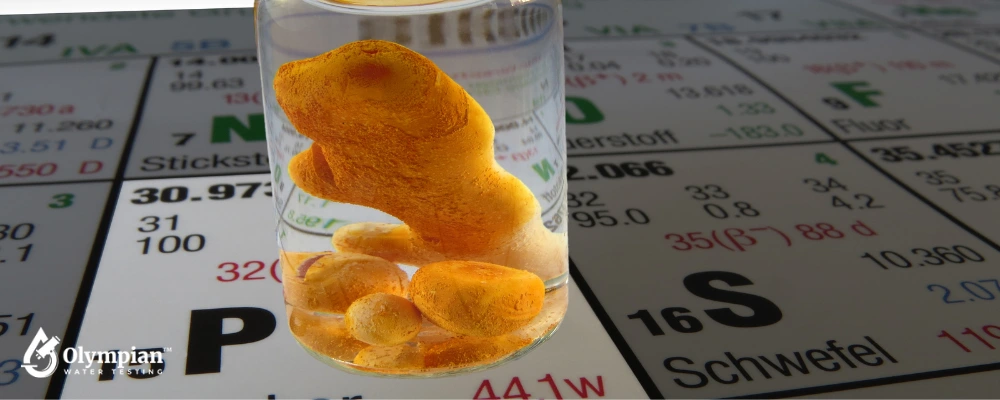
Spectrophotometry is a method used to measure the amount of a substance present in a sample by measuring the amount of light absorbed by the sample at a specific wavelength. In the context of phosphorus analysis, spectrophotometry can be used to determine the amount of phosphorus present in a sample by measuring the absorbance of light at a specific wavelength. This method is based on the principle that different substances absorb light at different wavelengths, and the intensity of the absorption is directly proportional to the concentration of the substance in the sample [1].
There are different types of spectrophotometry that can be used for phosphorus analysis, including ultraviolet-visible (UV-Vis) spectrophotometry, infrared (IR) spectrophotometry, and atomic absorption spectrophotometry (AAS) [2]. UV-Vis spectrophotometry is the most commonly used method for phosphorus analysis, as it is a simple and inexpensive method that can be used for a wide range of samples [3].
The most common method for phosphorus analysis using UV-Vis spectrophotometry is the colorimetric method, in which a reagent is added to the sample to form a colored complex with the phosphorus, and the absorbance of the colored complex is measured at a specific wavelength. One of the most commonly used reagents for this purpose is ammonium molybdate, which forms a yellow complex with phosphates. Other reagents that can be used include stannous chloride and ascorbic acid [4].
The advantages of spectrophotometry for phosphorus analysis include its high sensitivity and low cost [2]. Additionally, because the sample is measured in liquid form, it is relatively easy to handle and the results are easy to interpret [3]. Another advantage is that this method can be used for a wide range of samples, including water, soil, and biological samples [4].
However, there are also some limitations to this method. It can be difficult to achieve complete reaction between the reagent and the phosphorus, which can lead to inaccurate results [1]. Additionally, this method is not suitable for samples that contain high levels of interfering substances, as these can interfere with the formation of the colored complex and lead to inaccurate results [2]. Also, this method typically requires careful calibration to obtain accurate results and it is prone to interferences from other chemical species present in the sample [3].
In conclusion, spectrophotometry is a widely used method for the determination of phosphorus in various sample types. It offers a high sensitivity and low cost, but requires a certain level of care and attention to detail in the sample preparation process and calibration. Due to its limitations, it is best used in conjunction with other analytical techniques to confirm the results obtained [4].
[1] K.F.Forstner, "Phosphorus in Soils: How to Sample and Analyze," Agriculture Handbook No. 585, U.S. Department of Agriculture,Washington, DC, USA, 1984
[2] J.M. Bremner,"Multiple regression analysis of total nitrogen, available phosphorous, and exchangeable potassium in soil samples,"Soil Science Society of America Journal, vol. 29, pp. 179–184, 1965
[3] W.M. Mcbratney, J.M. Breshears,"Phosphorus," in Methods of Soil Analysis. Part 3. Chemical Methods, J.H. Dane, G.C. Topp, Eds, Soil Science Society of America and American Society of Agronomy, Madison, WI, USA, 1999.
[4] K.F. Forstner, "Phosphorus Analysis," in Methods of Soil Analysis. Part 2. Microbiological and Biochemical Properties, D.L. Sparks, Ed, Soil Science Society of America, Madison, WI, USA, 1996.
Atomic absorption spectrometry (AAS)

Atomic absorption spectrometry (AAS) is a method used to measure the concentration of a specific element in a sample by measuring the absorption of light by atoms of the element. In the context of phosphorus analysis, AAS can be used to determine the amount of phosphorus present in a sample by measuring the absorption of light by atomic phosphorus. This method is based on the principle that atoms in a sample will absorb light at specific wavelengths, known as absorption lines, which are unique to each element [1].
The sample is typically first prepared by digesting it with acid and/or other reagents to convert the phosphorus into a form that can be vaporized, such as phosphoric acid. The sample is then vaporized and the atoms are excited by passing them through a flame or an electrothermal atomizer. The absorption of light by the atomic phosphorus is then measured at a specific wavelength [2].
AAS is a very precise and accurate method for determining phosphorus in various sample types, including water, soil, sediment, and plant material [3]. Additionally, AAS is a method that can detect very low concentrations of elements, therefore it can be used in trace element analysis [4]. Also, AAS can be used for quantitative analysis and also as a confirmatory method for qualitative analysis [5].
However, there are also some limitations to this method. AAS requires a relatively high level of sample preparation, including digesting and vaporizing the sample, which can be time-consuming and labor-intensive [1]. Additionally, this method is not suitable for samples that contain high levels of interfering substances, as these can interfere with the absorption of light and lead to inaccurate results [2]. Also, this method typically requires careful calibration to obtain accurate results and the method is prone to interferences from other chemical species present in the sample [3].
In conclusion, AAS is a precise and accurate method for determining phosphorus in various sample types. It offers a high sensitivity and can be used in trace element analysis, but requires a certain level of care and attention to detail in the sample preparation process and calibration [5]. Due to its limitations, it is best used in conjunction with other analytical techniques to confirm the results obtained [4].
[1] M.A. West, J.O.J. Nriagu, "Atomic Absorption Spectrometry in Environmental Analysis," in Techniques for Analyzing Trace Elements in Environmental Samples, J.O.J. Nriagu, Ed., Lewis Publishers, Boca Raton, FL, USA, 1995.
[2] B. Welz, "Atomic Absorption Spectrometry," in Methods of Chemical Analysis, B. Welz, Ed., WILEY-VCH Verlag GmbH & Co. KGaA, Weinheim, Germany, 1999
[3] E.C. Spooner, "Atomic Absorption Spectrometry," in Analytical Methods for Environmental Monitoring, R.E. Clement, Ed., American Chemical Society, Washington, DC, USA, 1998
[4] G.L. Tommasi, "Introduction to Spectrophotometry," in Spectrophotometry in Food Science and Technology, G.L. Tommasi, Ed., Blackwell Publishing Ltd, Oxford, UK, 2005
[5] E.C. Helfferich, "Phosphorus," in Trace Elements in Soils, E.C. Helfferich, Ed., John Wiley & Sons, New York, NY, USA, 1962
Thermal methods

Thermal methods, such as combustion and pyrolysis, are a group of analytical techniques used to measure the concentration of various elements in a sample by heating the sample to high temperatures and measuring the gases or other products produced. In the context of phosphorus analysis, thermal methods can be used to determine the amount of phosphorus present in a sample by measuring the gases produced by the combustion or pyrolysis of the sample [1].
Combustion is a thermal method that involves the complete burning of a sample in the presence of oxygen to produce gases such as carbon dioxide, water vapor, and phosphoric oxide. The amount of phosphoric oxide produced is directly proportional to the amount of phosphorus present in the sample [2].
Pyrolysis, on the other hand, is a thermal method that involves heating a sample in the absence of oxygen to produce gases such as water vapor, carbon monoxide, and phosphine. The amount of phosphine produced is directly proportional to the amount of phosphorus present in the sample [3].
Thermal methods are highly sensitive and can be used for a wide range of samples, including water, soil, and biological samples [4]. They also have the advantage of being able to analyze the sample in its entirety, rather than just a specific fraction or component of the sample [5]. Additionally, thermal methods can be used in conjunction with other analytical techniques, such as mass spectrometry, to obtain even more detailed information about the composition of the sample.
However, there are also some limitations to these methods. They require a relatively high level of sample preparation, including grinding and drying the sample, which can be time-consuming and labor-intensive [1]. Additionally, thermal methods can be affected by the presence of other elements in the sample, which can lead to inaccuracies in the results [2]. They also require an instrumentation, facilities and trained personnel.
In conclusion, thermal methods, such as combustion and pyrolysis, are a group of analytical techniques used to measure the concentration of various elements in a sample. They are highly sensitive and can be used for a wide range of samples, but require a certain level of care and attention to detail in the sample preparation process. Due to its limitations, it is best used in conjunction with other analytical techniques to confirm the results obtained. Furthermore, as thermal methods are relatively high energy consuming, it might not be environmentally friendly, should be used cautiously and with a consideration of the environmental impact.
[1] L.E. McMillan, "Combustion Methods," in Analytical Methods for Elemental Analysis, L.E. McMillan, Ed., Elsevier, Amsterdam, Netherlands, 1984
[2] J.G. Speight, "The Chemistry and Technology of Coal," 3rd ed. Taylor & Francis Group, New York, USA, 2007
[3] J.E.B. Smith, "Pyrolysis Methods," in Techniques for Analyzing Trace Elements in Environmental Samples, J.O.J. Nriagu, Ed., Lewis Publishers, Boca Raton, FL, USA, 1995
[4] R.A. Meyers, "Introduction to Thermal Analysis," in Encyclopedia of Analytical Science, 2nd Ed., R.A. Meyers, Ed., Academic Press, London, UK, 2005
[5] R.E. Clement, "Thermal Methods," in Analytical Methods for Environmental Monitoring, R.E. Clement, Ed., American Chemical Society, Washington, DC, USA, 1998
Share this research on social media
Facebook
Twitter
LinkedIn
See all Research on Phosphorus