Addressing the Challenges and Embracing Solutions for VOCs in Drinking Water
- Published:
- Updated: December 14, 2024
Listen to this article
Summary
The challenge of Volatile Organic Compounds (VOCs) in drinking water demands attention and solutions. Key points include:
- VOC sources and persistence in water.
- Common VOC types: benzene, toluene, vinyl chloride.
- Health risks: carcinogenicity, nervous system effects, and cancer.

It is our lifeblood, drinking water, which is constantly under threat from a variety of pollutants. The latter are the Volatile Organic Compounds or VOCs which are the most difficult as they have the potential for health harms and also because they are difficult to identify and decontaminate. VOCs are chemicals made up of carbon that readily evaporate when they reach room temperature. They are unstable – they are everywhere and intractable.
VOCs are mainly from industrial processes, combustion and use of fuels, and some consumer products. In poor disposal, they enter groundwater and leach into our water. These substances are volatile and so they persist for very long in the environment, so their control is urgent.
Common Types of VOCs in Drinking Water
The VOCs can be extensive, each with different characteristics and health effects. These most common VOCs in water supply include benzene, toluene, and vinyl chloride.
Benzene: Commonly in gasoline, plastics, resins, synthetic fibers, rubber, dyes, detergents, pharmaceuticals and pesticides.
Toluene: Used in the production of benzene and as solvent in paints, rubber, resins, adhesives, inks and cleaning products.
Vinyl Chloride: Chemical utilised to create PVC and similar products in the plastics sector.
Any of these compounds can be very harmful if they’re found in drinking water, which is why their responsible management is so important.
Health Implications of VOC Exposure

VOCs, necessary in many industries, are also very harmful when present in our water. VOCs can be fatally toxic in a long-term, even small-scale, exposure. For example, benzene is a known carcinogen that in time will cause diseases such as leukemia.
Toluene, on the other hand, can cause the nervous system to become tired, dizzy and forgetful. We’ve linked vinyl chloride exposure to liver, lung and blood cancers. The health hazards of VOCs mean that we need quick and efficient ways to eliminate them from our drinking water.
Current Challenges in Managing VOCs in Drinking Water
While we have become increasingly aware of VOCs and their effects, we don’t yet know how to control them in our water. The first is detection. VOCs are so volatile, that they can easily slip out of the system and therefore are difficult to detect in water.
Then there’s also the elimination of VOCs from water. Simple water treatments don’t always get rid of these chemicals. Here’s where advanced treatment and close supervision come in.
Regulation and Standards for VOCs in Drinking Water
And laws and standards are what keep our drinking water safe. Different countries regulate what is and isn’t acceptable as VOC. The U.S. Environmental Protection Agency, for example, has established Maximum Contaminant Level Goals (MCLGs) for a variety of VOCs, such as benzene, toluene and vinyl chloride.
But creating rules is one thing, but implementing them is another. In most parts of the world, monitoring and enforcement are difficult to fund. Such discrepancy makes the battle against VOCs in drinking water even more urgent and needs to be more globally coordinated.
What are some technologies and techniques available for the removal of volatile organic compounds (VOCs)?
Our best weapon in the fight against VOCs is technology. There are currently several ways to purify water of VOCs. Activated carbon filtering, for example, is very common. Because activated carbon is porous, it will take up a multitude of VOCs and make them less concentrated in the water.
Another option is air-dialysis, where water is let out to the atmosphere so that the VOCs escape. More sophisticated oxidation reactions (which use oxidants to dissolve VOCs) are also increasingly employed. But each approach is finite and doesn’t always work against every VOC.
Emerging Solutions and Innovations
Our toolkit to attack VOCs is growing with our knowledge about them. There are researchers working around the world on creative ways to solve the VOC problem. These range from improved filters, more efficient oxidation and even biotechnologies using microbes to breakdown VOCs.
Graphene-based filters, for example, which absorb contaminant extremely well are being evaluated for VOC reduction. So, too, the use of photocatalysis, in which light activates a catalyst that dissolves VOCs, is promising. When the solutions are still being developed, that kind of research and innovation is absolutely essential.
What is the role of individuals and communities in addressing volatile organic compounds (VOCs)?
Governments and industries are important actors in the control of VOCs, but individuals and communities have a role to play too. There’s one place to pitch in: for more regulations, better enforcement and research dollars.
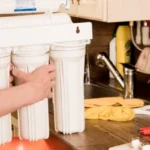
At the smaller scale, it is more practical to have a home water purifier that eliminates VOCs. The regular testing of home water, especially for those who use private wells, is another step.
Share this on social media:
Facebook
Twitter
LinkedIn

Related Posts