Identifying and Testing for Various Forms of Water Contaminants
- Published:
- Updated: December 16, 2024
Listen to this article
Summary
Identifying and testing for water contaminants is essential for safeguarding public health. Contaminants, including physical, chemical, and biological substances, can cause various health issues and environmental harm. Signs of contamination include unusual taste or odor, cloudy water, stains, and health problems. Testing methods include home test kits, laboratory testing, and continuous monitoring. Water contamination can harm wildlife, ecosystems, and human health. Factors like location, geology, climate, and human activity influence water quality. Prevention and treatment methods include water treatment facilities, point-of-use treatment, source water protection, and regular testing. Access to clean water is crucial for human health, hygiene, agriculture, industry, and the environment, underscoring the importance of prioritizing clean water access globally.

Water contamination is a problem that millions of people all over the world live with. It manifests in various health problems ranging from small illnesses to serious disorders. From agricultural runoff to industrial and sewage pollution. Identify and test water contaminants regularly to safeguard public health.
What are the Different Types of Water Contaminants?
Water contaminants are chemicals that exist in water and can be dangerous to the health and the environment. Physical, chemical and biological water contaminants are the three main water contaminants. Physical contaminants are dissolved solids or liquids that are observable in water: sand, silt, sediment and debris. Chemical pollutants are invisible, dissolved compounds, including heavy metals, pesticides and volatile organic compounds. Biological contaminants are organisms such as bacteria, viruses, parasites and algae found in water from sources such as sewers, animal manure and surface run-off. All of these pollutants can be harmful to human health and the environment, and water quality must be tracked and controlled to reduce such contaminants.
Identifying Water Contaminants

Water contaminants can be difficult to identify because they are often not visible to the naked eye. However, there are a few signs that can indicate the presence of contaminants in your water supply. Some of these signs include:
- A strange taste or odor in your water
- Cloudy or discolored water
- Stains on fixtures or clothing
- Health problems such as stomach discomfort, skin irritation, or respiratory problems
If you suspect that your water may be contaminated, it’s important to have it tested. There are many different types of water tests available, including tests for specific contaminants, tests for multiple contaminants, and general water quality tests.
Testing for Water Contaminants
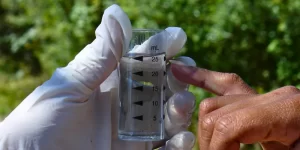
Testing for water contaminants is the best way to determine if your water supply is contaminated and what type of contaminants are present. Home test kits are an easy and convenient way to test your water for contaminants. They are widely available and can test for a range of contaminants, including lead, bacteria, and pesticides. Home test kits are simple to use and typically involve collecting a water sample and adding a test strip or solution. Results are usually available within minutes.
Laboratory water testing is a more comprehensive way to test your water for contaminants. This type of testing is typically performed by a professional laboratory and can test for a wider range of contaminants than home test kits. Laboratory tests are typically more accurate and can provide more detailed information about the types and levels of contaminants in your water.
Continuous monitoring is a method used to test water quality on an ongoing basis. This type of testing involves installing monitoring equipment in your water supply, which measures the levels of various contaminants in real-time. Continuous monitoring is typically used in industrial settings, where it’s important to ensure that water quality remains within acceptable limits.
Impact of Water Contamination on the Environment
Water contamination not only affects human health, but it also has a significant impact on the environment. Contaminants in water can harm wildlife, damage ecosystems, and disrupt the balance of aquatic habitats. For example, excessive amounts of nitrates in water can cause eutrophication, a process in which algae growth is stimulated, leading to oxygen depletion and harm to aquatic life. Contaminants can also spread through the food chain, affecting not only the water but also the plants and animals that rely on it.
Factors that Affect Water Contamination
There are many different factors that can affect the quality of your water, including:
- Location: The location of your water source can have a significant impact on its quality. For example, water sources that are located near industrial facilities or agricultural areas are more likely to be contaminated with chemicals.
- Geology: The geology of the area where your water source is located can also affect its quality. For example, water sources that are located near areas with high levels of minerals such as iron or manganese are more likely to be contaminated.
- Climate: The climate can also affect the quality of your water. For example, heavy rains can wash pollutants into water sources and increase the levels of contaminants.
- Human activity: Human activities such as agriculture, industrial processes, and waste disposal can also have a significant impact on the quality of water.
Prevention and Treatment of Water Contamination
Filtration and disinfection of water is one step towards having a pure and safe water. The means by which you can achieve this range from water treatment plant, point-of-use treatment, source water protection to regular testing. Filtration, chlorine bleaching and reverse osmosis are some ways water treatment plants filter out contaminants before it’s used. Point-of-use systems, however, can be installed at home and in the workplace to clean water as it’s being used. They are activated carbon systems, reverse osmosis and UV disinfection systems. Besides, source water protection programmes try to save water supplies from contamination by decreasing the use of pesticides and herbicides, regulating industrial effluent, and managing waste. It is also necessary to test water on a regular basis, so you know if something is being contaminated and act on it in a timely manner before it escalates.
Importance of Clean Water Access
The right to clean water is a human right, and a matter of human health and wellbeing. Water that’s safe to drink, cook with, and wash with, and that is good for agriculture, industry, and the natural world. Yet millions of people in the world still don’t have access to filtered water, and so are exposed to water-borne disease and other conditions. It is time to amplify access to clean water and to strive for everybody’s equal access to it.
Share this on social media:
Facebook
Twitter
LinkedIn

Related Posts