
Understanding the Importance of Bacteriological Testing
Bacteriological analysis is a critical step in ensuring water quality meets safety standards. It plays a key role in preventing waterborne pathogens, safeguarding both households and communities. By identifying threats early, it helps maintain a reliable drinking water supply.
Public Health Implications
Hidden dangers in water can severely impact health. The presence of undetected coliform bacteria indicates fecal contamination, posing risks to all, but more so to those with pre-existing health conditions. Public health officials stress the importance of regular testing to detect issues promptly and minimize exposure to harmful pathogens.
Contamination Sources
Leaking septic systems and manure runoff are significant sources of pollution. Certain storms can lead to flooding, spreading waste into local wells. The timing of contamination is critical, as delays can increase health risks. Residents often seek guidance from local health departments to protect their water quality indicators.
Indicator | Key Insight |
Coliform Bacteria | Signals possible fecal contamination in the water supply |
E. coli | Often indicates direct contact with animal or human waste |
pH Level | Highlights balance or acidity affecting overall potability |
Why a Bacteriological Test for Water Is Essential
Many homeowners rely on private wells, which are not covered by water safety regulations. This makes regular bacteriological tests critical for detecting pathogens and protecting health. The U.S. Environmental Protection Agency recommends testing water quality at least once a year. They focus on contaminants like total coliform bacteria, nitrates, and pH levels.
Regular testing is key to preventing the spread of harmful microbes. E. coli testing is essential, as it reveals contamination that can cause severe illness. High nitrates from fertilizer runoff can lead to blue baby syndrome in infants. Testing frequency allows for early intervention, addressing contamination concerns before they become serious. This practice ensures a safe water supply and protects communities from waterborne diseases.
How to Identify Common Waterborne Pathogens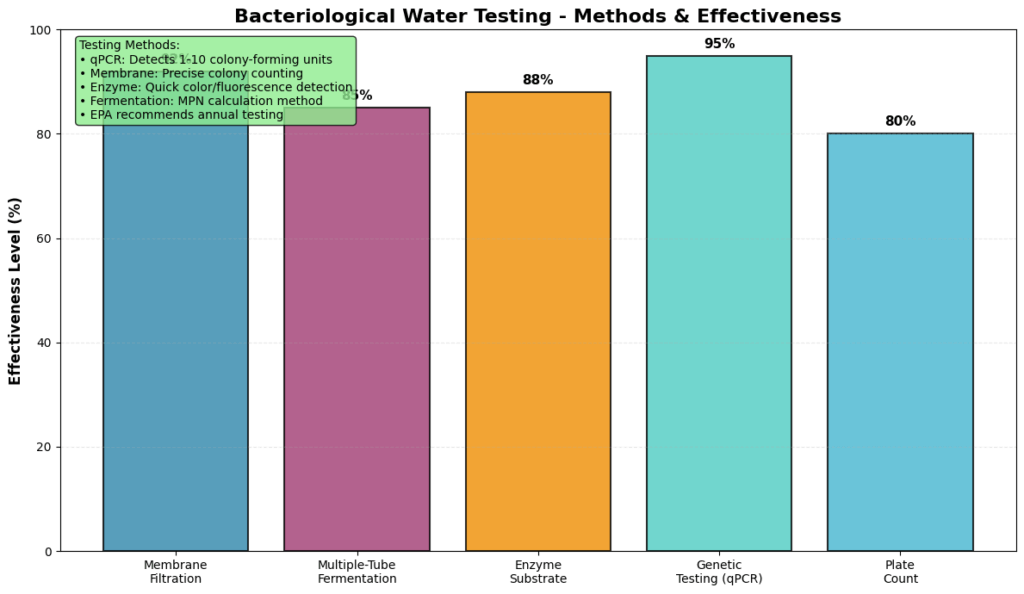
Detecting dangerous organisms starts with thorough checks. Many testing labs focus on catching early signals of waterborne illnesses. This allows communities to take swift action. These checks target different bacteria, hinting at possible microbial contamination that could harm public health.
Coliform Bacteria
These organisms come from soil or the digestive tracts of animals. Their presence may not cause direct harm but signals a possible entry of other threats. High counts urge more tests, which help confirm if fecal coliform species are involved.
E. coli
This bacterium belongs to the fecal coliform category and often signals direct contamination from waste. Some strains are harmless. Others can induce severe waterborne illnesses that need rapid medical care. Targeted monitoring aims to distinguish the risky strains from typical ones.
Other Harmful Microorganisms
Salmonella, Shigella, and Vibrio cholerae are known to trigger perilous conditions. Legionella raises concern in certain systems, prompting advanced checks. Routine inspections help spot microbial contamination before outbreaks occur.
Pathogen | Associated Disease |
E. coli | Gastrointestinal Disorders |
Salmonella | Typhoid Fever |
Shigella | Dysentery |
Vibrio cholerae | Cholera |
Legionella | Legionnaires’ Disease |
Membrane Filtration Technique
Water quality breaches necessitate precise methods to identify contaminants accurately. A perforated partition is used to trap microorganisms, allowing liquid to flow freely. This technique is vital for laboratory teams to detect early signs of risk.
Basic Procedure
A measured volume is passed through a membrane filter. The filter sits on nutrient-rich agar, sparking colony growth. This method allows technicians to monitor colony count and detect infections. It’s a reliable form of culture-based testing for thorough assessments.
Experts at the Environmental Protection Agency often recommend this method for assessing microbial load. Visible colonies on the agar reflect bacteria numbers in the sample. This reveals hidden threats in water supplies, whether for recreation or drinking.
When to Use Membrane Filtration
This technique is ideal for large water volumes needing precise monitoring. Municipal facilities rely on it for dependable data. It supports quick identification of pathogens, aiding public health in residential areas.
Step | Description | Benefit |
Sample Collection | Gather water in a sterile container | Preserves accuracy |
Filtration | Pass liquid through the membrane | Isolates bacteria |
Incubation | Place filter on selective media | Encourages colony growth |
Evaluation | Count colonies per unit volume | Quantifies safety levels |
Multiple-Tube Fermentation Method
This method employs MPN (Most Probable Number) to gauge bacteria in water samples. It leverages a series of fermentation tubes to detect possible contamination. This makes coliform testing more feasible. Gas formation or changes in appearance indicate microbes that threaten public health, vital when lab resources are scarce.
Experts rely on the American Public Health Association’s standard methods for this field test. Each tube contains growth media that reacts with target organisms. Indicators like turbidity or distinct color shifts signal bacterial presence. These signs guide treatment decisions, ensuring communities get cleaner, safer water.
Stage | Key Indicator | Outcome |
Inoculation | Media Prepped in Tubes | Suitable for Bacterial Growth |
Incubation | Visible Gas or Cloudiness | Signal of Possible Coliforms |
Interpretation | MPN Calculation | Estimates Bacterial Density |
Enzyme Substrate Tests in Roundup
Laboratories increasingly turn to enzyme-substrate detection for quick identification of bacteria in water. This method is praised for its ability to pinpoint contamination sources swiftly. It enhances accuracy, reducing wait times compared to traditional methods.
Chromogenic Media
Chromogenic media are essential for detecting bacterial activity. They change color when β-galactosidase breaks down substrates. This makes detection straightforward, even in high-pressure lab environments. The reliability of these results boosts confidence in lab findings.
Fluorogenic Tests
Fluorescence assays use substrates that emit light when enzymes break them down. This provides immediate insight into bacterial presence, aiding health agencies in their water quality assessments. The technology behind these assays allows for real-time confirmation of contamination. It’s a key tool for ensuring public safety across various settings.
Presence-Absence Tests Overview
In many public health settings, these tests are a practical choice. They serve as a qualitative test to confirm the presence of coliforms or E. coli in a sample. Smaller communities find them useful for water sample screening when time and resources are scarce. A simple media tube or vessel changes color if a coliform indicator is triggered, signaling possible contamination.
The method requires minimal equipment and offers quick detection of bacteria. It helps labs and field observers determine if further investigation is necessary. Many private well owners use this method before opting for a detailed analysis for exact counts or specific pathogens. Health agencies often suggest a follow-up test if this approach detects possible contaminants.
- Color shifts suggest the presence of total coliforms.
- Changes in odor can indicate bacterial activity.
- Broad screening to guide further action.
Parameter | Description | Significance |
Test Type | Presence-Absence | Offers a rapid yes/no result |
Equipment | Simple media tube | Minimizes the need for complex devices |
Result Indicator | Color or odor change | Alerts to bacterial presence |
Plate Count Method
This method is a tried-and-true way to track live bacteria in water samples. It relies on visible growth that reflects the water microbiota. Technicians place the sample on agar plates and incubate under set conditions.
Technique Essentials
A heterotrophic plate count offers a snapshot of bacterial populations by revealing colonies to the naked eye. Colony enumeration starts once these clusters form. This can offer a clear measure of microbial activity. Each spot often represents a single organism that multiplied, giving a direct insight into the water’s living load.
Assessing Total Bacteria Count
HPC testing is useful for spotting sudden increases, which can indicate system-wide concerns. Elevated numbers do not always signal dangerous strains, but they might act as an early alert for poor disinfection or shifts in water chemistry. More details appear in bacteriological water analysis, where recommended practices help safeguard public health. Regular monitoring supports cleaner water and greater peace of mind.
Advanced Genetic Testing Options
Many laboratories employ molecular methods for a deeper dive into water contaminants. qPCR testing is a favored approach, focusing on specific DNA regions to identify particular bacteria. This method of DNA-based water analysis can spot pathogens that traditional, culture-based techniques miss.
Creating precise primers enhances the detection of critical markers in samples. Research indicates that broad-range real-time PCR systems can detect as few as one to ten colony-forming units per reaction. Advanced extraction procedures, using enzymes and standards, ensure accuracy during amplification. These findings often uncover hidden threats, necessitating swift action for rapid pathogen detection.
Labs depend on this precise process to safeguard public health and adhere to stringent standards. The demand for advanced tools escalates when dealing with newly identified or elusive microorganisms. These genetic tests offer both speed and clarity, guiding decisions on ensuring safe drinking water.
Assessing Water Quality Standards
Quality requirements are essential for communities to adhere to safe drinking water guidelines. They protect households from various hazards. Regular testing ensures public systems meet federal standards and address regional needs. Private well owners also rely on frequent checks to stay aware of any emerging threats.
EPA Guidelines
The Environmental Protection Agency sets national rules for public water supplies. It focuses on maximum contaminant levels for microbes, chemicals, and other substances. These guidelines aim to ensure health outcomes, applying to both large municipal networks and smaller systems. Private wells, though not under federal oversight, benefit from regular testing to detect harmful pollutants.
- Regular Monitoring: Scheduled inspections help identify sudden contamination.
- Emergency Plans: Detailed steps guide local responses if serious risks appear.
State Regulations
Local agencies enhance federal standards with rules tailored to geographical and environmental concerns. Some regions work with the Bureau of Indian Standards to align best practices for rural or tribal areas. State programs dictate sampling frequency, offer certified labs, and outline compliance options for special conditions.
Regulatory Entity | Scope | Testing Focus |
EPA | Public Water Systems | Pathogens, Toxic Substances |
State Agencies | Local Compliance | Regional Water Concerns |
Bureau of Indian Standards | Community & Rural Standards | Quality Benchmarks |
Comparing Lab Testing vs. At-Home Kits
Many consumers turn to DIY water tests for a quick water quality check. These tools measure pH, iron, nitrates, and more. They’re handy for regular spot checks but might not catch all contaminants.
For a more detailed analysis, certified laboratories are the go-to. They employ advanced technology to detect a broad spectrum of pollutants, including heavy metals and bacteria. The expertise of lab professionals ensures results are reliable, giving users confidence in their water’s safety.
Public health departments often guide on how to schedule lab tests. They also share information on local water threats and suggest specific solutions. Working with experienced technicians ensures water quality meets federal and state standards.
The choice between DIY tests and lab analysis depends on individual needs. At-home kits are a budget-friendly initial step. Lab tests, on the other hand, provide a detailed report for those needing thorough verification.
Practical Tips for Water Sample Collection
Collecting a reliable sample requires precise steps to ensure test accuracy. It’s important to know each phase, from finding the right tap to sealing containers correctly. Those who focus on accuracy set the stage for valid results and peace of mind.
Sterile Techniques
Experts advise using sterile containers from reputable suppliers. This minimizes the risk of debris contamination. Keeping hands clean or wearing gloves is essential for preventing contamination. It’s also important to handle lids carefully, ensuring hands never touch the inside of containers.
Transport Conditions
Delivering the sample quickly to a certified facility is critical. Refrigeration can help maintain the sample’s integrity, supporting thorough analysis. Following local health department guidelines for sample handling is also recommended, as practices can vary. Quick transport is key to maintaining test accuracy, essential for microbial analysis.
Step | Action | Reason |
1 | Obtain sterile containers | Protect sample integrity |
2 | Follow correct sampling protocol | Avoid inaccurate data |
3 | Maintain stable temperature | Sustain sample validity |
Final Thoughts on Safeguarding Drinking Water
Water quality is a critical factor in health across the United States. The U.S. Environmental Protection Agency (EPA) sets standards for testing contaminants in drinking water. These guidelines help laboratories analyze samples accurately, ensuring compliance with the Safe Drinking Water Act. This process is essential for maintaining water safety in communities.
Embracing ongoing water testing and routine monitoring is key for both professionals and homeowners. Public water systems and private well owners benefit from proactive measures to prevent issues. The EPA’s Alternate Test Procedure Program allows for innovative approaches that meet strict standards. This openness fosters innovation and raises awareness about new threats to public health.
Working closely with certified laboratories is vital for building trust and effective solutions. Each test enhances confidence for both households and municipalities. By staying updated on test results and following best practices, we ensure a safe water supply for generations to come.