
What Are nsf water filter certifications?
Nsf water filter certifications verify products for safe and clean use. These seals confirm that water purification methods meet international standards. This ensures families can trust the water they drink. The organization, formerly known as the National Sanitation Foundation, works with ANSI to ensure reliable protocols. Experts from engineering and health fields shape its guidelines.
Where NSF Standards Come From
Experts from government agencies and research institutes develop testing criteria. They check how materials affect health, ensuring they don’t release contaminants. This process is why many water treatment devices follow NSF protocols for better quality and durability.
Differences Between NSF and Other Certifications
Several bodies exist in the industry, including the Water Quality Association (WQA) and IAPMO. NSF is known globally for its strict monitoring and frequent reviews. Brands that follow NSF guidelines often seek additional listings. Yet, consumers usually trust NSF first. This trust comes from decades of consistent testing for water treatment devices.
Certifying Organization | Primary Focus | Known Standards |
NSF | Drinking water safety and product testing | NSF/ANSI 42, 53 |
WQA | Water quality improvement | WQA Gold Seal |
IAPMO | Plumbing and mechanical product oversight | Uniform Plumbing Code |
How Does NSF Testing Ensure Water Filter Safety?
NSF conducts rigorous laboratory tests on each water filter. They ensure materials remain stable, preventing the release of harmful particles. This thorough examination confirms the filters’ performance under real-world conditions.
NSF experts test products against known contaminants, validating manufacturer claims. They assess the filters’ ability to remove substances like chlorine, lead, and microbes. Regular, unannounced factory visits also ensure ongoing compliance with standards.
NSF’s independent reviews build consumer confidence. Many rely on water filter ratings that reflect performance under challenging conditions. These ratings guarantee consistent filtration, ensuring filters maintain their efficiency over time.
NSF Testing Step | Key Outcome |
Component Analysis | Verifies safe materials and checks for leaching risks |
Performance Tests | Ensures targeted contaminants are reduced effectively |
Structural Evaluations | Confirms filters can withstand normal water pressure |
Factory Inspections | Monitors ongoing quality control without prior notice |
Which Product Categories Do NSF Standards Apply To?
Strict evaluations ensure safety and performance in wide-ranging filtration options. These reviews confirm the reliability of system materials. They also verify claims of contaminant reduction against recognized benchmarks.
Typical Home Water Systems
Countertop filters, faucet-mounted devices, and refrigerator cartridges are common in homes. Some opt for point-of-use filters with activated carbon. Others prefer reverse osmosis setups. UV sterilizers and distillers also meet NSF/ANSI standards, protecting daily water consumption.
Commercial Filtration Applications
Restaurants and food processing facilities use larger systems under NSF/ANSI standards. They include high-capacity carbon filters and ultraviolet treatment stations. These units ensure water and beverages are served with reduced impurities, maintaining quality and purity in commercial settings.
Are NSF-Certified Filters Worth the Investment?
The initial cost of an NSF-certified filter might seem steep. Yet, many believe the peace of mind it offers is invaluable. The stringent approval process guarantees continuous contaminant reduction. This ensures a reliable means to maintain water quality over the long haul.
Initial costs can vary based on brand and system size. Yet, the long-term benefits extend far beyond the initial purchase.
Cost Factors
Brands like Brita and Culligan offer a range of options, from affordable pitchers to advanced under-sink systems. Choosing an NSF-approved filter means consistent contaminant reduction. This is due to the thorough testing it undergoes. While replacement might be more frequent, the quality remains superior.
Potential Lifespan Benefits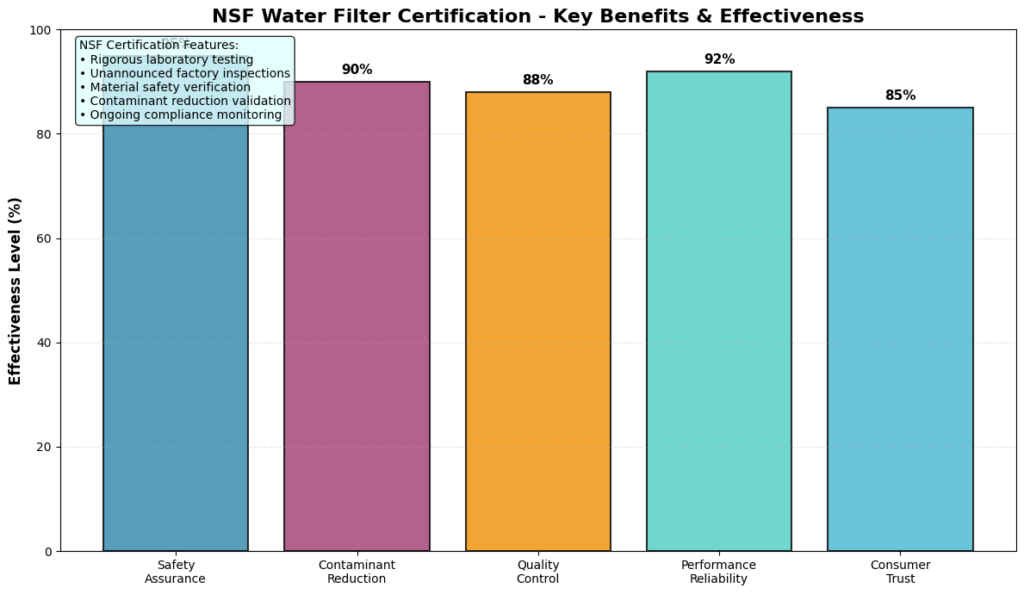
NSF-certified filters often outlast expectations. Their construction is durable, minimizing wear and tear that can compromise effectiveness. This longevity offsets the initial investment, ensuring continuous protection of your drinking water.
Brand | Approx. Cost | Expected Lifespan |
Brita | $20–$40 | 2 months |
Culligan | $25–$50 | 3 months |
PUR | $15–$35 | 2 months |
Aquasana | $60–$250 | 6–12 months |
How to Identify an Official NSF Label
Genuine NSF markings show a product has passed tough tests. These icons are on packaging and might list the NSF standard number. Yet, claims of “tested to NSF standards” don’t mean the product is certified by NSF International.
To confirm the official seal, scan the label details. Product numbers should match those in the NSF online database at nsf.org. This resource checks each brand’s official status and what contaminants are covered.
Consumers can take a few simple steps:
- Compare the product’s formal name and model details with the NSF database.
- Look for an alphanumeric code referencing the NSF standard.
- Contact the manufacturer if anything is unclear about the certification labeling.
This careful approach ensures the chosen system has been properly checked. It meets key performance promises.
Common Misconceptions About NSF Seals
Many shoppers believe that every NSF seal covers all possible impurities in tap water. This misconception can lead to missed hazards, as each certification targets specific elements. For instance, a seal labeled nsf 42 often focuses on taste and odor challenges, potentially leaving other contaminants unchecked. It’s essential to carefully read labels to identify the right protection for specific needs.
Another common misunderstanding is the belief that one filtration product suits all households. Water sources vary by region, making certain filters more effective than others. Some consumers mistakenly believe that an NSF mark guarantees lifelong performance. In reality, filtration components degrade over time. Regular maintenance and replacement are necessary to maintain water quality at desired levels.
Myth | Fact |
All NSF seals are the same | Distinct standards like nsf 42 address unique concerns |
One certification removes every contaminant | Each standard targets specific impurities only |
How NSF Testing Differs from Other Certification Bodies
Unlike some programs, NSF doesn’t just approve products once. They regularly check products and enforce strict labeling rules. This ensures that each filter maintains its quality over its entire life. NSF’s partnership with ANSI has led to standards like nsf 53, focusing on health-based contaminants for thorough protection.
Scope of Evaluation
NSF thoroughly examines how filters work and how they’re made. They check the design, materials, and chemical leaching. This rigorous process confirms filters effectively remove harmful substances without affecting taste or smell.
Frequency of Recertification
NSF’s ongoing testing keeps manufacturers on their toes. They conduct regular audits and product sampling to ensure consistent quality. This rigorous approach sets NSF apart from others. For more information, check out this guide on water filter certification. It shows how NSF pushes companies to maintain their filtration systems’ reliability.
Evaluating Contaminants and Purification Levels
Clean water relies on trusted filtration systems that tackle various hazards. The NSF water testing program evaluates performance against heavy metals, chemical residues, and harmful microbes. Consumers seek assurance when choosing filters for their homes or businesses.
“The U.S. Environmental Protection Agency recognizes lead as a serious health concern because it can leach into drinking water through aging pipes.”
Removing Lead and Chlorine
Activated carbon or reverse osmosis filters are effective in reducing lead and chlorine. These methods ensure a balanced mineral profile, preventing dangerous substances from staying in the water. A filter that has undergone NSF water testing will often display its certification on the label.
Tackling Sediments and Microorganisms
Tap lines can contain physical particles like rust and sand, necessitating strong filtration. Sediment cartridges and UV systems effectively capture or neutralize microbes. Together, they meet NSF water testing standards, providing year-round protection.
Steps to Maintain an NSF-Certified Filter System
Regular upkeep is essential for maintaining clean water flow and ensuring every sip is fresh. Many manufacturers, including Brita and Culligan, suggest checking each component for wear or damage. Cartridge replacements often follow a set schedule, but some homes may need faster replacements.
Proper care extends the life of water treatment devices. Cleaning filter housings with mild detergent helps remove buildup. This ensures each element remains free from residue. Routine checks also prevent clogging, which can impact overall filtration.
- Follow brand guidelines for cleaning schedules and product-safe cleaners.
- Record installation dates and desired intervals to track pending replacements.
Rinsing seals and gaskets can reduce the risk of leaks or contamination. A simple brush or cloth can eliminate sediment in hard-to-reach areas. This habit supports consistent performance for those aiming to safeguard their water treatment devices at home or in small businesses.
How Frequently Should You Replace Your Certified Filters?
Regular filter changes ensure your drinking water remains fresh and maintains high water filter ratings. Many certified filter systems use technology that degrades once their capacity is reached. Despite clear guidelines in product manuals, users often overlook these recommendations. This oversight can lead to reduced efficiency and an unpleasant taste in the water.
Filters act as a barrier against harmful contaminants. Each component in a filter has its own limitations. Exceeding these limits can result in poor performance and compromised water quality. It’s essential to adhere to the recommended replacement schedules.
Signs of Filter Degradation
A noticeable decrease in water flow indicates the filter is nearing its end. Unusual odors or metallic tastes in the water suggest rising contaminant levels. Persistent cloudiness in your glass also signals that the system is failing to remove particles effectively.
Recommended Replacement Timelines
The lifespan of filters varies by manufacturer, typically ranging from three to six months. Neglecting these intervals can lead to lower water filter ratings. NSF guidelines emphasize the importance of checking labels for specific details, as each product has unique operating thresholds. Adhering to these guidelines ensures your water remains pure and refreshing.
Filter Type | Approximate Replacement Interval |
Carbon Block | 3–6 Months |
Reverse Osmosis Membrane | 2–3 Years |
What Are the Cost Differences for Certified Versus Non-Certified Filters?
Certified water filters typically have a higher initial cost. They undergo rigorous testing to ensure consistent performance and high-quality materials. Brands like Brita and PUR are well-known for this approach. Their products often meet NSF/ANSI standards, which involves detailed evaluations for safety and filtration efficiency.
On the other hand, non-certified filters might seem more affordable but lack clear evidence of thorough testing. This uncertainty can leave homeowners questioning their effectiveness in removing contaminants. Investing in a certified device, which adheres to NSF/ANSI standards, can provide long-term peace of mind. It also comes with a warranty that supports its performance claims.
Factor | Certified Filter | Non-Certified Filter |
Initial Investment | Higher but backed by approved protocols | Often lower at the outset |
Testing Process | Evaluated under recognized guidelines | Unclear quality checks |
Warranty Coverage | Extended support from established brands | Limited or no warranty |
Are There Multiple NSF Marks to Look For?
Companies like Brita and PUR display different NSF seals on their products. Consumers might see various labels due to each certification focusing on different contaminants. It’s important to identify the right emblem to select a filter that meets specific water quality needs.
NSF 42 and NSF 53
NSF 42 deals with taste, odor, and aesthetic issues. Filters with this mark improve water clarity without removing essential minerals. On the other hand, NSF 53 targets health risks like lead and volatile organic compounds. Systems certified under this standard aim for more stringent contaminant reduction while preserving trace elements.
Specialized Standards for Different Needs
Some consumers seek filters for emerging substances or advanced purification. NSF 401 addresses pharmaceuticals and complex pollutants, appealing to those concerned about evolving water hazards. NSF 58 is for reverse osmosis setups, providing a higher level of protection through multi-layered filtration.
Standard | Focus |
NSF 42 | Taste, odor, and aesthetic concerns |
NSF 53 | Health-related contaminants like lead and VOCs |
NSF 401 | Emerging pollutants such as pharmaceuticals |
NSF 58 | Reverse osmosis filtration |
Moving Forward with Safe Water Solutions
Third-party verification from NSF, WQA, and IAPMO is essential for reliable water filtration. These organizations test products against strict guidelines. Their seals confirm performance, giving users confidence in their choices.
Understanding contaminant profiles and brand reputations is vital. Credible seals are a clear indicator of quality. This knowledge helps families and businesses choose the right water solutions. By doing so, they ensure their water meets safety standards, thanks to certification labeling and a focus on quality.
FAQ
What are NSF water filter certifications, and why are they important for public health?
NSF water filter certifications verify that a product meets American National Standards Institute (ANSI) benchmarks. They are critical because they confirm the filter’s ability to reduce contaminants and maintain structural integrity. This verification ensures consistent, reliable performance, boosting public health.
How do NSF standards differ from certifications offered by WQA or IAPMO?
NSF is known for its collaborative development with ANSI and experts. It conducts unannounced plant inspections and lab challenges. This focus on material safety and performance accuracy sets NSF apart from WQA and IAPMO.
How does NSF ensure a water filter truly reduces contaminants such as lead or chlorine?
NSF tests filters in strict laboratory conditions to confirm contaminant reduction. For example, lead or chlorine removal is tested under real-world usage scenarios. Only products meeting specific reduction claims are certified.
Which filtration setups or products typically carry NSF certifications?
NSF standards apply to various filtration options, including countertop filters and commercial units. Products with the NSF seal meet rigorous safety and contaminant-reduction requirements, regardless of size or complexity.
Are NSF-certified filters worth the extra investment compared to non-certified options?
NSF-certified models, like those from PUR or Culligan, may cost more initially. Yet, they offer stronger performance and longer lifespans. This investment in quality and safety is often justified by their consistent performance over time.
How can a consumer identify an authentic NSF label?
Official NSF-certified filters display the NSF logo and standard reference on the product or packaging. Consumers can verify the certification on NSF’s online database by entering the filter model number. This ensures they are not confused with “tested to” or “meets NSF criteria” claims.
Is it true that an NSF seal guarantees the removal of every possible contaminant?
No. NSF standards target specific concerns, such as taste and odor (NSF/ANSI 42) or health-related contaminants (NSF/ANSI 53). An NSF seal confirms compliance for specific claims but does not cover all water quality issues.
Why is NSF testing considered more thorough than some other certification bodies?
NSF emphasizes regular testing, material analysis, and unannounced inspections. This ensures manufacturers continually meet strict requirements. NSF 53, for example, demands rigorous proof of ongoing filtration efficiency, often exceeding industry checks.
What kinds of contaminants do NSF-certified filters typically target?
NSF evaluations cover harmful substances like lead, chlorine, and microbial concerns. Depending on the standard, filters may use activated carbon or reverse osmosis membranes. This protects water for home or commercial use.
What can users do to maintain the safety and effectiveness of NSF-certified filter systems?
Users should follow manufacturer guidelines and clean or flush filter components regularly. Replacing cartridges within suggested timelines prevents bacterial buildup. This ensures the system meets NSF’s stringent performance benchmarks.
How often should an NSF-certified filter be replaced to guarantee ongoing contaminant reduction?
Replacement intervals depend on usage, water quality, and manufacturer guidelines. Signs of degradation include slower flow rate, unpleasant taste, or visible sediment buildup. Following recommended timelines maintains certified performance and water quality benefits.
Do certified filters cost more, and what are the long-term benefits of choosing them?
Yes, NSF-certified filters may cost more due to rigorous testing and manufacturing standards. The investment in quality and safety is justified by reliable filtration, improved contaminant protection, and warranty benefits. Long-term peace of mind and consistent water safety often outweigh the initial expense.