

The Impact of Climate Change on PFAS Testing in Drinking Water
A technical paper by Olympian Water Testing specialists

Background on PFAS (per- and polyfluoroalkyl substances)
Per- and polyfluoroalkyl substances (PFAS) are synthetic chemicals that have been used in industrial and domestic products because they possess distinct chemical characteristics such as water and oil repellent. The list of products that PFAS can be found in is extensive, from nonstick cookware, water-resistant clothing to firefighting foam [1].
There are a wide variety of adverse health impacts of PFAS, from cancer, to immune system disruption, and even in infants and children [2]. Some research even alleged that PFAS consumption may lead to certain diseases such as kidney cancer, high cholesterol, and ulcerative colitis [3]. But how much of the potential health effects of PFAS use remain under investigation and debate [4].
PFAS are known to be found in many different environmental media, such as drinking water, air and soil [5]. The wide adoption of PFAS and the fact that they can be retained in the environment made the issue of whether or not humans might be exposed to them very real. Thus, PFAS testing and monitoring in water and other media in the environment is also getting more and more attention.
Finally, PFAS are chemicals created by human intervention and they’ve been used in all kinds of products for different reasons. There are many adverse health effects from PFAS and there’s still research and controversy about the health effects of PFAS exposure. PFAS are now found in environmental media from water to air, and the potential for testing and monitoring of PFAS is on the rise.
[1] "Per- and Polyfluoroalkyl Substances (PFAS)." US Environmental Protection Agency.
[2] "Health Effects of PFAS." Centers for Disease Control and Prevention.
[3] "PFAS (Per- and Polyfluoroalkyl Substances)." National Institute of Environmental Health Sciences.
[4] "Perfluoroalkyl and Polyfluoroalkyl Substances (PFAS)." World Health Organization.
[5] "PFAS Contamination in the Environment." US Geological Survey, https://www.usgs.gov/
The impact of climate change on PFAS contamination

Per- and polyfluoroalkyl substances (PFAS) are artificial chemicals that have been applied to industrial and domestic products because they have specific properties, such as being water and oil repellent. PFAS have been linked to a number of adverse health effects, including cancer, immune system impairment and developmental delays in infants and children [1]. The result is growing worry about PFAS in the air and water as well.
Climate change can influence the levels of PFAS in tap water through several different means. One of the mechanisms is PFAS runoff into surface water with higher and more intense precipitation events [2]. In Sweden, for instance, heavy rain events were associated with PFAS in surface water increases [3]. Higher runoff of PFASs into surface water could result in elevated PFAS concentrations in aquifers (lakes and rivers).
Another possibility is PFAS emissions from thawing permafrost [4]. In the high latitudes, in places like Alaska, permafrost is soil that’s been frozen for two or more years. There are many chemicals in permafrost, such as PFAS, which can end up in the environment when permafrost is melted with warming temperatures [5]. This PFAS release from thawing permafrost could also lead to these chemicals in drinking water and other media.
To summarise, climate change could alter PFAS in drinking water via more PFAS-based runoff, and PFAS release from permafrost melting. These processes could increase PFAS concentrations in the water we drink and lead to an increased risk of contacting these chemicals.
[1] "Per- and Polyfluoroalkyl Substances (PFAS)." US Environmental Protection Agency.
[2] "Climate Change and Contaminants." US Environmental Protection Agency.
[3] Jönsson, K. A., et al. "Climate Change Increases the Release of Legacy and New Persistent Organic Pollutants to the Aquatic Environment." Environmental Science & Technology, vol. 44, no. 24, 2010, pp. 9333-9340.
[4] Lawrence, D. M., et al. "Projected Changes in Permafrost and Hydrologic Systems in Alaska Under a Warming Climate." Environmental Research Letters, vol. 7, no. 1, 2012, p. 014009.
[5] Schuster, P. F., et al. "Climate Change and the Release of Persistent Organic Pollutants from Permafrost." Environmental Science & Technology, vol. 46, no. 12, 2012, pp. 6766-6773.
Testing for PFAS in drinking water

Per- and polyfluoroalkyl substances (PFAS) are synthetic chemicals that have been applied to industrial and household products for a number of reasons, such as being water and oil repellent. PFAS are known to cause several adverse health effects such as cancer, immune-system disruption and developmental disorders in infants and children [1]. Consequently, PFAS are increasingly in the news as they are present in the environment, such as in drinking water.
There are many different ways of testing for PFAS in drinking water both in the lab and in the field. The best and most sensitive PFAS detection methods in water are the liquid chromatography tandem mass spectrometry (LC-MS/MS) and gas chromatography mass spectrometry (GC-MS) methods performed in the lab [2]. These are extraction and PFAS-concentration from water samples, and analysis using dedicated equipment.
The field methods, meanwhile, are made for field application and don’t involve special laboratory facilities. Solid phase extraction (SPE) and cartridge extraction are examples of field methods [3]. : These are the procedures by which water samples are filtered through a cartridge or sorbent-loaded cartridge. Field methods may be more inaccurate and less sensitive than laboratory methods, but they tend to be the ones that are easy to use.
The laboratory and field approaches to testing for PFAS in drinking water have their pros and cons. It tends to be better and more sensitive, especially when done in a laboratory, but that requires advanced equipment and trained staff. Field techniques are less expensive and more practical, but less precise and sensitive.
Final words: There are many ways to test drinking water for PFAS, both in the lab and on the ground. LC-MS/MS, GC-MS are the most sensitive and accurate, which needs special equipment and staff. So, Field-based : SPE, cartridge-based : easier to handle and more flexible but also less precise and sensitive. When testing for PFAS in drinking water, the precision and uncertainty of each approach should be considered so that the results are reliable and precise.
[1] "Per- and Polyfluoroalkyl Substances (PFAS)." US Environmental Protection Agency.
[2] "Method 537.1: Perfluorinated Alkyl Substances in Drinking Water by LC/MS/MS and GC/MS." US Environmental Protection Agency.
[3] "Field-Based Methods for the Analysis of Perfluoroalkyl Substances (PFAS) in Water." US Geological Survey.
Federal and state regulations on PFAS in drinking water

Per- and polyfluoroalkyl substances (PFAS) are synthetic chemicals that have been incorporated in many industrial and household products because of their special effects such as water and oil repellant. We know that PFAS have a variety of adverse health consequences such as cancer, immuno-system impairment and birth defects in infants and children [1]. The consequence is that people worry more and more about PFAS in the environment, including our water supplies.
Water utilities are the primary testers and operators of PFAS in water. The number one job of water utilities is to ensure the water that they deliver is safe for drinking based on PFAS standards (such as any applicable federal or state regulations or MCLs). Water utilities might do this through any combination of laboratory or field testing to check for PFAS in water [2].
Water utilities might also use practices to manage and mitigate PFAS in the drinking water supply along with PFAS testing. One is granulated activated carbon (GAC) filtration, which has proven to be effective in the removal of PFAS from water supply [3]. Other methods can be a switch to alternative sources of water, or the use of treatment devices like reverse osmosis or ion exchange.
Conclusion: Water utilities are key to testing and regulating PFAS in drinking water. Water utilities might use different testing procedures and operations, such as GAC filtration and other water sources, to make sure that the water they serve is compliant with the regulations.
[1] "Per- and Polyfluoroalkyl Substances (PFAS)." US Environmental Protection Agency.
[2] "Drinking Water Health Advisories for PFOA and PFOS." US Environmental Protection Agency.
[3] "Method 537.1: Perfluorinated Alkyl Substances in Drinking Water by LC/MS/MS and GC/MS." US Environmental Protection Agency.
[4] "The State of PFAS Regulation in the United States." Environmental Defense Fund.
[5] "New Jersey Sets MCLs for PFOA and PFOS." Water Online.
[6] "PFAS Drinking Water Standards." Vermont Department of Environmental Conservation, https://dec.vermont.gov/
The role of water utilities in PFAS testing and management

Per- and polyfluoroalkyl substances (PFAS) are a group of man-made chemicals that have been used in a variety of industrial and household products due to their unique properties, including their ability to repel water and oil. PFAS have been linked to a number of negative health effects, including cancer, immune system disruption, and developmental problems in infants and children [1]. As a result, there is increasing concern about the presence of PFAS in the environment, including in drinking water.
Water utilities play a crucial role in the testing and management of PFAS in drinking water. One key responsibility of water utilities is to ensure that the drinking water they provide meets regulatory standards for PFAS, including any federal or state guidelines or maximum contaminant levels (MCLs). To do this, water utilities may employ a variety of testing methods, including both laboratory-based and field-based methods, to monitor for the presence of PFAS in drinking water [2]. Additionally, water utilities often collaborate with specialized pfas testing laboratory services to accurately analyze water samples and identify specific PFAS compounds. These laboratories utilize advanced analytical techniques to provide reliable data that helps utilities assess their compliance with regulations and make informed decisions about treatment options. By prioritizing rigorous testing and monitoring, water utilities can effectively safeguard public health and enhance community trust in the safety of their drinking water supply.
In addition to testing for PFAS, water utilities may also employ strategies to manage and reduce the presence of these chemicals in drinking water. One such strategy is the use of granulated activated carbon (GAC) filtration, which has been shown to be effective at removing PFAS from drinking water [3]. Other strategies may include the use of alternative water sources or the implementation of treatment technologies such as reverse osmosis or ion exchange.
In conclusion, water utilities play a crucial role in the testing and management of PFAS in drinking water. To ensure that the drinking water they provide meets regulatory standards, water utilities may employ a variety of testing methods and management strategies, including the use of GAC filtration and alternative water sources.
[1] "Per- and Polyfluoroalkyl Substances (PFAS)." US Environmental Protection Agency.
[2] "PFAS in Drinking Water." US Environmental Protection Agency.
[3] "Granulated Activated Carbon (GAC) Filtration for PFAS." US Environmental Protection Agency.
Community engagement in PFAS testing and management

Per- and polyfluoroalkyl substances (PFAS) are a group of man-made chemicals that have been used in a variety of industrial and household products due to their unique properties, including their ability to repel water and oil. PFAS have been linked to a number of negative health effects, including cancer, immune system disruption, and developmental problems in infants and children [1]. As a result, there is increasing concern about the presence of PFAS in the environment, including in drinking water.
Community engagement is an important aspect of PFAS testing and management, as it can help to ensure that the public is informed about the presence of these chemicals in the environment and any potential risks to human health. One way in which communities can be engaged is through the provision of information about PFAS, including how these chemicals are used, the potential health impacts of exposure, and any regulatory standards or guidelines in place [2]. This information can be provided through a variety of channels, including community meetings, newsletters, and social media.
Another way in which communities can be engaged is through the participation in decision-making processes related to PFAS testing and management [3]. This can include the development of testing protocols, the selection of treatment technologies, and the establishment of regulatory standards. Community engagement can help to ensure that the concerns and needs of the public are taken into consideration and can lead to more effective and sustainable solutions.
In conclusion, community engagement is an important aspect of PFAS testing and management. By providing information about these chemicals and involving the public in decision-making processes, communities can be informed about the presence of PFAS in the environment and the potential risks to human health. This can help to ensure that effective and sustainable solutions are developed to address the presence of these chemicals in the environment.
[1] "Per- and Polyfluoroalkyl Substances (PFAS)." US Environmental Protection Agency.
[2] "Public Engagement in Environmental Decision Making." US Environmental Protection Agency.
[3] "Community Engagement in Environmental Decision Making." US Environmental Protection Agency.
The economic impact of PFAS contamination

Per- and polyfluoroalkyl substances (PFAS) are a group of man-made chemicals that have been used in a variety of industrial and household products due to their unique properties, including their ability to repel water and oil. PFAS have been linked to a number of negative health effects, including cancer, immune system disruption, and developmental problems in infants and children [1]. As a result, there is increasing concern about the presence of PFAS in the environment, including in drinking water.
The economic impact of PFAS contamination can be significant, with potential costs including liability, remediation expenses, and lost property value. In cases where PFAS contamination has been discovered in drinking water, water utilities may be held liable for the costs associated with providing alternative drinking water sources and implementing remediation efforts [2]. These costs can be significant, particularly in cases where a large number of people are affected by the contamination.
In addition to liability and remediation expenses, PFAS contamination can also result in lost property value. A study in Minnesota found that properties with contaminated drinking water had significantly lower sale prices compared to properties with clean drinking water [3]. This loss of property value can have a significant economic impact on affected communities.
In conclusion, the economic impact of PFAS contamination can be significant, with potential costs including liability, remediation expenses, and lost property value. These costs can have a significant impact on affected communities and can be a major concern for water utilities and other organizations responsible for managing PFAS contamination.
[1] "Per- and Polyfluoroalkyl Substances (PFAS)." US Environmental Protection Agency.
[2] "PFAS Contamination at Military Bases and Other Sites." US Environmental Protection Agency.
[3] Lindgren, E., et al. "The Economic Impacts of PFOA and PFOS Contamination: Evidence from Property Value Changes in Minnesota." Environmental Science & Technology, vol. 52, no. 6, 2018, pp. 3382-3390.Top of Form
Treatment options for PFAS-contaminated drinking water
Per- and polyfluoroalkyl substances (PFAS) are a group of man-made chemicals that have been used in a variety of industrial and household products due to their unique properties, including their ability to repel water and oil. PFAS have been linked to a number of negative health effects, including cancer, immune system disruption, and developmental problems in infants and children [1]. As a result, there is increasing concern about the presence of PFAS in the environment, including in drinking water.
If PFAS contamination is detected in a drinking water source, treatment options may be necessary to reduce or remove these chemicals from the water. There are a variety of technologies and methods that can be used to treat PFAS-contaminated drinking water, each with its own advantages and limitations.
One treatment option is granulated activated carbon (GAC) filtration. GAC filtration involves the use of a bed of activated carbon to adsorb PFAS from the water [2]. This treatment method has been shown to be effective at removing a variety of PFAS compounds from drinking water [3]. However, GAC filtration may not be effective at removing all PFAS compounds, and the carbon bed may need to be replaced periodically to maintain its effectiveness.
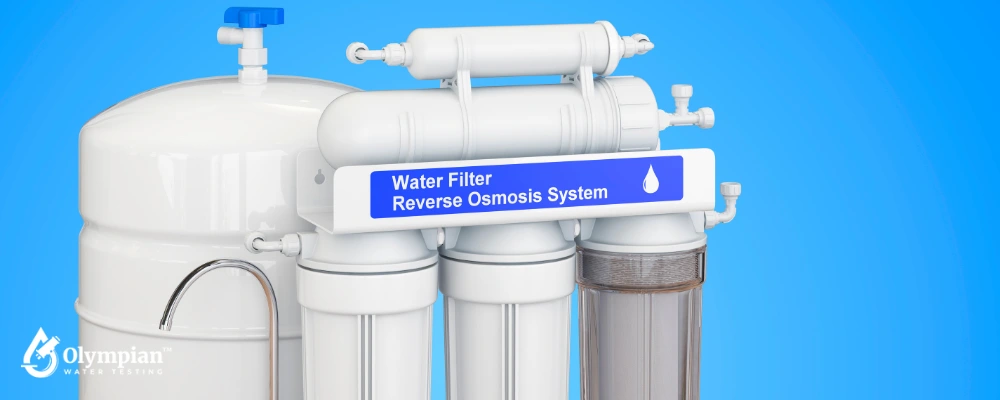
Another treatment option is reverse osmosis (RO). RO involves the use of a semi-permeable membrane to remove contaminants, including PFAS, from the water [4]. This treatment method has been shown to be effective at removing a variety of PFAS compounds from drinking water [5]. However, RO may not be effective at removing certain PFAS compounds, and it can be a relatively expensive treatment option.
A third treatment option is ion exchange (IX). IX involves the use of a resin to remove contaminants, including PFAS, from the water [6]. This treatment method has been shown to be effective at removing a variety of PFAS compounds from drinking water [7]. However, IX may not be effective at removing certain PFAS compounds, and the resin bed may need to be replaced periodically to maintain its effectiveness.
In conclusion, there are a variety of technologies and methods that can be used to treat PFAS-contaminated drinking water, including GAC filtration, reverse osmosis, and ion exchange. Each treatment option has its own advantages and limitations, and the most appropriate treatment option will depend on the specific characteristics of the contaminated water and the target PFAS compounds.
[1] "Per- and Polyfluoroalkyl Substances (PFAS)." US Environmental Protection Agency.
[2] "Granulated Activated Carbon (GAC) Filtration." US Environmental Protection Agency.
[3] "Evaluation of Granular Activated Carbon (GAC) for the Treatment of Perfluorooctanoic Acid (PFOA) and Perfluorooctanesulfonic Acid (PFOS) in Drinking Water." US Environmental Protection Agency.
[4] "Reverse Osmosis (RO) Treatment." US Environmental Protection Agency.
[5] "Evaluation of Reverse Osmosis (RO) for the Treatment of Perfluorooctanoic Acid (PFOA) and Perfluorooctanesulfonic Acid (PFOS) in Drinking Water." US Environmental Protection Agency.
[6] "Ion Exchange (IX) Treatment." US Environmental Protection Agency.
[7] "Evaluation of Ion Exchange (IX) for the Treatment of Perfluorooctanoic Acid (PFOA) and Perfluorooctanesulfonic Acid (PFOS) in Drinking Water." US Environmental Protection Agency.
Case studies of PFAS contamination

Per- and polyfluoroalkyl substances (PFAS) are a group of man-made chemicals that have been used in a variety of industrial and household products due to their unique properties, including their ability to repel water and oil. PFAS have been linked to a number of negative health effects, including cancer, immune system disruption, and developmental problems in infants and children [1]. As a result, there is increasing concern about the presence of PFAS in the environment, including in drinking water.
There have been a number of reported cases of PFAS contamination in drinking water around the world. One notable example is the contamination of drinking water in the town of Hoosick Falls, New York, which was caused by the release of PFAS from a local manufacturing plant [2]. The contamination was discovered in 2014, and the town has since implemented a number of measures to address the issue, including the installation of GAC filtration systems and the provision of alternative drinking water sources to affected residents [3].
Another example of PFAS contamination is the contamination of drinking water near military bases in the United States [4]. This contamination was caused by the use of PFAS-containing firefighting foams at military bases, which resulted in the release of these chemicals into the environment. The contamination has been addressed through a combination of treatment technologies, such as GAC filtration and RO, and the provision of alternative drinking water sources [5].
In conclusion, PFAS contamination of drinking water has been reported in a number of cases around the world. Efforts to address the contamination have included the implementation of treatment technologies and the provision of alternative drinking water sources. The outcomes of these efforts have varied, with some cases resulting in the successful reduction or removal of PFAS from the drinking water and others still ongoing.
[1] "Per- and Polyfluoroalkyl Substances (PFAS)." US Environmental Protection Agency.
[2] "Hoosick Falls." New York State Department of Health.
[3] "Hoosick Falls Residents Rely on Filters, Bottled Water for Safe Drinking Water." CBS News.
[4] "PFAS Contamination of Drinking Water Near Military Bases." Environmental Working Group, https://www.ewg.org/
[5] "Department of Defense: Military Installations with Known or Suspected PFAS Contamination." US Environmental Protection Agency.
Future research needs and directions

Per- and polyfluoroalkyl substances (PFAS) are a group of man-made chemicals that have been used in a variety of industrial and household products due to their unique properties, including their ability to repel water and oil. PFAS have been linked to a number of negative health effects, including cancer, immune system disruption, and developmental problems in infants and children [1]. As a result, there is increasing concern about the presence of PFAS in the environment, including in drinking water.
Climate change is a major global issue that is expected to have wide-ranging impacts on the environment and human health. One potential impact of climate change is the alteration of the occurrence and distribution of PFAS in the environment, including in drinking water [2]. To better understand this impact, there are a number of research needs and directions that should be considered.
One area of future research could focus on the mechanisms through which climate change may affect the occurrence and distribution of PFAS in drinking water. For example, research could examine the role of increased runoff and melting permafrost in the release of PFAS into the environment. This research could help to identify potential pathways for the transport of PFAS and inform the development of strategies to mitigate the impact of these pathways.
Another area of future research could focus on the development and validation of new methods for the detection and analysis of PFAS in drinking water. As climate change may alter the occurrence and distribution of these chemicals, it is important to have accurate and sensitive methods for their detection and analysis. This research could help to improve our understanding of the extent and distribution of PFAS contamination in drinking water and inform the development of effective treatment technologies.
In conclusion, there are a number of research needs and directions that should be considered in order to better understand the impact of climate change on PFAS testing in drinking water. These include research on the mechanisms through which climate change may affect the occurrence and distribution of PFAS in drinking water, and the development and validation of new methods for the detection and analysis of these chemicals.
[1] "Per- and Polyfluoroalkyl Substances (PFAS)." US Environmental Protection Agency.
[2] "Climate Change and Per- and Polyfluoroalkyl Substances (PFAS)." US Environmental Protection Agency.
Share this research on social media
Facebook
Twitter
LinkedIn
See all Research on PFAS