What Are Microplastics?
Microplastics are tiny plastic particles that have become a growing concern in our environment, including our drinking water. These minuscule fragments, less than 5 millimeters in diameter, can originate from various sources. They have the ability to impact human health and ecosystems.
Definition and Size Range
Microplastics are defined as plastic particles larger than 1 micron (1 μm) and smaller than 5 millimeters (5 mm) in diameter. To put this into perspective, they can be as small as bacteria (~2 μm) and smaller than the average red blood cell (~6-7 μm). Their tiny size allows them to easily enter water sources and even be ingested by organisms, including humans.
Primary vs. Secondary Microplastics
Microplastics can be categorized into two main types: primary and secondary. Primary microplastics are intentionally manufactured for specific purposes, such as the microbeads used in personal care products like exfoliating face washes and toothpastes. These microbeads, typically made from polyethylene or polypropylene, can easily pass through water treatment systems and end up in waterways.
Secondary microplastics, on the other hand, result from the breakdown of larger plastic items. Plastic degradation can occur due to various factors, including exposure to sunlight, mechanical abrasion, and chemical reactions. Common sources of secondary microplastics include synthetic clothing fibers released during washing, tire wear particles from road traffic, and the fragmentation of plastic litter in the environment.
The prevalence of microplastics in drinking water has been extensively studied. Research indicates that concentrations of microplastics in bottled water made of plastic are higher than in tap water. Commonly found polymer types in drinking water include polyethylene, polyethylene terephthalate (PET), polyester (other than PET), and polypropylene.
As the world continues to grapple with the challenges posed by microplastic pollution, it is essential to understand their sources, characteristics, and impacts. This knowledge is vital for addressing the health and environmental concerns they pose.
Sources of Microplastics in the Environment
Microplastics, defined as plastic particles less than five millimeters in length, have become a pervasive form of environmental contamination. These tiny plastic fragments enter the environment through various pathways, contributing to widespread plastic pollution. Let’s explore the primary sources of microplastics in the environment.

Breakdown of Plastic Waste
The breakdown of larger plastic debris is a significant source of microplastics. When exposed to sunlight, wind, and waves, plastic items such as bottles, bags, and packaging gradually degrade into smaller pieces. This process, known as photodegradation, can take years or even decades. As a result, most plastics in the ocean eventually break down into microplastics, contributing significantly to marine debris and surface runoff contamination.
Microbeads in Personal Care Products
Another notable source of microplastics is the use of plastic microbeads in personal care products. These tiny plastic particles, first introduced approximately 50 years ago, were commonly found in items such as facial scrubs, toothpaste, and cosmetics. When these products are used and rinsed down the drain, the microbeads enter the wastewater effluent, easily passing through water filtration systems due to their small size. This has led to their detection in oceans and Great Lakes, posing threats to aquatic life and birds that mistake them for food.
| Year | Event |
|---|---|
| 2012 | Many products containing plastic microbeads were on the market, with limited consumer awareness |
| 2015 | The Microbead-Free Waters Act was signed into law, banning plastic microbeads in cosmetics and personal care products in the U.S. |
Synthetic Fibers from Clothing
Microfiber shedding from synthetic clothing is another significant contributor to microplastic pollution. During washing, synthetic garments such as polyester and nylon release thousands of microfibers into the water. These fibers, too small to be effectively filtered out by wastewater treatment plants, ultimately find their way into rivers, lakes, and oceans. Studies have shown that microplastics originating from clothing fibers are present in tap water, highlighting the extent of this issue.
The NOAA Marine Debris Program is actively researching microplastics and developing standardized methods for global comparisons of microplastic distribution. By understanding the sources and pathways of microplastics, we can develop targeted strategies to reduce their environmental impact and protect our water resources from further contamination.
How Microplastics Contaminate Water Sources
Microplastic contamination of water sources is a growing concern. These tiny particles are found in rivers, lakes, oceans, and even groundwater. The presence of microplastics in our water supply poses significant challenges for water treatment facilities. It also raises questions about the impacts on human health and aquatic ecosystems.

Surface Water Contamination
Microplastics enter our water sources mainly through surface water contamination. They can be introduced into rivers, lakes, and oceans via various pathways. This includes runoff from land-based sources, wastewater discharge, and the breakdown of larger plastic debris.
- Runoff from land-based sources, such as littering and improper waste management
- Wastewater discharge containing microfibers from synthetic clothing and microbeads from personal care products
- Breakdown of larger plastic debris in the environment due to exposure to sunlight, wind, and waves
The table below illustrates the estimated annual input of microplastics into oceans from different sources:
| Source | Annual Input (Million Metric Tons) |
|---|---|
| Tire wear particles | 1.41 |
| Textile fibers | 0.79 |
| Plastic pellets | 0.23 |
| Paint particles | 0.14 |
| Microbeads | 0.01 |
Groundwater Contamination
Microplastics can infiltrate groundwater through leaching from landfills or the use of treated wastewater for aquifer recharge. As plastic waste breaks down in landfills, tiny particles can seep into the soil. They eventually reach underground water sources. The increasing practice of using treated wastewater for groundwater replenishment can also introduce microplastics into aquifers if treatment processes are not effective.
The presence of microplastics in both surface water and groundwater poses significant water treatment challenges. Conventional treatment methods, such as filtration and sedimentation, may not effectively remove these tiny particles. Microplastics can persist in treated water and eventually reach our taps. This leads to concerns about the health risks associated with long-term exposure to these contaminants.
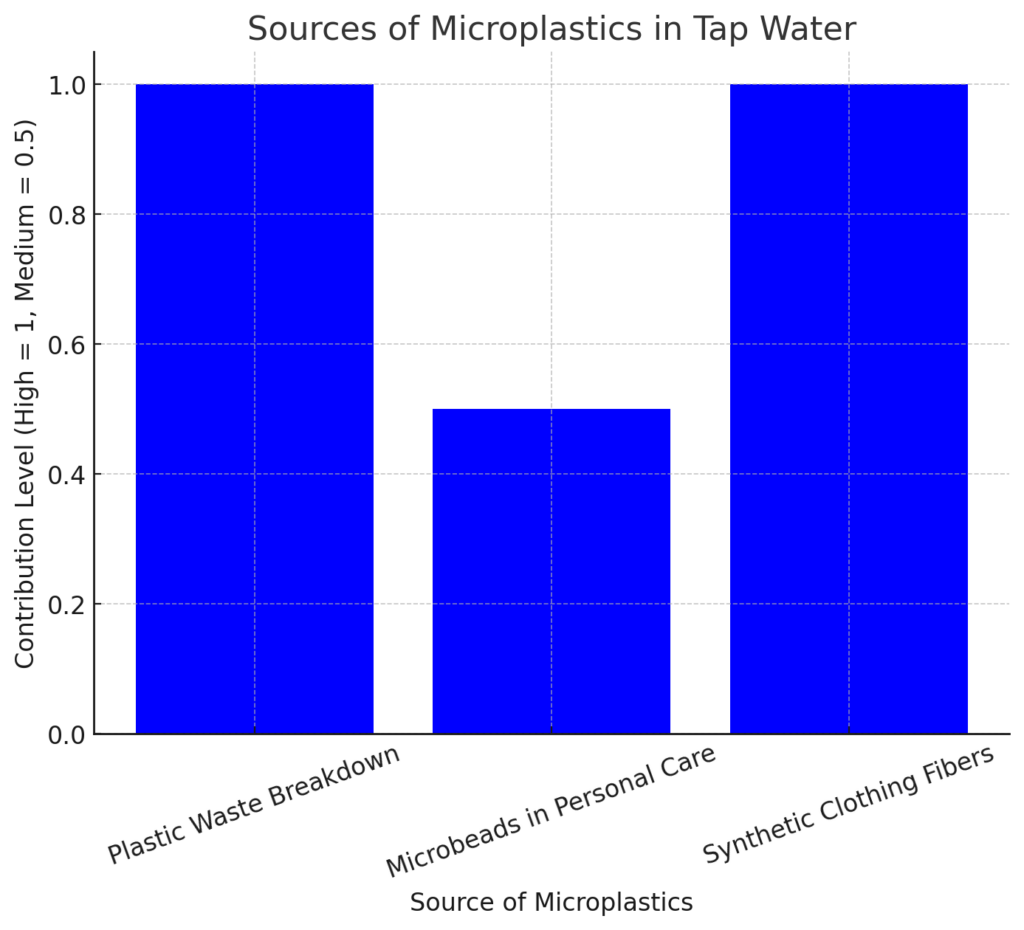
The Journey of Microplastics from Source to Tap
Microplastics, particles under 5 mm, are increasingly found in drinking water. They pose health risks as they move through water systems. Studies reveal microplastics in tap and bottled water, with bottled water showing higher levels due to bottling stress.
Microplastics enter water systems through various routes. They come from plastic waste, personal care products, and synthetic fibers. In the water, they can break down and release harmful chemicals like PCBs and PAHs.
| Source of Microplastics | Potential Health Risks |
|---|---|
| Plastic waste breakdown | Endocrine disruption, reproductive health issues |
| Microbeads in personal care products | Gastrointestinal irritation, altered gut microbiome |
| Synthetic fibers from clothing | Respiratory and cardiovascular diseases |
| Pipe degradation in water distribution systems | Chronic inflammation, immune system disruption |
Water treatment advancements may not remove all microplastics. This means microplastics can remain in drinking water. Pipe degradation in systems adds more microplastics, worsening the problem.
To tackle microplastics in tap water, we need a broad strategy. This includes cutting down on single-use plastics, better waste management, and more effective water treatment. Reverse osmosis systems can filter out microplastics, and whole-home conditioners can reduce other contaminants, improving our living spaces.
By 2050, there could be more plastic in the oceans than fish.
As research on microplastic contamination grows, it’s vital for everyone to act. We must work together to reduce plastic pollution and find new ways to ensure clean drinking water for everyone.
Microplastics in Tap Water
The presence of microplastics in drinking water has become a growing concern in recent years. These tiny plastic particles have entered our tap water, raising questions about their impact on human health. The effectiveness of current water testing methods in detecting and measuring contaminant levels is also under scrutiny. Researchers are now exploring how to identify microplastics and develop more sensitive testing techniques to assess their prevalence in water sources. Moreover, the potential long-term effects of ingesting these particles are still largely unknown, prompting calls for more comprehensive studies. As public awareness grows, there is an increasing demand for regulatory changes aimed at ensuring clean and safe drinking water for all communities.
Studies have revealed significant regional variations in the concentration of microplastics found in tap water samples. Some areas have shown higher contamination levels than others. This indicates that local factors such as water sources, treatment processes, and pollution levels may influence the prevalence of microplastics.

Prevalence of Microplastics in Tap Water
Research findings suggest that microplastics are widespread in tap water supplies worldwide. A study in the United Kingdom analyzed 177 tap water samples from 13 cities. It found microplastics in every sample tested, highlighting the pervasive nature of microplastic contamination in our drinking water.
The size of microplastics detected in tap water varies greatly. Some particles are as small as one-thousandth of a millimeter in diameter. Smaller microplastic particles, between 0.1 and 2 microns, have been linked to cognitive decline in mice. This raises concerns about the health risks for humans.
Studies on Microplastics in Tap Water
Several studies have evaluated the effectiveness of various methods in removing microplastics from tap water. One notable research finding suggests that boiling and filtering tap water can reduce microplastic and nanoplastic presence by nearly 90%.
| Water Hardness (mg L−1 of CaCO3) | Microplastic Removal Percentage |
|---|---|
| 80 | 34% |
| 180 | 84% |
| 300 | 90% |
The effectiveness of microplastic removal through boiling and filtering depends on water hardness. In harder water with 300 mg of CaCO3 per liter, up to 90% of microplastics were removed after boiling for five minutes. In softer water, only around 25% of microplastics were eliminated.
Despite these findings, concerns remain about the long-term health implications of consuming microplastics in drinking water. Some studies have linked microplastic consumption to metabolic disorders such as diabetes. This highlights the need for further research to understand the risks associated with microplastic ingestion.

Microplastics in Bottled Water
Many believe bottled water is safer than tap water. Yet, recent studies show bottled water can also contain microplastics. This raises concerns about water quality regulations and consumer perceptions.
In Spain, a study found bottled water had a median microplastic concentration of 0.73 MPs/L. The range was 0.64–1.58 MPs/L. The median size of these microplastics was 93 µm, with sizes ranging from 76–130 µm. The study also found artificial cellulosic particles (ACPs) in bottled water, with a median concentration of 1.70 ACPs/L and a range of 0.58–2.82 ACPs/L.
Microplastics in bottled water come from various sources. These include leaching of plastic from packaging materials and contamination during bottling. The study identified several types of microplastics, including polyester fragments, polyester fibres, and polyethylene fragments.
- 35 polyester fragments
- 29 polyester fibres
- 11 polyethylene fragments
- 1 polyethylene film
- 2 polyamide fragments
- 1 polystyrene fragment
- 1 polypropylene fragment
- 1 polysiloxane fragment
Comparison of Microplastics in Bottled Water vs. Tap Water
Research shows bottled water has higher microplastic concentrations than tap water. The exact reasons are unclear. Yet, it’s thought that the extra processing and packaging in bottled water production may contribute to this difference.
| Water Source | Median Microplastic Concentration |
|---|---|
| Bottled Water | 0.73 MPs/L |
| Tap Water | Lower than bottled water |
It’s important to note that microplastics can be removed from drinking water. Technologies like reverse osmosis systems can effectively remove nearly all microplastics from water.
Health Concerns Associated with Microplastics
Microplastics are increasingly found in our environment and water sources, raising health concerns. Research indicates that ingesting microplastics can cause physical harm, release harmful chemicals, and accumulate in the body over time. This accumulation can have long-term effects on our health.
Potential Health Risks
Studies have linked microplastic exposure to various health issues. A December 2024 review in Environmental Science & Technology analyzed 28 rodent and 3 human studies. It concluded that microplastics may cause digestive problems and even colon cancer. The review also found reproductive hazards, affecting hormone levels and fertility.
Microplastics may also pose respiratory risks, impacting lung function and causing inflammation. The presence of chemicals in microplastics is linked to cancer, immune system damage, and reproductive problems. These chemicals have been found in human tissues, raising concerns about cardiovascular diseases and inflammation.
Gaps in Knowledge and Ongoing Research
Despite growing research, understanding microplastic effects on human health remains incomplete. Studies have shed light on the risks, but more research is needed. This includes identifying and quantifying microplastics in various environments.
Efforts like those by the Environmental Contaminants Analytical Laboratory at Penn State are underway. They aim to understand microplastic prevalence and their environmental and health impacts. As plastic production increases, it’s vital to continue studying microplastic health effects and finding ways to reduce their impact.
Challenges in Removing Microplastics from Water Treatment Plants
Water treatment plants face significant challenges in removing microplastics from our drinking water. These tiny particles are difficult to capture due to their small size and diverse properties. Advanced treatment technologies like membrane filtration and reverse osmosis can help. Yet, implementing these solutions on a large scale is hindered by cost implications and the need for substantial energy.
Recent studies have highlighted the alarming presence of microplastics in our water systems. The removal of microplastics during treatment varies from 46% to 87%. Approximately two-thirds of the total microplastics found are nanoplastics smaller than one micron. Researchers have found significantly higher concentrations of plastics, with a focus on previously unreported nanoplastics.
The monitoring difficulties in detecting and quantifying microplastics in treated water complicate the assessment of removal strategies. Current scanning electron microscope techniques can analyze down to half a micron in size. Yet, this precision is not yet feasible for large-scale monitoring. As a result, drinking water treatment plants are currently unable to remove 100 percent of microplastics. This leaves consumers exposed to the health risks associated with ingesting these tiny particles.
The table below illustrates the concentration ranges of microplastics (MPs) at various stages of wastewater treatment:
| Treatment Stage | MPs Concentration Range (particles/L) | Average MPs Concentration (particles/L) |
|---|---|---|
| Inlet to WWTPs | 0.28 × 10^4 to 3.14 × 10^4 | 1.90 × 10^3 |
| After Pretreatment | 0.22 to 1.26 × 10^4 | 6.87 × 10^2 |
| After Biological Treatment | Below LOQ to 7.86 × 10^3 | 4.67 × 10^2 |
| After Tertiary Treatment | 0 to 2.97 × 10^2 | 1.93 × 10^1 |
To overcome the filtration limitations posed by microplastics, we need continued research and innovative solutions. Collaboration between water treatment facilities, policymakers, and the public is essential. Ensuring access to clean and safe drinking water for all requires addressing microplastic contamination challenges. This is critical for protecting human health and the environment.
Current Regulations and Policies on Microplastics
As concerns about microplastics in drinking water grow, governments and international bodies are taking action. Microplastics, defined as plastic fragments or fibers under 5 mm, have been found in tap and bottled water. This has led to demands for stricter water quality standards and regulatory frameworks.
Internationally, the World Health Organization has set guidelines for monitoring microplastics in drinking water. Yet, a unified and detailed set of regulations on microplastics in drinking water is lacking across countries and regions.
International Guidelines
The World Health Organization has issued guidelines for monitoring and assessing microplastics in drinking water. These guidelines serve as a basis for countries to establish their own monitoring requirements and water quality standards. They highlight the need for more research to understand the health risks posed by microplastics in drinking water.
National and Local Regulations
Several countries have banned microbeads in personal care products, acknowledging their role in microplastic pollution. The United States has the Microbead-Free Waters Act of 2015, the only federal law addressing microplastics in consumer goods.
California has been proactive, implementing testing requirements for certain products and drinking water concerning microplastics. Other states and local governments are exploring similar measures to tackle microplastics in drinking water.
| Country/Region | Regulation/Policy | Description |
|---|---|---|
| United States | Microbead-Free Waters Act of 2015 | Federal legislation banning the use of microbeads in rinse-off cosmetics and personal care products |
| California | Testing requirements for consumer products and drinking water | State-level regulations requiring testing for microplastics in certain consumer products and drinking water sources |
| European Union | European Plastics Strategy | A plan to reduce plastic pollution, including measures for microplastics in the environment |
Despite these efforts, more detailed and unified regulatory frameworks are needed to tackle microplastics in drinking water effectively. As research uncovers more about the health risks of microplastics, it’s essential for governments and international bodies to collaborate. They must develop and enforce effective water quality standards and monitoring requirements.
Strategies to Reduce Microplastic Pollution
Addressing microplastic pollution demands a multifaceted strategy. It must target the root causes and promote sustainable solutions. By focusing on plastic reduction, better waste management, and eco-friendly alternatives, we can significantly reduce microplastics in our environment and tap water.
Reducing Single-Use Plastics
Reducing single-use plastics is a key strategy against microplastic pollution. Simple changes in our daily lives, like using reusable bags and water bottles, can have a big impact. Governments and businesses must also play a role by discouraging disposable plastics and promoting sustainable options.

Improving Waste Management
Effective waste management is critical to prevent plastic pollution. Enhancing recycling infrastructure and promoting the circular economy can keep plastics in use longer. This reduces waste in landfills and oceans. Innovative recycling technologies, such as advanced sorting and chemical recycling, can improve recycling efficiency.
| Strategy | Impact on Microplastic Reduction |
|---|---|
| Implementing deposit-return schemes for plastic bottles | Increases recycling rates and reduces plastic litter |
| Investing in waste collection and sorting infrastructure | Prevents plastic leakage and improves recycling efficiency |
| Promoting the use of recycled plastics in manufacturing | Reduces demand for virgin plastics and supports the circular economy |
Developing Biodegradable Alternatives
Investing in biodegradable materials is essential for sustainable alternatives to plastics. These materials, made from renewable sources like plant starches or algae, break down naturally without harming the environment. Supporting eco-friendly businesses and initiatives can help us move towards a sustainable future.
Combating microplastic pollution requires a unified effort from all sectors. By focusing on plastic reduction, improving waste management, and developing sustainable materials, we can ensure a cleaner environment for future generations.

Household Solutions for Filtering Microplastics
As concerns about microplastics in drinking water grow, many households are looking for effective solutions. Studies reveal that 83% of tap water worldwide and 94% of U.S. tap water contain microplastics. This highlights the need for additional water filtration methods. Fortunately, several point-of-use treatment options can help remove these contaminants.
Reverse osmosis (RO) systems are highly effective in contaminant removal, including microplastics. These systems use membranes with pore sizes as small as 0.0001 microns. They can filter out a wide range of contaminants. In fact, RO systems can remove between 94% and 100% of plastic fragments like PVC and PET. Advanced RO systems, such as those by Kind Water, can filter up to 50 gallons of water per day while reducing water waste by 50%.
Activated carbon filters are also a popular choice for reducing microplastics in drinking water. These filters can capture particles down to 1-2 microns in size. They effectively filter out up to 99% of microplastics. Brands like Tappwater and Doulton offer high-quality activated carbon filters. Doulton’s ceramic water filters, for example, have an absolute filtration rating of 99.99%+ for microplastics. Their Fluoride Plus filters can remove microfibres down to 0.5 microns.
When selecting a water filtration system, consider the size of microplastics you want to remove. Microplastics in drinking water can range from a few microns to a few millimeters. Many studies find particles between 10 and 500 microns. Nano-sized microplastics, typically less than 100 microns, can be challenging to remove. Yet, products like LifeStraw filters have been tested to block 99.999% of microplastic particles, including those as small as 0.02 microns.
Regardless of the filtration system you choose, proper filter maintenance is key to ongoing effectiveness. Always follow the manufacturer’s guidelines for replacing filters and cleaning the system regularly. By investing in a reliable water filtration system and maintaining it properly, you can significantly reduce your exposure to microplastics. This way, you can enjoy cleaner, safer drinking water in your home.
| Filtration System | Microplastic Removal Efficiency | Particle Size Range |
|---|---|---|
| Reverse Osmosis (RO) | 94% – 100% | Down to 0.0001 microns |
| Activated Carbon Filters | Up to 99% | 1-2 microns |
| Doulton Ceramic Filters | 99.99%+ | Down to 0.5 microns |
| LifeStraw Filters | 99.999% | Down to 0.02 microns |
Initiatives to Raise Awareness about Microplastic Pollution
It’s vital to raise awareness about microplastic pollution to inspire change and push for policy action. Through public education, consumer campaigns, and scientific communication, we can better understand this issue. This understanding is key to grasping its environmental and health impacts.
Stakeholder engagement is essential in tackling microplastic pollution. By engaging individuals, businesses, and organizations, we can build a sense of collective responsibility. This encourages behavior change. The urgency of the situation is underscored by several statistics:
- Approximately 136 billion milk jugs worth of plastic debris enter the oceans each year, with around 80 percent originating from land sources.
- The average recycling rate for plastics in the United States was about 6 percent in 2021, indicating a need for improved waste management practices.
- An estimated 9 percent of microplastics in the ocean come from synthetic fibers found in clothing materials such as nylon, acrylic, polyester, and fleece.
Public education initiatives can enlighten people on the sources of microplastics. This includes the breakdown of larger plastic items, synthetic textiles, and personal care products. By highlighting the presence of microplastics in various water sources, we can prompt individuals to make more sustainable choices.
Consumer campaigns can focus on industries and products contributing to microplastic pollution. For instance, promoting microplastic-free personal care products and supporting eco-friendly packaging can drive demand for sustainable options. Scientific communication efforts, like accessible research and public outreach, ensure the latest microplastic research reaches everyone.
By combining these initiatives and engaging stakeholders, we can build a strong movement against microplastic pollution. Through public education, consumer campaigns, and scientific communication, we empower individuals, influence industries, and push for policy changes. These actions protect our water resources and the environment.
The Role of Individuals in Combating Microplastic Pollution
As global plastic production surges, with over 400 million tons annually post-2020, our individual actions against microplastic pollution are vital. By choosing sustainable options and adopting eco-friendly habits, we can collectively diminish plastic waste. This, in turn, reduces the plastic that ends up in our water.
Lifestyle Changes to Reduce Plastic Consumption
Reducing our use of single-use plastics is key to fighting microplastic pollution. Simple actions like using reusable bags, bottles, and straws can greatly reduce waste. Choosing products with less packaging and opting for sustainable alternatives, like bamboo toothbrushes, also helps.
Our clothing choices also play a role. Synthetic fabrics, like polyester, shed microplastic fibers when washed. These tiny particles evade wastewater treatment systems. By choosing natural fibers or using microfiber filters, we can reduce these harmful emissions.
Supporting Eco-Friendly Businesses and Initiatives
Our purchasing power can drive environmental change. By backing companies that prioritize sustainability, we encourage the growth of eco-friendly products. This sends a strong message that sustainability is valued. Researching companies’ environmental policies and supporting those that align with our values can inspire others to follow suit.
Getting involved in local initiatives and supporting organizations focused on plastic reduction can amplify our impact. Joining beach cleanups, pushing for better waste management, and educating others about plastic reduction are all effective ways to contribute to the fight against microplastic pollution.
While the battle against microplastic pollution is significant, our individual actions are not to be underestimated. By making informed choices, adopting sustainable habits, and supporting green initiatives, we can all contribute to a cleaner, healthier future. Our collective efforts are essential in addressing this global challenge.
The Future Outlook on Microplastics in Tap Water
The world faces a critical challenge with microplastic pollution, impacting tap water quality. Daily, 65 million microplastic particles are released from wastewater plants (Murphy et al., 2016). Microplastics have been found in tap water globally, including in Kokshetau, Kazakhstan, with concentrations up to 6.0 × 10⁻² particles/dm³. This highlights the urgent need for effective solutions. Research and emerging technologies offer hope in addressing this issue.
Policies and international cooperation are essential for tackling microplastics in tap water. Over 60 countries have banned single-use plastics and microbeads (UNEP, 2018). The United States has banned cosmetic products with plastic microbeads (Kershaw, 2015). The European Commission aims to reduce microplastic release by 30% by 2030, starting with a ban on loose glitter and microbeads in October 2023.
Combating microplastic pollution requires a multi-faceted strategy. This includes technological advancements, policy reforms, and behavioral changes. EU projects like PLASTICHEAL and AURORA are studying microplastic impacts on human health. By 2025, these studies will provide critical insights for developing effective solutions.
The outlook on microplastics in tap water is cautiously optimistic. The world acknowledges the need for immediate action and cooperation. By investing in research, enforcing strict policies, and promoting sustainability, we can achieve a future with clean drinking water. The journey will be difficult, but with determination and a shared commitment, we can overcome this challenge and secure a better future.
FAQ
What are microplastics, and how are they defined?
Microplastics are tiny plastic particles, smaller than 5 millimeters, ranging from 1 micron to 5,000 microns. They are classified into primary microplastics, which are made intentionally, and secondary microplastics, resulting from larger plastic items breaking down.
How do microplastics enter the environment and contaminate water sources?
Microplastics enter the environment through several sources. These include the breakdown of plastic waste, the use of microbeads in personal care products, and synthetic fibers from clothing shedding during washing. They then contaminate water sources through runoff, wastewater discharge, and leaching from landfills.
Can microplastics be found in tap water, and what are the levels of contamination?
Yes, studies have found microplastics in tap water worldwide, with varying contamination levels. Despite water treatment, microplastics can remain in tap water. This is because conventional methods may not remove all particles effectively.
Are microplastics also present in bottled water?
Yes, microplastics have been detected in bottled water, with some studies indicating higher levels than in tap water. Bottled water’s microplastic content can come from plastic packaging leaching and contamination during the bottling process.
What are the possible health risks of microplastic ingestion?
Research suggests microplastics may cause physical damage, leach harmful chemicals, and accumulate in the body. Yet, the long-term health effects of microplastic exposure are not fully understood. Further research is essential to grasp the risks.
How can households reduce their exposure to microplastics in drinking water?
To reduce microplastic exposure, households can install water filtration systems. Options like reverse osmosis systems or activated carbon filters can provide additional protection against contamination.
What can individuals do to combat microplastic pollution?
Individuals can combat microplastic pollution through daily choices. Reducing single-use plastics, choosing reusable alternatives, and supporting eco-friendly businesses can help decrease plastic waste in the environment.
What is the future outlook on addressing microplastics in tap water?
The future for addressing microplastics in tap water hinges on ongoing research, technological advancements, and policy developments. As our understanding grows, new detection and removal technologies may emerge. International cooperation and knowledge sharing are key to developing effective strategies against microplastic pollution.