
Can You Drink Distilled Water?
- Published:
- Updated: June 10, 2025
Summary
Distilled water is a highly purified form of water, created by boiling and condensing water to remove impurities. While it’s safe to drink in moderation, it lacks essential minerals, which can be a concern for long-term consumption.
- Purity: Distilled water is free from contaminants and minerals but may lack essential nutrients like calcium and magnesium, which are important for overall health.
- Health Risks: Long-term consumption of distilled water may lead to mineral deficiencies, impacting health, especially if the diet doesn’t compensate for the lost minerals.
- Safe Usage: Distilled water is ideal for medical, laboratory, and automotive use due to its purity, but for daily drinking, a balanced diet is crucial to make up for the missing minerals.
We, a team of experts, have deeply studied distilled water. We looked into its safety and benefits. Distilled water is very pure, with no minerals or bacteria, just water.
This raises questions about its safety and benefits. We aimed to give clear info on its production, safety, and uses. We focused on its purity and its role in industries like pharmaceuticals and medicine, where potable water testing is essential to meet stringent safety standards.
Exploring distilled water, we’ll talk about the science behind drinking it. We’ll look at its health benefits and risks. It’s often more expensive than tap water but doesn’t offer extra health benefits.
We’ll also discuss its practical uses and daily guidelines. It lacks minerals like calcium and magnesium. You might need supplements or eat more fruits and veggies to make up for this. This will help us understand its safety and benefits better.
Can You Drink Distilled Water Safely?
Yes, you can drink distilled water safely in moderation. Distilled water is highly purified, and the distillation process removes harmful contaminants such as bacteria, chlorine, and heavy metals. This makes it safer than some tap water, especially in areas where the water quality is poor. However, distilled water lacks essential minerals like calcium, magnesium, and potassium, which are important for overall health.
For most people, drinking distilled water occasionally or in moderation poses no immediate health risks, especially if they maintain a balanced diet that provides these essential nutrients. However, if you rely on distilled water for long periods and do not consume a diet rich in minerals, you may risk mineral deficiencies, which could negatively affect your health. Additionally, it’s worth noting that while distilled water is free of impurities, it lacks essential minerals like calcium and magnesium that contribute to overall well-being. This raises a question for many: does distilled water expire over time? While distilled water can be stored indefinitely if kept in a clean, sealed container, factors like exposure to air and contaminants can affect its quality, so it’s important to monitor storage conditions.
In conclusion, distilled water is safe to drink, but it’s not the best choice for long-term hydration unless your diet compensates for the missing minerals.
| Characteristic | Value |
|---|---|
| pH Level | around 6.9 |
| Dissolved Solids | up to 10 parts per million |
| Mineral Content | Lacks essential minerals like calcium, magnesium, and potassium |
Can You Drink Distilled Water Everyday?
Yes, it is safe to drink distilled water every day, but there are some considerations. Distilled water is purified and free from contaminants, which makes it safe in terms of hygiene and cleanliness. However, since it lacks minerals like calcium and magnesium, drinking it exclusively over long periods may lead to mineral deficiencies if your diet doesn’t compensate for the missing nutrients.
For most healthy individuals with a balanced diet, drinking distilled water daily is not a major concern. It’s important to ensure that your food intake provides the necessary minerals that distilled water lacks. People with specific health conditions or mineral deficiencies should consult a healthcare provider before consuming distilled water as a primary water source.
| Characteristic | Value |
|---|---|
| Safety for Daily Use | Yes, if consumed in moderation and with a balanced diet |
| Risk of Mineral Deficiency | Possible, if not compensated by diet |
| Ideal for | Short-term use, medical or laboratory applications |
| Long-Term Consumption | Safe with a balanced diet, but not the best choice for long-term hydration |
The Scientific Research Behind Distilled Water Consumption
Exploring the science behind drinking distilled water reveals a complex topic. It’s important to note that distilled water can be safe but lacks essential minerals. This can lead to imbalances and deficiencies. Yet, it effectively removes harmful pathogens and chemicals from water.
The World Health Organization (WHO) warns about the health risks of drinking distilled water. It lacks minerals like magnesium, calcium, and potassium. To avoid these issues, it’s key to eat a variety of foods. This ensures you get all the necessary nutrients.
| Mineral | Importance | Food Sources |
|---|---|---|
| Magnesium | Essential for muscle and nerve function | Dark leafy greens, nuts, and seeds |
| Calcium | Crucial for bone health | Dairy products, fortified plant-based milk, and leafy greens |
| Potassium | Important for heart health and blood pressure regulation | Fruits, vegetables, and whole grains |

Comparing Distilled Water with Other Drinking Water Sources
We look at distilled water compared to tap water and bottled water. Distilled water is purified, with no contaminants or minerals. Tap water and bottled water may have minerals and impurities. The process to make distilled water removes up to 99.9% of tap water minerals.
There are many choices for drinking water, each with its own benefits and drawbacks. Tap water might have fluoride for teeth but can also have lead and copper. Bottled water is purified but can be pricey and harm the environment. Distilled water is cheaper and better for the planet, giving you clean water with few impurities.
| Drinking Water Source | Purification Process | Mineral Content | Contaminant Risk |
|---|---|---|---|
| Distilled Water | Boiling and condensation | Low | Low |
| Tap Water | Varying treatment methods | Variable | Variable |
| Bottled Water | Purified water with varying treatment methods | Variable | Variable |
Health Benefits and Potential Risks of Drinking Distilled Water
Drinking distilled water may have health benefits like better digestion and lower disease risk. It removes up to 99.5% of impurities, making it a top choice for clean water. But, it’s important to know the risks, like lower metabolic function and more urine, which can lead to mineral imbalance. For those comparing water options at home, residential water testing can help determine if distilled water is necessary or if your tap water already meets safety standards.
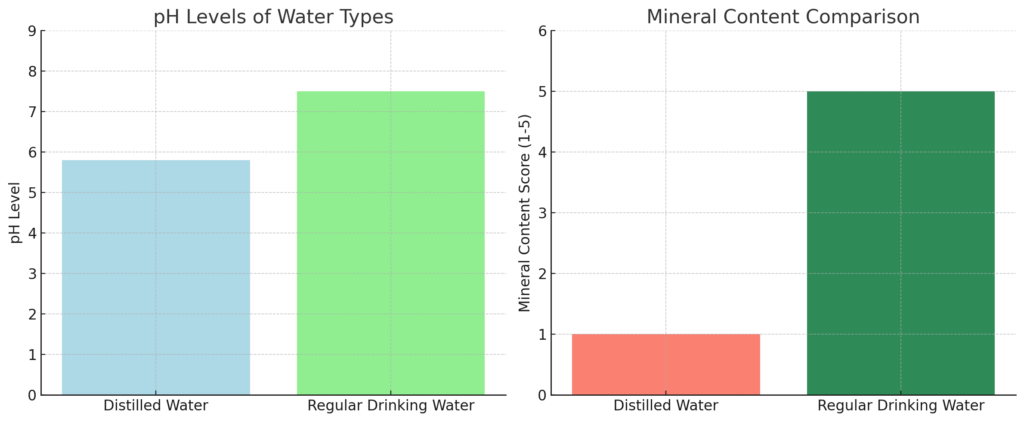
To avoid these risks, it’s key to eat a balanced diet and get the right minerals. The U.S. Environmental Protection Agency (EPA) says purified water can have up to 10 ppm dissolved solids. Distilled water often lacks minerals like iron, fluoride, and calcium.
| Type of Water | pH Level | Mineral Content |
|---|---|---|
| Distilled Water | 5.8 (slightly acidic) | Lacks essential minerals |
| Regular Drinking Water | 7.5 (slightly alkaline) | Contains essential minerals |
Practical Applications and Daily Usage Guidelines
We use distilled water in many parts of our lives. This includes medical tools, lab tests, cosmetics, and cars. Its high purity is key to avoiding contamination and ensuring accuracy.
In medicine, distilled water stops bacteria and other harmful microorganisms. This helps prevent infections. It’s also vital in labs for making chemical solutions and running experiments. The purity of distilled water is critical here, as impurities can skew results.
Distilled water is also used in cars to stop corrosion in batteries and cooling systems. This helps cars last longer and keeps engines safe. It’s used in making cosmetics and pharmaceuticals too. Here, its purity is essential to keep products clean and safe.
We also use distilled water at home, like in cooking and cleaning. But, drinking it regularly can cause problems. It removes almost all minerals and impurities from water, which is why drinking water testing is important—especially when comparing it to tap or filtered options for daily use.
Conclusion: Making an Informed Decision About Distilled Water Consumption
Our detailed study on distilled water has shown its safety and benefits. It’s a purified water that removes impurities and minerals. While it’s good for removing harmful substances, it lacks essential minerals, which is a concern for long-term use.
Deciding to drink distilled water depends on your health and diet. For most people, drinking it in moderation is safe, as long as you eat a balanced diet. But, athletes or those in hot climates might need to watch their mineral intake more closely.
The debate on distilled water highlights the need to choose wisely about our water sources. Knowing the pros and cons helps us make choices that fit our needs. This ensures we stay hydrated and healthy in a balanced way.
Think Your Tap Water is Unsafe? Test It Today!
Your health matters, and so does the quality of the water you drink. While distilled water is an option, nothing beats the benefits of safe, mineral-rich tap water. Ensure the water in your home is clean and safe by getting it tested today.
Get your tap water tested and enjoy the peace of mind knowing it’s safe to drink.
Shedule Your Test Now!
Share this on social media: