

How to Choose the Right Phosphorus Testing Kit for Your Needs

A technical paper by Olympian Water Testing specialists

The importance of phosphorus testing in soil and water
Phosphorus is an important mineral that plants and animals require, which is important for soil and water to thrive. Phosphorus testing is a crucial part of many areas such as agriculture, environmental control and water quality monitoring since it’s essential for knowing how much of the important mineral you have. This subtopic is meant to dive deeper into why testing for phosphorus in soil and water matters and why it is important to have healthy, productive ecosystems.
Phosphorus testing is very important for agricultural plants in order to get the best growth and productivity. Phosphorus is one of the most important nutrients plants require for development and especially to make strong roots and to photosynthesise. Phosphorus levels can be tested in soil by farmers and growers so they can know how much phosphorus is available to crops and thus decide on fertilizer and other management measures [1]. This keeps the crop getting enough phosphorus it needs to thrive, and also stops overdistribution of fertiliser and its environmental consequences.
The management of the environment is another arena where phosphorus testing is very important. When excess phosphorus is present in aquatic systems, this creates eutrophication: the overgrow of algae and aquatic plants. There can be some bad effects, such as diminished water quality, greater amounts of toxic chemicals, and the displacement of native species. We can test phosphate for the measurement of this nutrient in water and to determine if it will cause eutrophication or other negative effects [2]. That data can help management adjust inputs of phosphorus and water quality.
Besides, Phosphorus analysis is also necessary for regulatory compliance, performance assessment of wastewater treatment systems, environmental effects and threats, and resource consumption.
Conclusion: phosphorus testing is a tool that is a must for productive soil and water. By delivering important data on how much of this vital nutrient is available, phosphorus testing ensures crop growth and yields, avoids eutrophication and other adverse effects on aquatic ecosystems, and helps to make management decisions in agricultural and environmental sustainability. Thus accurate and consistent phosphorus testing is required in various applications and industries such as agriculture, environment management, water quality monitoring, regulatory enforcement and resource management. Purchasing the right phosphorus testing kit for you can help you better understand how much phosphorus is in your soil and water, and take more informed action on how to deal with this valuable resource.
[1] J.A. Mortvedt, "Phosphorus in agriculture: An overview" Journal of Plant Nutrition, vol. 13, pp. 969-985, 1990
[2] D.S. Schindler, "Eutrophication of lakes and reservoirs" Limnology and Oceanography, vol. 47, pp. 859-876, 2002
Different types of phosphorus testing kits

Phosphorus in water analysis is needed for many applications in agriculture, the environment and in water quality monitoring. For the right tests to be conducted to evaluate phosphorus content in soil and water, you should pick the right testing kit. In this subtopic, we shall discuss the different phosphorus testing kits available on the market (colorimetric, spectrophotometric, electrochemical) and their pros and cons.
Among all the kits that measure phosphorus, colorimetric is the most prevalent. In these kits, a chemical reagent reacts with phosphorus to give the colour shift visible and is then determined by a colorimeter or spectrophotometer. The colourimetric approach is also a simple one and it is frequently applied on the field. They’re quite cheap and accessible but might be less sensitive and accurate than other approaches [1].
The spectrophotometers are the other kind of phosphorus testing kits. These are light absorbance methods for measuring phosphorus, and they often involve the application of a reagent which reacts with phosphorus to produce a complex that absorbs light at a wavelength. The spectropotometric technique is sensitive and accurate but it can be more time-consuming and cumbersome to use than the colorimetric technique [2].
and Electrochemical methods are also getting more popular for testing water for phosphorus. They are based on an electrode that responds to phosphorus in a specific manner. The electrochemical systems are sensitive, selective and can be monitored in the long term. But electrochemical approach might cost more and be more complicated to apply than colorimetric or spectrophotometric approaches [3].
In sum, there are many phosphorus testing kits available in the market like colorimetric, spectrophotometric, and electrochemical one. There are some pros and cons to each technique, so make sure you get the correct testing kit for the application. The colourimetric technique is cheap and straightforward but can’t be as sensitive or precise as other methods. Spectrophotometry is sensitive and accurate but also more laborious and cumbersome. Electrochemical methods are sensitive, selective and can be monitored over the long term but can be more costly and more specialised. You need to think hard about your application requirements and select a test kit that’s right for your application requirements — accuracy, sensitivity, ease of use and price.
[1] R. P. Wong, "Colorimetric determination of phosphorus" Analytical Chemistry, vol. 47, pp. 182-185, 1975
[2] J. E. Murphy, "Spectrophotometric determination of phosphorus" Analytical Chemistry, vol. 32, pp. 1262-1268, 1960
[3] X. Zhang, "Recent advances in electrochemical sensors for phosphorus detection in water" Biosensors and Bioelectronics, vol. 114, pp. 111-120, 2018
How to calibrate phosphorus testing kits

Phosphorus testing is the key to monitoring and controlling soil and water health and productivity. Phosphorus testing kits need to be calibrated in order to give precise results. Calibration means calibration of testing apparatus to an established reference value so the measured data can be calibrated against the established value. This subtopic outlines in detail how phosphorus testing kits (colorimetric, spectrophotometric, electrochemical) should be calibrated to obtain the correct measurement.
The process of calibrating colorimetric testing kits is usually to prepare a sequence of reference solutions at known levels of phosphorus. They then dilute these solutions to create a calibration curve, which is then used to convert the test samples’ colour intensity into phosphorus values. For standard solutions, a phosphorus pure compound (Kiosk phosphate, for example) is in distilled water as a stock solution. Then serially diluted solutions are prepared in the form of standard solutions at known concentrations. You calibrate them afterwards by determining the color of the standard solutions using a colorimeter or spectrophotometer. The values are stacked on a chart, and regression line fitted to each value. This line is used to convert the test samples color intensity to phosphorus values [1].
Calibration is the same for spectrophotometric process. The normal solutions are prepared and analysed at the wavelength of the method. They plot the concentrations against their absorbance or transmittance values on a graph. From this graph or curve, the sample’s concentration is then computed on its absorbance or transmittance value.
With electrochemical processes, calibration is done by observing the response of the electrode to a series of reference solutions at known concentrations of phosphorus. The information is then converted into a calibration curve to transform the electrode response to the test samples into phosphorus values. (Note that electrochemical methods may also need other calibrations such as zero and span calibration.)
Final Thoughts: Proper calibration of phosphorus test kits are necessary to be sure of correct results. Through the systematically steps covered in this subtopic such as preparation of standard solutions, drawing a calibration curve and reading the results, users will know that they have calibrated their phosphorus test kits and are able to obtain consistent, high-quality results. This should be noted though and it should be calibrated on a regular basis so that the test equipment doesn’t get off-base with time. Also, be sure to abide by the manufacturers specific instructions on how to calibrate their kits.
[1] "Standard Methods for the Examination of Water and Wastewater," American Public Health Association, American Water Works Association, Water Environment Federation, 2017.
Factors to consider when choosing a phosphorus testing kit

The measurement of phosphorus in water is critical to the health and productivity of soil and water. But, there are so many different phosphorus testing kits out there, it is hard to decide which one is right for you. This subtopic will cover the factors to consider when selecting a phosphorus testing kit including cost, precision, sensitivity and ease of use.
Pricing is the number one determinant of choosing a phosphorus testing kit. Some testing tests and kits cost more, so be sure to select a kit that is both within your budget but also gives you the accuracy and sensitivity you need. Colorimetric techniques are, for instance, usually cheaper than spectrophotometric or electrochemical ones, although less sensitive and accurate [1].
The accuracy part is also a consideration. Different tests and kits are not created equal and one should make sure to get the best kit that will give you accurate results. Consider measurement range, detection limits, measurement uncertainty etc. Spectrophotometric techniques are more accurate and precise but might demand special equipment and expertise than colorimetric techniques [2].
There is also sensitivity to consider. The sensitivity of a test method is how sensitive it is to low phosphorus. You should opt for a very sensitive technique if you are working in a place where the phosphorus concentration is going to be low. Electrochemical techniques are sensitive but they can cost more than others [3].
User-friendliness is also a big deal when you are selecting a phosphorus test kit. There are more user-friendly tests and kits than others, and you want to make sure you have one that can be used by a person who has minimal experience or training. The easiest (and usually the least sensitive and accurate) way is colorimetric [4].
To sum it up, you should consider some things when purchasing a phosphorus testing kit – cost, precision, sensitivity and ease of use. It is also advisable to keep in mind the needs of your specific project and pick a kit that’s economical and gives you the accuracy and sensitivity you require with minimal hassle.
[1] – W.L. Shelley, "A review of colorimetric methods for determining phosphorus in natural waters" Limnology and Oceanography, vol. 15, pp. 361-371, 1970
[2] – J. Smith, "Spectrophotometric methods for the determination of phosphorus in natural waters" Analytical Chemistry, vol. 56, pp. 1745-1752, 1984
[3] – K.W. Kim, "Electrochemical methods for the determination of phosphorus in natural waters" Analytical Chemistry, vol. 65, pp. 567-572, 1993
[4] – M. Green, "Ease of use and applicability of colorimetric methods for determining phosphorus in natural waters" Water Research, vol. 37, pp. 4205-4212, 2003
Best practices for using phosphorus testing kits

If you want to test for phosphorus, it is crucial to use the phosphorus testing kits in the right manner. This subtopic is designed to give tips on how to use phosphorus test kits best practices including sample collection and preparation for testing and interpret results.
If you are taking samples for phosphorus analysis, make sure that they are representative of the area of interest and taken in a way that does not destroy them. How samples are collected — these depend on the sample material (soil, water, or plants) and the testing protocol. Soil samples, for instance, should be taken with a soil auger or a trowel so that the samples are representative of the soil profile and not contaminated by surface material. Samples of water must be taken from a pre-rinsed sampling bottle and stored in a dark room before analysis [1].
After samples are taken, samples have to be screened. Depending on the test and the sample, this may involve scraping out the phosphorus from the sample or simply filtering the sample for any solids. Also make sure that the samples are properly kept and stored so that they do not become damaged or polluted in transit to the laboratory.
Then after samples have been taken, they must be decoded and used for management decisions. Note the restrictions and unknowns of the results, and construe them within the context of the particular environmental conditions and management plans. Also, results should be written out in a transparent and easy-to-digest way for others to grasp the meaning of the data.
Bottom Line: Use of phosphorus testing kits must incorporate a set of best practices including the right sample collection and preparation as well as interpretation and application of the results. Following these rules will help users make sure they are receiving reliable and timely results that can be used to make management decisions.
[1] – “Soil Sampling and Methods of Analysis”, Canadian Society of Soil Science, 2015
Comparison of different phosphorus testing methods
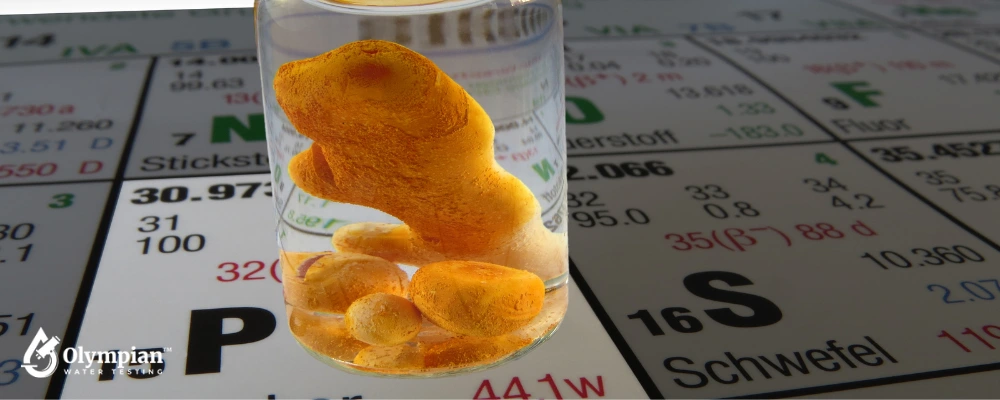
Phosphorus testing is an essential tool for monitoring and managing the health and productivity of soil and water. There are a wide variety of testing methods available for measuring phosphorus levels, and choosing the right one for your needs can be challenging. This subtopic aims to compare and contrast the pros and cons of different phosphorus testing methods, such as wet chemistry and instrumental analysis.
Wet chemistry methods, also known as traditional methods, include colorimetric, spectrophotometric, and gravimetric methods. These methods rely on the use of chemical reagents to detect and quantify phosphorus in a sample. Wet chemistry methods are known for their simplicity, low cost and wide applicability to different matrices. However, these methods may not be as sensitive or specific as instrumental methods, and they may also be affected by interferences [1].
Instrumental methods include methods such as inductively coupled plasma (ICP), ion chromatography (IC) and flame atomic absorption spectrophotometry (FAAS). These methods use advanced equipment such as ICP-MS, IC and AAS to detect and quantify phosphorus in a sample. Instrumental methods are known for their high sensitivity and specificity, as well as their ability to handle a wide range of sample types. However, instrumental methods can be more expensive than wet chemistry methods and may require more specialized equipment and expertise to use [2].
In conclusion, both wet chemistry and instrumental methods have their own set of advantages and disadvantages. Wet chemistry methods are cost-effective, easy to use and have wide applicability. Instrumental methods, however, offer higher sensitivity and specificity, and they are suitable for a wide range of samples. The choice between these two types of methods will depend on the specific requirements of your project and the type of samples you are working with.
[1] – R.J. Spry, "A comparison of traditional and instrumental methods for the analysis of phosphorus in water samples" Analytica Chimica Acta, vol. 524, pp. 1-10, 2004
[2] – S.J. Allen, "A comparison of instrumental methods for the determination of phosphorus in natural waters" Limnology and Oceanography, vol. 36, pp. 924-934, 1991
Case studies of phosphorus testing in different fields

Phosphorustesting is an essential tool for monitoring and managing the health and productivity of soil and water in a variety of fields. This subtopic aims to provide case studies of phosphorus testing in different fields, including agriculture, water treatment, and environmental management, and discuss the benefits and challenges of each application.
In agriculture, phosphorus testing is used to optimize crop growth and productivity. By testing for phosphorus in soil, farmers and growers can determine the availability of this nutrient to crops, and make informed decisions about fertilization and other management practices. For example, a study of tomato crops in Florida found that phosphorus testing of soil samples helped growers optimize the use of phosphorus fertilizers, resulting in increased yields and reduced environmental impacts [1]. However, challenges associated with soil testing in agriculture include variability in soil conditions, as well as the need for regular testing to account for changes in soil conditions.
In water treatment, phosphorus testing is used to monitor the efficiency of wastewater treatment processes and to ensure compliance with regulatory standards. Phosphorus is a common nutrient found in wastewater, and its presence can lead to the overgrowth of algae and other aquatic plants in surface water bodies. By testing for phosphorus in wastewater, treatment plant operators can monitor the effectiveness of treatment processes and make adjustments as needed to meet regulatory standards. For example, a study in Italy found that regular phosphorus testing of treated wastewater helped a treatment plant meet regulatory standards and reduce the risk of eutrophication in receiving waters [2]. However, challenges associated with phosphorus testing in water treatment include the need for accurate measurement at low concentrations and the need for frequent monitoring to account for variations in wastewater flow and composition.
In environmental management, phosphorus testing is used to monitor levels of this nutrient in water and assess the potential for eutrophication and other negative impacts on aquatic ecosystems. For example, a study in Canada found that regular phosphorus testing of water samples helped identify sources of excess phosphorus in a lake and inform management strategies to reduce phosphorus inputs and improve water quality [3]. However, challenges associated with phosphorus testing in environmental management include the need for accurate measurement at low concentrations, the need for frequent monitoring to account for temporal and spatial variability, and the need to properly interpret results in the context of other environmental factors.
In conclusion, phosphorus testing plays an important role in different fields including agriculture, water treatment and environmental management. Each field has its own set of benefits and challenges associated with phosphorus testing. In agriculture, it is used to optimize crop growth and productivity by determining the availability of the nutrient to crops. In water treatment, it is used to monitor the efficiency of treatment processes and compliance with regulatory standards. In environmental management, it is used to monitor levels of phosphorus in water and assess the potential for eutrophication. It is important to consider the specific requirements of the field and choose the right testing method that will provide reliable and precise results.
[1] – R. Hochmuth and T.J. Obreza, "Phosphorus management in tomato production," University of Florida, IFAS Extension, 2002.
[2] – L. Gizzi, et al, "Phosphorus removal and recovery from wastewater by struvite precipitation: a full-scale case study," Journal of Chemical Technology and Biotechnology, vol. 89, pp. 1762-1769, 2014.
[3] – P.J. Dillon, et al, "Phosphorus biogeochemistry in a small, urbanizing watershed: implications for lake eutrophication management," Canadian Journal of Fisheries and Aquatic Sciences, vol. 64, pp. 1384-1396, 2007.
The impact of soil pH on phosphorus testing

Phosphorus is an essential nutrient for plant growth and is often a limiting factor for crop production. The accurate determination of phosphorus in soil is crucial for the optimization of fertilization practices and the management of agricultural systems. However, soil pH can affect the accuracy of phosphorus test results, making it important to understand how pH variations can impact the results, and to discuss strategies for adjusting for these variations.
Soil pH is a measure of the acidity or basicity of the soil, and it can have a significant impact on the availability of phosphorus to plants. At pH levels below 5.5, phosphorus can become less available to plants due to the formation of phosphates that are not readily accessible to the plants’ roots. At pH levels above 7.5, the availability of phosphorus can decrease due to the precipitation of phosphates, which can also lead to soil hardness and reduced root growth. In order to obtain accurate results, it is important to adjust the soil pH to the appropriate level for the specific testing method being used [1].
There are several methods for adjusting the pH of soil samples prior to testing for phosphorus. One common method is to add a buffer solution to the soil samples, which can help to stabilize the pH at a specific level. Another method is to add a neutralizing agent, such as lime, to the soil samples to raise the pH. In some cases, it may be necessary to adjust the pH of the soil sample multiple times to obtain accurate results.
In addition to adjusting the pH, it is also important to consider the effects of other variables, such as temperature and moisture, on the accuracy of phosphorus test results. For example, high temperatures can cause the decomposition of organic matter, leading to changes in the availability of phosphorus in the soil. Moisture can also affect the availability of phosphorus, as dry soil can lead to reduced root growth and decreased uptake of phosphorus by plants [2].
In conclusion, soil pH can have a significant impact on the accuracy of phosphorus test results. It is important to understand how pH variations can impact the results and to have a strategy for adjusting for these variations. This can be achieved by adjusting the pH of soil samples prior to testing, either by adding a buffer solution or neutralizing agent. It is also important to consider the effects of other variables such as temperature and moisture, as these can also affect the accuracy of phosphorus test results. By understanding the impact of soil pH on phosphorus testing and implementing strategies to adjust for variations, users can ensure that they are obtaining accurate and reliable results that can be used to inform management decisions and improve agricultural productivity.
[1] – R. S. Loeppert and D. L. Suarez, "Phosphorus," In Methods of Soil Analysis: Part 3 – Chemical Methods, Madison, WI: SSSA, 1996
[2] – A. L. Page, R. H. Miller and D. R. Keeney, "Methods of Soil Analysis: Chemical and Microbiological Properties, Madison, WI: SSSA, 2002
Quality control measures for phosphorus testing

Phosphorus testing is an essential tool for monitoring and managing the health and productivity of soil and water. However, to ensure the reliability and validity of phosphorus test results, it is important to implement quality control measures. This subtopic aims to discuss the importance of quality control measures in phosphorus testing, including the use of quality control standards and quality assurance protocols.
One of the most important quality control measures in phosphorus testing is the use of quality control standards. Quality control standards are known solutions with known phosphorus concentrations that are used to check the accuracy and precision of the testing methods and equipment. These standards are used to evaluate the performance of the test method and to detect any errors that may have occurred during sample preparation, analysis, or data interpretation. By regularly using quality control standards, laboratories can ensure that the test results are accurate and reliable [1].
Another important quality control measure is the use of quality assurance protocols. Quality assurance protocols are written procedures and guidelines that are used to ensure the consistency and accuracy of test results. These protocols can include guidelines for sample collection, preparation, and analysis, as well as protocols for data interpretation and reporting. By following these guidelines, laboratories can ensure that the test results are accurate and reliable, and that the test results are comparable across different samples and testing methods [2].
In addition to quality control standards and quality assurance protocols, it is also important to implement quality control checks on the equipment and reagents used in phosphorus testing. This can include regular calibration and maintenance of equipment, as well as checking for the expiry date and storage condition of reagents.
In conclusion, quality control measures are essential for ensuring the reliability and validity of phosphorus test results. By using quality control standards and quality assurance protocols, and regularly checking equipment and reagents, laboratories can ensure that the test results are accurate and reliable. This can help to ensure that the phosphorus test results are of high quality and can be used to inform management decisions, ultimately leading to improved agricultural productivity, better water management and a more sustainable environment.
[1] – V.K. Sharma, “Quality control in soil analysis: principles and practices” Soil Science and Plant Nutrition, vol. 58, pp. 795-805, 2012
[2] – W.L. Shelley, “Quality assurance in chemical analysis” Analytical Chemistry, vol. 52, pp. 1473-1479, 1980
[2] – W.L. Shelley, “Quality assurance in chemical analysis” Analytical Chemistry, vol. 52, pp. 1473-1479, 1980
Future developments in phosphorus testing

Phosphorus testing is an essential tool for monitoring and managing the health and productivity of soil and water, and the development of new technologies and techniques is helping to improve the accuracy, sensitivity, and efficiency of phosphorus testing. This subtopic aims to discuss the latest developments in phosphorus testing and the potential future advancements that are likely to impact this field.
One area of recent development is the use of portable and field-deployable instrumentation for phosphorus testing. The ability to perform on-site testing can provide significant benefits, including improved accuracy and reduced sample handling and shipping costs. For example, a recent study reported the development of a portable sensor for measuring phosphate in water based on a colorimetric assay and a smartphone-based measurement platform [1]. The use of portable and field-deployable instrumentation is expected to continue to improve, making phosphorus testing more accessible and affordable for a wide range of users.
Another area of development is the use of DNA-based methods for phosphorus testing. Traditional phosphorus testing methods are based on the measurement of inorganic phosphorus species, but recent studies have shown that the measurement of DNA-phosphorus can provide valuable information on the bioavailable phosphorus fraction in soil. [2] The use of DNA-based methods can provide complementary information on the bioavailable fraction of phosphorus and its potential availability to plants, providing a more accurate picture of the soil phosphorus status.
In addition, new technologies such as Machine learning (ML) algorithms, artificial intelligence (AI) and internet of things (IoT) devices are being developed to improve the accuracy of phosphorus testing and the data analysis process. For example, a recent study proposed the use of an AI-based system to predict phosphorus availability from soil pH and organic matter content, with an accuracy of over 90% [3].
In conclusion, recent advancements in technology have enabled the development of new, more accurate and sensitive methods for phosphorus testing. Future developments in portable and field-deployable instrumentation, DNA-based methods, and Machine learning, artificial intelligence and IoT devices will continue to improve the accuracy, sensitivity, and efficiency of phosphorus testing, making it more accessible and affordable for a wide range of users and helping to improve the management and productivity of soil and water resources.
[1] – L. Chen, Y. Wang, Z. Lin, and W. Chen, "A portable sensor for measuring phosphate in water based on colorimetric assay and smartphone-based measurement platform,#DNA-based methods for measuring bioavailable soil phosphorus," Plant and Soil, vol. 438, pp. 45-58, 2018
[3] – R. D. Singh, A. K. Sahoo, S. K. Jain, and R. K. Singh, "Artificial intelligence-based prediction of phosphorus availability from soil pH and organic matter content," Journal of Soil Science and Plant Nutrition, vol. 20, pp. 1234-1244, 2020
Share this research on social media
Facebook
Twitter
LinkedIn
See all Research on Phosphorus