Understanding Bromide as a Potential Water Contaminant
- Published:
- Updated: January 2, 2025
Listen to this article
Summary
Bromide, a naturally occurring element found in the earth’s crust and seawater, has become a growing concern as a water contaminant due to human activities like industrial waste and agricultural runoff. While small amounts of bromide are not harmful, excessive levels in water can lead to the formation of toxic disinfection by-products (DBPs) when treated with chlorine, posing risks to both human health and aquatic ecosystems. Neurological, gastrointestinal, and skin issues can arise from high exposure levels in humans, and DBPs have been linked to cancer and reproductive problems.
- Sources: Industrial discharges, agricultural runoff, natural leaching from rocks.
- Health risks: Neurological symptoms, cancer risks from DBPs.
- Treatment methods: Activated carbon, ion exchange, reverse osmosis

There is water in life. It is 60 per cent of our body, and its quantity is directly related to our health and wellbeing. But in today’s world, it is far from easy to keep our water pure.
Bromide is an element naturally occurring in crustal rocks and in seawater. It is a negatively charged ion, an anion, and can be reacted with positively charged ions (eg, sodium or potassium) to make salts, the industrial compounds we work with. These are drugs, fire retardants, fumigants and photographic film, so bromide is a part of every day existence.
Though it’s naturally occurring, bromide levels in water bodies have also been increased by humans. Increasing amounts of bromide compounds in industrial products and their release into our environment as waste streams also lead to rising levels of bromide in our water supplies. Being a water-soluble element, it’s important to know what this intrusion means for our waterways.
How Bromide Ends Up in Water Systems: Industrial Activities and Natural Occurrences
Bromide, like so many other contaminants, enters our water supplies by way of natural and manufactured routes. Nature acts by leaching out of the crust into groundwater, or its inclusion in ocean water and uptake into freshwater systems through atmospheric deposition or storm surges.
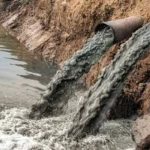
The humans are the major source of bromide contamination. Bremide from waste water discharged from industry often flows into surface water and even into the groundwater of abandoned lands. And there are bromide-based agricultural pesticides and herbicides that can seep into waterways via runoff. Once we know where these emissions come from, we can then tailor interventions to minimize bromide contamination.
The Impact of Bromide on Aquatic Life: Ecological Risks and Consequences

Our drinking water is contaminated with bromide that’s not only harmful to humans – it could be deadly to marine animals. Toxic bromide damages aquatic habitats by disrupting the growth and reproduction of marine life.
A water sample with high levels of bromide will also create toxic brominated disinfection by-products (DBPs) if it is treated with chlorine or chloramine to disinfect the water. These DBPs can also cause behaviour, reproduction and even mass mortality among aquatic organisms in extreme instances. Keeping bromide in our waters, therefore, is not just good for us, it’s good for our aquatic environments.
What are the potential risks and symptoms of exposure to bromide on human health?
Humans can become extremely exposed to bromide at very high levels. They’re primarily dependent on exposure and time. Voici some of the possible side effects:
Neurological signs: Such as headaches, hallucinations and muscle weakness.
Gastrointestinal problems: Vomiting and vomiting are the typical bromide side effects.
Skin disease: If you have high bromide exposure, your skin may rashes and develop lesions.
Of note, one of the main issues associated with bromide in water is its reaction with disinfectants in water treatment plants, which can result in brominated DBPs. These chemicals were found to pose health risks such as cancer and reproductive difficulties, and thereby water supplies must be managed for bromide.
Detecting Bromide in Water: Available Testing and Monitoring Techniques
It is very important to monitor for the presence and concentration of bromide in water in order to control its risks. There are different methods in the lab, like ion chromatography, inductively coupled plasma mass spectrometry (ICP-MS), and ion-selective electrode method.
These are highly sensitive and highly accurate analyses that can take some time and involve expensive equipment and people. The tests can be performed quickly on the field as well, and is a quick, affordable way to test for bromide in any location that is remote.
Regulatory Standards: Current Guidelines on Bromide Levels in Drinking Water
Bromide drinking water requirements are different across countries and institutions. Some regulate the quantities of DBPs produced by bromide as a result of its reaction with disinfectants, others mandate bromide specifications.
These advices usually follow scientific data concerning the health impacts of exposure to bromide and DBP. They’re important for the health of the population and following these rules is paramount to water providers.
Removal Techniques for Bromide in Water: Treatment Methods and Their Effectiveness
Keeping bromide from water sources is a matter of both prevention and remediation. There are various techniques for flushing bromide out of water: activated carbon adsorption, ion exchange and reverse osmosis.
These are all skewed toward positive and negative results, and can not be effective in the same way, depending on the type of water and bromide amount. Further, bromide removal technologies are being continually designed and improved by researchers so that they can be more efficient and economical.
Future Directions and Preventive Measures: Steps to Reduce Bromide Contamination in Water Supplies
Prevention is by far the best way to control bromide in our drinking water. Some ways to prevent are to use less bromide-based products, treat industrial wastewater better, and use best management practices on farms.
Meanwhile, further studies are needed to get a handle on the environmental behaviour and health impacts of bromide and its DBPs. We’ll use that information to build better regulations, treatment and prevention protocols, and make our precious water safe once again. We are all stewards of the earth, responsible for protecting the quality of our water now and into the future.
Conclusion
Preventive measures – reducing industrial and agricultural inputs – along with new water-treatment technologies are needed to control bromide contamination in water. Constant monitoring and compliance with regulations are the foundation for water safety, public health and environmental sustainability.
Share this on social media:
Facebook
Twitter
LinkedIn

Related Posts