

The History of Lead in Plumbing
Lead has been integral to plumbing systems for millennia, with ancient civilizations like the Romans heavily relying on it. Despite its long-standing use, lead’s presence in plumbing has become a significant public health issue, most acutely in the United States.
The extensive use of lead pipes in the U.S. during the 20th century has had a profound impact on both the nation’s infrastructure and public health. It’s estimated that over 9 million lead service lines exist, affecting around 22 million people. This widespread use has led to major contamination incidents in cities like Newark, Flint, Washington, D.C., Chicago, and Buffalo. These events underscore the lead crisis facing the nation.
Ancient Civilizations’ Use of Lead Pipes
The Romans were pioneers in using lead pipes for their water systems. They valued lead for its malleability, durability, and resistance to corrosion. Yet, the long-term health impacts of lead exposure were not fully understood at the time.
Lead Plumbing in the United States
In the U.S., lead pipes were a staple in plumbing systems throughout the 20th century, prevalent in urban areas and older homes. Lead was also used in solder for pipe connections. Its affordability, ease of installation, and perceived durability made it a popular choice.
The legacy of lead plumbing in the U.S. has had profound economic and health consequences. The U.S. economy loses over $50 billion annually due to lead exposure. More than half of all U.S. children have detectable lead levels in their blood, with Black and Hispanic children more likely to be affected. Low-income households, a result of historical redlining and segregation, bear the brunt of these disparities.
Recent efforts to combat the lead crisis are gaining traction. The EPA has updated its rule, mandating the replacement of most lead pipes nationwide within a decade. The Bipartisan Infrastructure Deal allocated $15 billion for lead service line replacement, the largest investment in U.S. history. Cities like Newark have been proactive, replacing nearly all 23,000 lead service lines with copper in 2021.
How Lead Enters Drinking Water
Lead can enter drinking water through the corrosion of lead-containing plumbing materials. This includes pipes, fittings, and fixtures. The U.S. Environmental Protection Agency (EPA) states that lead in drinking water can account for 20% or more of a person’s total lead exposure. Approximately 6 million lead service lines (LSLs) exist in the United States, serving an estimated 15 to 22 million people.
Corrosion of Lead Plumbing
Corrosion happens when a chemical reaction occurs between the water and lead-containing plumbing materials. Several factors influence this process. These include the water’s acidity, dissolved mineral content, temperature, and the age and condition of the plumbing. When corrosion occurs, lead can dissolve or flake into the drinking water, leading to contamination.
Factors Influencing Lead Leaching
Several factors can influence the amount of lead that leaches into drinking water:
- Water acidity: Water with high acidity or low mineral content can exacerbate corrosion.
- Water temperature: Warm or hot water can have higher levels of lead compared to cold water.
- Stagnation time: Water that has been stagnant in pipes for several hours, such as overnight or during work/school hours, can have elevated lead levels.
- Plumbing age and condition: Older plumbing systems and those in poor condition are more likely to leach lead.
The table below summarizes the factors influencing lead leaching and their effects:
| Factor | Effect on Lead Leaching |
|---|---|
| High water acidity | Increases corrosion and lead leaching |
| Warm or hot water | Higher lead levels compared to cold water |
| Stagnation time | Elevated lead levels after water has been unused for several hours |
| Older plumbing systems | More likely to leach lead due to corrosion and deterioration |
It is important to note that there is no safe level of lead exposure, particular for young children and pregnant women. Reducing lead in drinking water is critical for protecting public health. It prevents the adverse effects of lead exposure, such as developmental delays, learning difficulties, and other health concerns.
Common Sources of Lead Plumbing
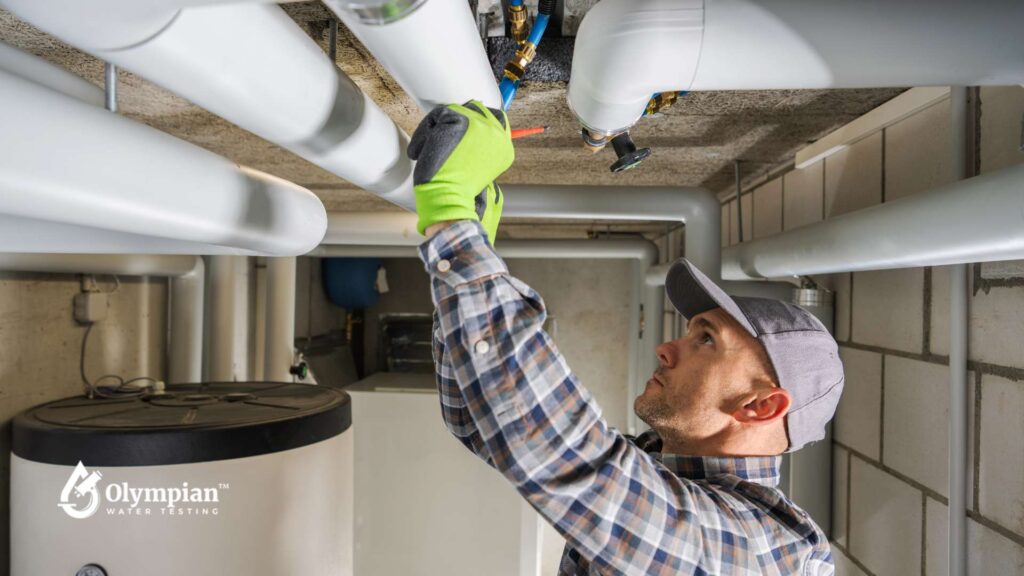
Many homes and buildings in the United States contain lead plumbing components, despite efforts to reduce lead exposure. These components can lead to elevated lead levels in drinking water, posing significant health risks. This is most concerning for children and pregnant women. It’s essential to identify these hazards and take steps to ensure safe drinking water.
Lead plumbing components were common in the United States until the mid-1980s, when regulations restricted their use. Yet, many older homes and buildings have lead-containing plumbing. This can leach lead into the water supply over time. Here are some common sources of lead plumbing:
Lead Service Lines
Lead service lines connect a building’s plumbing to the main water supply. Installed before the 1950s, these lines are a significant source of lead contamination. As they age and corrode, lead can leach into the water, more so in acidic or low-mineral water. The Environmental Protection Agency (EPA) estimates 6.1 million lead service lines are in use across the country.
Lead-Soldered Joints
Before 1986, lead-based solder was used to join copper pipes in household plumbing. Over time, lead from these joints can leach into drinking water, more so in acidic or corrosive water. Despite the ban on lead solder over three decades ago, many older homes have plumbing systems with these joints, posing a risk.
Plumbing Fixtures Containing Lead
Some plumbing fixtures, like faucets and valves, may contain lead. Even those labeled “lead-free” can have small amounts of lead, as the term means less than 0.25% lead content under the Safe Drinking Water Act. Older fixtures, made before the 1990s, are more likely to have higher lead levels. As these fixtures age and corrode, they can release lead into the water.
| Lead Source | Timeframe of Use | Potential Risk |
|---|---|---|
| Lead Service Lines | Before 1950s | High |
| Lead-Soldered Joints | Before 1986 | Moderate to High |
| Plumbing Fixtures Containing Lead | Before 1990s | Low to Moderate |
Addressing lead plumbing requires a multi-faceted approach. This includes regular water testing, corrosion control treatments, and replacing lead-containing components. By understanding lead plumbing sources and taking proactive measures, we can ensure safe drinking water for all communities.
Inadequate or Inappropriate Municipal Water Treatment
The safety of drinking water is a critical concern for public health. Municipal water treatment plays a key role in ensuring water is free from harmful contaminants, including lead. Inadequate or inappropriate treatment can lead to elevated lead levels, posing significant health risks.
The U. S. Environmental Protection Agency (EPA) has strict regulations for water quality monitoring and treatment. Water utilities must regularly test their water for lead and other contaminants. They also need to implement corrosion control treatments to prevent lead leaching. These treatments often involve adding chemicals like zinc orthophosphate to form a protective coating on lead pipes. In addition to these measures, water utilities are encouraged to obtain olympian water testing accreditation, which signifies adherence to the highest standards of safety and quality in water testing procedures. This accreditation not only enhances public trust but also ensures that the monitoring methods used are scientifically rigorous and up to date. By maintaining compliance with EPA regulations and pursuing such accreditation, utilities can safeguard public health and maintain the integrity of their water supply systems.
Water Quality Monitoring Requirements
Despite these regulations, some cities fail to properly monitor and treat their water. In Pennsylvania, about 67% of over 6,000 water samples tested were found to be potentially corrosive. A 2006-2007 survey showed 12% of private water supplies had lead levels above the EPA’s action level of 15 µg/L. From 2007 to 2024, about 10% of first-draw lead tests exceeded this level.
| Location | Year(s) | Samples Tested | Percentage Exceeding Lead Action Level |
|---|---|---|---|
| Pennsylvania | – | 6,000+ | 67% (potentially corrosive) |
| Private Water Supplies | 2006-2007 | – | 12% (exceeding 15 µg/L) |
| – | 2007-2024 | 4,500 (first-draw tests) | 10% (exceeding 15 µg/L) |
Corrosion Control Treatments
The effectiveness of corrosion control treatments depends on several factors. These include the water’s pH and alkalinity, the presence of other chemicals, and the plumbing system’s age and condition. In some cases, improper treatment can increase lead levels by making the water more corrosive. This highlights the need for regular monitoring and adjustment of treatment practices.
Preventing lead exposure from drinking water requires proper municipal water treatment, regular water quality monitoring, and the replacement of lead-containing plumbing materials. By working together, we can ensure our drinking water is safe and free from harmful contaminants like lead.
Public Health Concerns
Lead exposure from aging plumbing is a major public health issue, affecting children and pregnant women most. The World Health Organization states that up to 800 million children worldwide have blood lead levels at or above 5 micrograms per deciliter (µg/dL). Nearly half of these children reside in South Asia. In the United States, over 170 million people were exposed to harmful lead levels in early childhood. The Biden-Harris Administration reports that over 9 million homes, schools, daycares, and businesses receive drinking water through lead pipes.
The Centers for Disease Control and Prevention (CDC) has established the blood lead reference value (BLRV) to identify children at risk of lead exposure. In 2012, the BLRV was set at 5 µg/dL, updated to 3.5 µg/dL in 2021. Despite this progress, lead exposure continues to pose health risks, even at low levels.
Vulnerable Populations: Children and Pregnant Women
Children and pregnant women are highly susceptible to the adverse effects of lead exposure. Infants and young children absorb a greater proportion of ingested lead than adults, making them more vulnerable to lead poisoning. Symptoms of lead exposure in young children include:
- Irritability
- Fatigue
- Loss of appetite
- Weight loss
- Abdominal pain
- Vomiting
- Constipation
- Hearing loss
Pregnant women exposed to lead face an increased risk of miscarriage, premature birth, and developmental issues in their babies. Symptoms of lead exposure in adults can include high blood pressure, abdominal pain, constipation, joint and muscle pain, numbness or tingling of the extremities, headache, fatigue, and memory loss.
Developmental Delays and Learning Difficulties
Lead exposure can cause significant developmental delays and learning difficulties in children. Health effects are found at blood lead levels of less than 5 µg/dL, including diminished IQ scores and increased behavioral problems. The following table illustrates the impact of blood lead levels on children’s health:
| Blood Lead Level (µg/dL) | Health Effects |
|---|---|
| ≤ 10 | Increases in behavioral effects and delays in puberty |
| Diminished IQ scores and increased behavioral problems |
No Safe Level of Lead Exposure
The CDC emphasizes that there is no safe level of lead exposure. Even low levels of lead in the blood can cause adverse health effects, and the risk of lead poisoning increases with prolonged exposure. Regular lead risk assessments and testing of drinking water in homes, schools, and childcare facilities are critical for identifying and addressing lead exposure.
Addressing the public health concerns associated with lead exposure from aging plumbing requires a multifaceted approach. This includes public awareness campaigns, financial assistance for lead pipe replacement, and strict enforcement of regulations and standards. By prioritizing the health and well-being of vulnerable populations, we can work towards eliminating childhood lead poisoning and ensuring safe drinking water for all communities.
Lead Exposure from Old Plumbing
Lead exposure from old plumbing is a major concern for homeowners and buyers. Despite the ban on lead service lines in 1961 and household plumbing in 1987, many homes, mainly 1-to-4-family residences, may have lead pipes and fixtures. This is risky, as lead exposure can lead to serious health issues, like decreased IQ and learning challenges, in infants and children.
The EPA reports that about 9 million lead pipes are in use across the U.S. In Pennsylvania, over 70% of homes were built before the 1978 lead paint ban. Philadelphia alone has between 20,000 and 25,000 lead service lines. The EPA has tightened regulations, aiming to reduce lead concentrations to below 10 parts per billion, down from 15.
Homeowners can take steps to reduce lead exposure. The table below shows recommended flushing times for different cities and situations:
| City/Situation | Recommended Flushing Time |
|---|---|
| Morning Flushing (General) | At least 2 minutes |
| Pittsburgh | 1 minute |
| Philadelphia | 3 minutes |
| After Lead Pipe Replacement | 30 minutes (from outside hose spigot, utility sink, or bathtub) |
| Ongoing Flushing After Replacement | Every 3 weeks |
Flushing is just one part of the solution. Regular water and blood lead level tests are also key. New York City tests tap water to ensure lead treatment is effective. New York State Law also requires blood tests for children at one and two years old, and for all children aged six months to six years at each well-child visit.

Lead plumbing affects a home’s value and desirability. Buyers are wary of homes with lead pipes due to health risks and the cost of lead abatement. Homeowners and local governments must prioritize replacing lead pipes and follow EPA regulations to protect residents, mainly children and pregnant women.
The Flint, Michigan Water Crisis
The water crisis in Flint, Michigan, is a stark reminder of the devastating effects of lead exposure from aging pipes. In 2014, the city switched its water source to the Flint River. This decision led to a public health emergency, affecting thousands, mainly children and vulnerable populations.
The Flint River water was more corrosive, causing lead to leach from the city’s pipes. This resulted in dangerously high lead levels in the drinking water. Tests in 2015 showed lead concentrations far exceeding the Environmental Protection Agency’s (EPA) action level of 15 parts per billion. Some homes had levels as high as 13,200 parts per billion.
Dangerously High Levels of Lead
The Flint water crisis exposed residents to toxic levels of lead. Lead is a neurotoxin that can cause irreversible brain and nervous system damage, most severely in children. The Centers for Disease Control and Prevention (CDC) emphasizes that no level of lead exposure is safe for children. In Flint, the effects were dire:
- 66% of households reported one or more adult members experiencing at least one behavioral health issue “more than usual.”
- 54% of households reported that at least one child experienced at least one behavioral health issue “more than usual.”
- 22.5% of households reported difficulties accessing behavioral health services.
- 34% of individuals self-reported symptoms of anxiety, while 29% self-reported symptoms of depression.
- 51% of households felt that the physical health of at least one member had worsened due to the Flint water crisis.
Nationwide Public Health Emergency
The Flint water crisis was a wake-up call, highlighting the risk of lead exposure from aging pipes nationwide. The EPA estimates that 9.2 million service lines delivering drinking water in the U.S. are made of lead. Half of these are in just six states: Florida, Illinois, Ohio, Pennsylvania, Texas, and New York.
The federal government has recognized the urgency of the situation. The 2021 Infrastructure Law allocated $15 billion over five years for lead pipe replacement. The EPA has proposed requiring the removal of all lead pipes across the U.S. within 10 years. Yet, the average cost to replace each lead service line is $5,066. The new federal funding will cover less than one-fifth of the costs in the Great Lakes region alone.
The Flint water crisis highlights the need for proactive measures to identify and replace lead plumbing. Ensuring access to safe drinking water for all communities is critical. By investing in infrastructure upgrades and prioritizing public health, we can prevent future crises and protect future generations.
Depreciation of Housing Stock
Lead pipes in aging plumbing systems significantly affect housing stock depreciation. As buyers learn about lead exposure risks, they hesitate to buy homes with lead pipes. This hesitation lowers demand, causing property values to drop and selling times to lengthen.
Lead plumbing’s impact is worsened by the high cost of remediation and pipe replacement. Homeowners face significant expenses to make their homes appealing to buyers. This is a heavy burden, mainly for low-income areas where lead pipes are common.
| Depreciation Factor | Typical Lifespan |
|---|---|
| Building Structure | 27.5 years |
| Plumbing Systems | 27.5 years |
| Furnaces and Heating Systems | 27.5 years |
| Fences | 15 years |
| Concrete Structures (sidewalks, patios) | 15 years |
| Furniture | 5 years |
| Carpets | 5 years |
| Appliances | 5 years |
| Cabinets | 5 years |
Residential rental properties depreciate at 27.5 years, including structures and plumbing. Lead pipes can speed up this process, requiring early replacement. This quickens depreciation, affecting property value and appeal.
Impact on Real Estate Markets
Lead plumbing’s impact on real estate markets is significant. Properties with lead pipes lose value, reducing overall property values. This makes selling homes harder, potentially slowing down the market.
Lead plumbing also scares off buyers, reducing demand. This decline hurts housing stock value, population growth, and economic activity. Affected areas see less investment and growth.
The Need for Comprehensive Solutions
To tackle lead plumbing’s effects, we need broad solutions. These might include:
- Government programs to help with costly repairs and replacements
- Incentives for developers to build new, lead-free homes
- Public campaigns to raise awareness about lead risks and the need for testing and remediation
Implementing these solutions can help mitigate lead plumbing’s impact. The goal is to ensure safe, healthy living environments and promote economic growth in affected areas.
Impact on Real Estate Market
Lead pipes in aging plumbing systems have significant effects on the real estate market in affected communities. As awareness of health risks from lead exposure grows, homes built before 1978 see a drop in property values. This decline makes these areas less attractive, impacting the market overall.
Recent data shows the average cost to address health hazards like lead-based paint in public housing is $15,000 per unit. Yet, the Capital Fund Formula provides only $3,500 per unit. This gap highlights the financial hurdles communities face in dealing with lead plumbing.
Reduced Property Values
Lead pipes and related health risks have led to lower property values. A study on 9,425 adults aged 51 to 61 found a 35 percent house price drop. This was linked to more depressive symptoms and functional limitations among Black and other non-White homeowners, with a greater impact on those with less financial assets.
Between 2006 and 2012, US house prices fell by 34 percent on average. Some cities saw even steeper declines, like Phoenix’s 46 percent drop and Las Vegas’s 60 percent. Lead plumbing likely worsened these market challenges in affected areas.
| City | House Price Change (2006-2012) |
|---|---|
| US Average | -34% |
| Phoenix | -46% |
| Las Vegas | -60% |
| Pittsburgh | +5% |
| Buffalo | +6% |
Decreased Attractiveness of Affected Communities
The presence of lead pipes and the risk of lead exposure makes affected communities less appealing. The stigma of lead contamination and high remediation costs decrease demand. This further depresses property values and slows the real estate market recovery in these areas.
Fixing lead pipes in aging systems is key to revitalizing communities and boosting the real estate market. The Biden administration has pledged $3 billion for replacements. HUD also plans to invest nearly $90 million in health hazard protection in low-income homes. These efforts are vital for creating safe living environments and supporting market recovery.
Loss of Tax Revenues
Aging lead plumbing infrastructure in the U.S. poses significant public health risks and affects local tax revenues. As property values decline due to lead pipes, municipal budgets suffer. This leads to a decrease in public service quality and an economic decline in affected communities.
The Environmental Protection Agency (EPA) estimates 9.2 million lead service lines in use nationwide. The Natural Resources Defense Council (NRDC) suggests this number could be higher, ranging from 9.7 million to 12.8 million. Major cities like Chicago, Cleveland, and New York City have significant lead service line numbers.
| City | Number of Lead Service Lines |
|---|---|
| Chicago | 387,000 |
| Cleveland | 235,000 |
| New York City | 112,000 |
Property Taxes and Municipal Budgets
Property taxes are a key funding source for local governments. Lead pipes can significantly lower property values. This results in reduced tax revenues, limiting funds for essential services like education and infrastructure maintenance.
Decline in Public Service Quality
The loss of tax revenues due to lead pipes creates a vicious cycle. Reduced funding for public services lowers their quality. This makes affected areas less attractive, further depressing property values and tax revenues.
Economic Decline of Affected Communities
Communities with aging lead water pipes face economic decline due to lost tax revenues and service deterioration. This decline affects various aspects, including:
- Reduced investment in local businesses and infrastructure
- Decreased job opportunities and economic growth
- Increased vacancy rates and abandoned properties
- Diminished overall quality of life for residents
The replacement of lead pipes is a costly and time-consuming process, requiring significant federal funding and legislative support to address the issue effectively. By investing in lead plumbing replacement, communities can improve public health and safety. This also stabilizes and increases property values, attracting residents and businesses, and reversing economic decline.
The Need for Comprehensive Solutions
The issue of lead exposure from aging water infrastructure demands comprehensive solutions. These solutions must involve efforts from all levels of government. Approximately 22 million Americans are affected by lead service lines (LSLs), with a greater impact on marginalized communities. The Biden administration has invested $50 billion in updating the nation’s drinking water infrastructure. The Environmental Protection Agency (EPA) aims to reduce the lead remediation timeline from over 70 years to just 10 years in some areas.
Lead pipe replacement is a costly and time-consuming process. It requires substantial federal funding and legislative support. The Justice40 Initiative seeks to ensure 40% of federal investment benefits marginalized communities. Families facing lead exposure may be temporarily displaced, causing financial and emotional distress. This highlights the need for solutions that address both infrastructure and social impacts.
| Country/Region | Percentage of Dwellings with Lead Pipes |
|---|---|
| United States | Approximately 6-10 million toxic lead water pipes |
| United Kingdom | Around 40% |
| Europe | Varies from 5% to 50% |
The new federal Lead and Copper Rule (LCR) sets the action level for lead at 15 parts per billion. It requires 90% of samples to test below this level. The rule also introduces a trigger level of 10 parts per billion, prompting reexamination of corrosion control measures. It mandates increased testing, transparency, and replacement rates, placing greater pressure on utilities to address lead pipe issues. As the EPA prepares to release a new cost estimate in 2023 for the full national replacement of all lead pipes, it is evident that comprehensive solutions, supported by federal funding and legislative action, are essential. They are necessary to protect public health and ensure safe drinking water for all communities.
Replacing Lead Pipes
Replacing lead pipes is a critical step in addressing the public health crisis posed by lead exposure through aging plumbing infrastructure. The process of replacing lead pipes is a costly and time-consuming endeavor, requiring substantial investment and coordinated efforts from various stakeholders. The importance of this issue has been highlighted by the U.S. Environmental Protection Agency’s (EPA) new rule, which mandates the removal of nearly all lead pipes within the next decade. To learn more about identifying lead service lines in your home, visit this informative article.
The scale of the problem is significant, with approximately 9.2 million lead service lines in use across the United States. Cities like Philadelphia, where roughly 1 in 20 properties may have a lead service line, face a daunting task in addressing this issue. Progress is being made, with initiatives like the Philadelphia Water Department’s (PWD) Service Line Replacement Program. This program aims to replace approximately 1,000 lead service lines in North Philadelphia, scheduled to begin in the summer of 2025.
Costly and Time-Consuming Process
Replacing lead pipes is an expensive undertaking, requiring substantial financial resources and a long-term commitment. The costs associated with lead pipe replacement can be a significant burden for municipalities and homeowners alike. To help alleviate this burden, the PWD offers a zero-interest loan for customers interested in replacing their lead service lines. The department will also replace any lead service line from the City’s water main to the customer’s meter during water main construction at no charge to the property owner.
Federal Funding and Legislative Support
Federal funding and legislative support play a critical role in accelerating the replacement of lead pipes and mitigating the public health risks they pose. The Biden-Harris administration has recognized the importance of this issue, announcing $3 billion in funds on May 2, 2024, to assist in the replacement of lead service lines nationwide. This financial support, along with contributions from local water departments like the PWD, is essential in addressing the lead exposure crisis.
| City | Estimated Lead Service Lines | Replacement Program Status |
|---|---|---|
| Philadelphia | 1 in 20 properties | Service Line Replacement Program scheduled for summer 2025 |
| United States (total) | 9.2 million | Varies by state and municipality |
While replacing lead pipes is a complex and costly process, it is a necessary investment in public health and safety. With the support of federal funding and legislative initiatives, communities across the United States can work towards a future where lead exposure from aging plumbing is no longer a threat to the well-being of their residents.
Economic Benefits of Infrastructure Investment
Investing in the replacement of aging lead pipes and modernizing water infrastructure brings significant economic benefits to communities nationwide. These upgrades improve public health and safety, create jobs, stabilize property values, and attract new residents and businesses. It’s a win-win for everyone involved.
The economic impact of such investments is profound. A 2020 study found that investing in U.S. water infrastructure would add $4.5 trillion to the economy by 2039, creating 800,000 jobs. The Bipartisan Infrastructure Law (BIL) has allocated $55 billion for water systems, the largest federal investment in this area. Over $15 billion is dedicated to replacing lead service lines and lead remediation activities. This is expected to create 200,700 jobs over the next decade.
Enhancing Public Health and Safety
Replacing lead pipes is vital for public health, protecting vulnerable populations like children and pregnant women. Lead exposure can lead to developmental delays, learning difficulties, and other health issues. With 12.8 million homes and 400,000 schools and child care centers using lead pipes, investing in infrastructure is critical for safe drinking water for all.
Boosting Property Values and Community Attractiveness
Lead pipes and aging water infrastructure can harm property values and deter investment. Addressing these issues proactively can stabilize and potentially increase property values. This makes communities more attractive, leading to increased tax revenues and a stronger local economy.
Stimulating Economic Growth and Job Creation
Investing in water systems creates direct jobs in construction and related fields. It also boosts the economy through increased attractiveness and livability of communities. The BIL’s $10 billion for PFAS cleanup will create more jobs while addressing environmental and public health concerns.
| Economic Benefit | Impact |
|---|---|
| Overall Economic Growth | $4.5 trillion added to U.S. economy by 2039 |
| Job Creation | 800,000 jobs created; 200,700 jobs from lead pipe replacement alone |
| Property Value Stabilization | Increased attractiveness to residents and businesses |
| Tax Revenue Growth | Increased property values and business investment |
By focusing on water infrastructure and lead pipe replacement, we lay the groundwork for long-term economic growth, improved public health, and vibrant communities across the United States.

Public Awareness Campaigns
Public awareness campaigns are vital in educating residents about lead exposure risks from aging plumbing systems. These efforts aim to inform people about health hazards and encourage proactive measures for safe drinking water.
The Environmental Protection Agency (EPA) has set the maximum contaminant level goal for lead in drinking water at zero. This highlights the urgency of eliminating lead exposure, with a focus on young children. Infants, due to their high water intake relative to body size, are at a higher risk from lead-contaminated tap water.
Educating Residents about Lead Exposure Risks
These campaigns focus on educating residents about lead exposure risks. Key risks include:
- Developmental delays and learning difficulties in children
- Increased risk of exposure during and after lead service line replacement
- Higher lead levels in warm or hot tap water compared to cold water
- Absence of symptoms in most children and adults exposed to lead
By raising awareness, campaigns aim to motivate residents to protect their health.
Importance of Testing and Replacing Lead Pipes
Public awareness campaigns also stress the need for testing and replacing lead pipes. They provide information on:
- Blood lead tests for early detection and monitoring
- Certified point-of-use filters for lead removal (NSF/ANSI standard 53 and 42)
- Replacement costs for water service lines ($6,000 to $10,000 per property)
- Proactive replacement programs by local authorities (e.g., City of Columbus)
The table below summarizes key information about lead exposure risks and mitigation measures:
| Risk Factor | Mitigation Measure |
|---|---|
| Increased exposure during lead service line replacement | Use certified filters for 6 months after replacement |
| Higher lead levels in warm or hot tap water | Use cold water for drinking and cooking |
| Absence of symptoms in most exposed individuals | Conduct regular blood lead tests for early detection |
| Lead-soldered joints in homes built before 1986 | Replace plumbing fixtures and use certified filters |
By educating residents about lead exposure risks and the need for testing and replacing lead pipes, campaigns contribute to ensuring safe drinking water. This is a critical goal for communities across the United States.
Financial Assistance and Incentives
Replacing lead pipes is vital for public health and safe drinking water across the U.S. The cost, though, can be overwhelming for homeowners and municipalities. To help, financial aid and incentives have been set up to support lead pipe replacement efforts.
The Infrastructure Investment and Jobs Act has provided $15 billion for lead service line replacement (LSLR) projects. An extra $11.7 billion is available through the Drinking Water State Revolving Fund General Supplemental for LSLR initiatives. These funds are key for communities to replace their lead infrastructure and safeguard public health.
| Funding Source | Amount Allocated |
|---|---|
| Infrastructure Investment and Jobs Act (LSLR-specific) | $15 billion |
| Drinking Water State Revolving Fund General Supplemental | $11.7 billion |
States and municipalities also offer financial aid for homeowners to replace lead service lines. This aid includes grants, low-interest loans, and cost-sharing arrangements. These programs make lead pipe replacement more affordable, encouraging more people to participate and speed up the elimination of lead from drinking water.
Incentives for lead pipe replacement are also important. Some cities offer rebates or discounts on water bills for those who replace their lead lines. Others waive permit fees or provide free water testing. These incentives help cover costs and highlight the need to address lead in drinking water, motivating people to take action for public health.
Regulations and Standards
The United States has taken steps to address lead exposure from aging plumbing. The Safe Drinking Water Act (SDWA) of 1974 aimed to safeguard public health and water quality. Amendments in 1986 mandated “lead-free” materials in public water systems. The EPA’s Lead and Copper Rule (LCR) of 1991 focused on minimizing lead and copper in drinking water.
Revisions to the LCR have improved monitoring and treatment. The Reduction of Lead in Drinking Water Act of 2011 lowered the lead content in plumbing. In 2021, the EPA introduced Lead and Copper Rule Revisions (LCRR) to further protect communities. The new rule sets a compliance deadline for October 16, 2024, and lowers the lead action level to 10 ppb.
The Bipartisan Infrastructure Law has allocated $15 billion for lead pipe removal. A 2023 NRDC study showed removing lead pipes offers significant health and economic benefits. Despite efforts, many water systems have exceeded lead action levels, underscoring the need for ongoing vigilance.
Fetuses, infants, and young children are most vulnerable to lead poisoning. Low levels of lead can harm their brain development and cause behavioral issues. Adults face risks like cardiovascular disease and reproductive problems from lead exposure. As regulations evolve, it’s vital for everyone to stay informed and take action against lead exposure.
FAQ
What is the history of lead in plumbing?
Lead has been used in plumbing for thousands of years, starting with ancient civilizations like the Romans. In the United States, lead pipes were common in plumbing systems, mainly in urban areas and older homes. It was also used in solder to join pipes and fittings.
How does lead enter drinking water?
Lead enters drinking water when pipes and fixtures containing lead corrode. This corrosion is influenced by water acidity, dissolved materials, temperature, and the age and wear of the plumbing. It also depends on how long the water is stagnant.
What are the common sources of lead plumbing?
Lead plumbing sources include lead service lines and lead-soldered joints in plumbing before 1986. Even fixtures labeled “lead-free” may contain some lead.
What are the public health concerns associated with lead exposure?
Lead exposure is dangerous, harming children and pregnant women the most. It can cause developmental delays, learning issues, and lower IQ in children. Pregnant women face higher risks of miscarriage, premature birth, and developmental issues in their babies. The CDC states there’s no safe level of lead exposure.
How does lead exposure from old plumbing affect property values?
Lead pipes significantly lower property values and desirability. Buyers are wary of homes with lead pipes due to health risks and the cost of remediation. Homes with lead pipes often need expensive replacement, deterring buyers and reducing the housing market’s appeal.
What impact does the depreciation of housing stock have on local economies?
Depreciation from lead pipes hurts the real estate market, lowering property values. This affects homeowners and the area’s attractiveness to residents and businesses. Decreased property taxes lead to less funding for public services, further reducing the area’s appeal and property values.
What solutions are needed to address the problems associated with older lead water pipes?
Solving the lead pipe problem requires efforts from local, state, and federal levels. Some cities are replacing lead pipes, but it’s expensive and slow. Federal funding and support are key to speed up replacements and protect public health. Awareness campaigns and financial help for homeowners can also aid in community health and safety.
What regulations and standards have been established to limit lead in plumbing materials?
In 1986, the U.S. banned lead in plumbing to reduce water lead exposure. The EPA has regulated lead in drinking water for over 30 years. The Lead and Copper Rule has been updated, requiring the full replacement of lead service lines nationwide within 10 years by 2024.