


Phosphorus (P) is an essential plant growth nutrient present in the environment in various forms such as rocks, minerals, and soils. However, excessive P levels in water bodies including lakes and rivers are responsible for harmful algal blooms resulting in oxygen depletion that can harm aquatic life. P can be found in drinking water and its excessive levels can cause scaling in pipes, making it difficult for water to flow through them resulting in damage to plumbing systems. Its high levels can also cause discoloration of clothing when used in laundry and greatly contribute to the growth of biofilm in pipes and water heaters. P can contaminate drinking water through various sources. These sources can either be natural or anthropogenic from where P can become part of ground and surface water reservoirs by leaching and runoff processes.
Rocks, minerals, and soil contribute to the natural sources of P contamination while the anthropogenic sources of drinking water contamination include agricultural runoff containing the residues of fertilizers and manures, discharge from wastewater treatment plants and septic systems, and industrial effluents mainly from food and beverage processing. In the US, P levels in drinking water are regulated by the EPA. Based on the available information and the low risk associated with human health, EPA has classified P into the secondary maximum contaminant level (SMCL) category and set a limit of 10 mg/L. This means that the P presence in drinking water is not a serious health concern but may have aesthetic impacts such as taste, appearance, and odor.
However, it should be noted that long-term P exposure through drinking water may contribute to the development of various diseases in humans, and therefore, P levels should regularly be monitored and maintained to ensure a safe drinking water supply to the consumers. Moreover, precautions in terms of reduced fertilizer use in agriculture, and improvements in sewage treatment systems should be taken to reduce contamination of water reservoirs causing increased P levels in drinking water. In the US, EPA requires water utilities and treatment facilities to regularly monitor P levels in drinking water and ensure its limits meet the SMCL and consumers must be informed about the detected P levels in drinking water. Many environmental and public health impacts associated with excessive P have been described so far. This includes aesthetic impacts such as discoloration, unsuitable taste and odor to drinking, etc. Although the associated health risks are generally not considered directly concerning P, being a nutrient, P may cause increased growth of harmful bacteria such as coliforms and other parasites that can be significantly harmful to human health.
It is also important to mention that high P levels significantly contribute to the growth of harmful algal blooms that results in oxygen depletion in surface water reservoirs and is a major cause of the loss of aquatic biodiversity and environmental quality. Studies have shown that the associated health impacts of elevated P in drinking water are mainly associated with bone loss due to the reduced ability of the body to absorb calcium, kidney damage, and cardiovascular diseases. However, the potential health impacts associated with P are not well established so far and it needs additional research to demonstrate the toxic potential of P through drinking water consumption. Additionally, it has been found that the reported P levels in the US are considered safe for human consumption and do not pose any health risks. However, it’s always good to consult with healthcare professionals if you have any concerns associated with your drinking water contamination.

The biological role associated with P has high significance to the human body as it plays a crucial role in various metabolic functions. Notably, it plays role in bone and teeth formation and maintenance of their strength and structure as well as in energy metabolism since P is an essential component of adenosine triphosphate (ATP) a molecule that stores cell energy and is also found in DNA and RNA (Abbas 2022). Further, P also acts as a natural buffer by neutralizing excessive acids in the cell and is also a component of many important enzymes playing role in catalytic reactions of the body (Schröder et al. 1996).
Absorption takes place in the small intestine and levels of P inside the body are mainly regulated by kidneys that filter excess P through urine after filtration (Geddes et al. 2013; Stremke and Hill Gallant 2018). Excessive exposure may lead to the toxic impacts associated with P by negatively altering the cellular and molecular processes. Various mechanisms have been proposed related to the toxic potential of P that mainly includes: 1) an imbalance in the body’s ability to absorb calcium that results in adverse impacts on bone health and elevated osteoporosis risk (Shakoor et al. 2014), 2) P can trigger inflammatory responses in the body that can cause cells and tissues damage along with an increased renal and cardiovascular disease risks, 3) Enzymatic inhibition of various activities that result in reduced cellular processes because of altered enzyme activities involved in many metabolic reactions (Goodson et al. 2019), 4) Oxidative stress resulting in increased cellular and DNA damage due to increased production of reactive oxygen species (ROS) has also been demonstrated concerning excess P exposure (Nguyen et al. 2022; Walwadkar et al. 2006), 5) Laboratory-based investigations also suggest an altered gene expression by either causing up- and downregulation of important genes associated with increased P levels in plants and animal-based models (Liu et al. 2016; Liu et al. 2013).
However, it is important to state that most of the studies reported on the toxicity of P are mainly based on laboratory animals or plant models and there is no epidemiological evidence reported so far demonstrating the toxicity of P exposure through drinking water in exposed healthy human subjects. This may probably be due to limited adverse impacts and low detection of phosphorus in drinking water causing limited/reduced health risks. Given the newly introduced omics-based analytical platforms that are capable of providing insight at the cellular and molecular levels, it should be taken into account to conduct cross-sectional studies correlating the low but long-term P exposure impacts on the human to provide better insight associated with P toxicity.

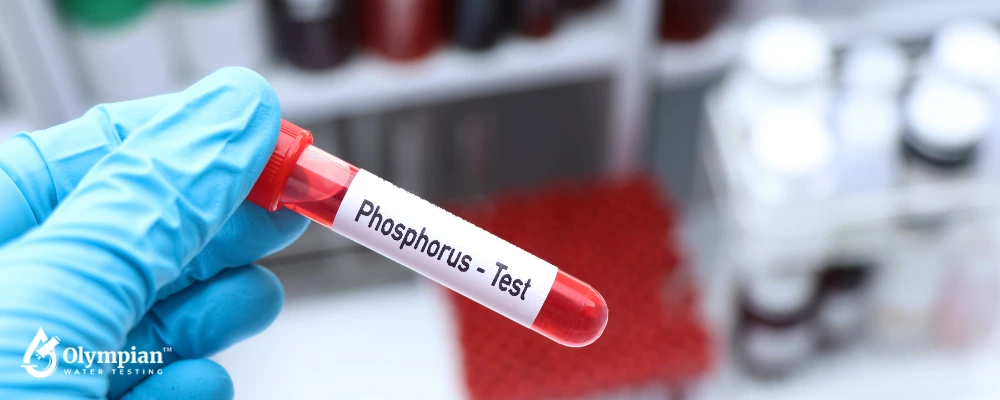
Quantification and detection of phosphorus in drinking water can be done using various analytical approaches. Some of these notably include 1) chemical methods involving specific reagents to react with P in water to make a color change (Pote and Daniel 2000), 2) spectrophotometric methods by using a standard curve of known P levels, and detecting the unknown P levels in drinking water samples using a specific light wavelength (Vaughan et al. 2018), 3) ion-specific electrodes that measure the electrical potential of P ions in water (Adeloju 2013), 4) atomic absorption spectrophotometry (AAS) coupled with specific detectors such as flame or graphite furnace (FAAS/GFAAS).
The method uses a light beam to excite P atoms in water and measure the amount of absorbed light to determine the P concentration in drinking water. AAS is a widely used method for metal quantification in various matrices due to its affordability and high sensitivity. However, for more sensitive and precise measurement of P, inductively coupled plasma (ICPMS/OES) is widely recommended but the limitations include its high operating cost and should only be used when the desired results are at very low levels i.e. ppb/ppt (Jia et al. 2022). It must be taken into account that the choice of preference for a specific detection method mainly depends on the accuracy, precision, costs, and complexity of the adopted method.
Elemental P or in the form of phosphates in drinking water can be removed by adopting various strategies. These methods mainly comprise chemical precipitation by adding chemicals such as Al or Fe salts to drinking water that result in the precipitation of P which can be removed from water using suitable filters (Clark et al. 1997). Adsorption of P using ion-exchange resins is also common for removing P from drinking water (Blaney et al. 2007). More recently, granulated drinking water treatment residues (DWTR) have shown high P adsorption potential with high efficiency of P removal (Li et al. 2018).
Certain sorbents have been developed with the potential to remove P from an aqueous medium for example, Fe-coated natural and engineered sorbents have been shown to efficiently remove P from water (Boujelben et al. 2008). Moreover, biological treatment using specific bacteria is also very effective, affordable, and environmentally approache for P removal. Microbes consume P from water as a nutrient and convert it into a removable form that can be eliminated from water (Zahed et al. 2022). While using a certain P-removal strategy, it must be ensured that the adopted treatment method does not introduce any other harmful substances into the water and the treated water meets the EPA standards for safe drinking water in the US.


Following frequently asked questions (FAQs) try to address some general public concerns in the US, especially the NYC and NJ region.
For natural reservoirs used by the drinking water industry, the level of total P must be 40 ppm (parts per million) or less according to the EPA. Any more than that is no longer considered safe for a drinking water supply according to the Standards.
The water running through the supply is usually from the local drinking water supply systems, this water is treated with chlorine and contains an average phosphate concentration of 1 mg/L.
Phosphates are not toxic to people or animals unless they are present at very high concentrations. Digestive problems could occur from extremely high levels of phosphate.
P causes harmful effects on water bodies, such as detrimental shifts in biological communities, fish kills, and reduction of dissolved oxygen and pH values. Sources of human input of phosphorus include wastewater treatment facilities, lawn fertilizers, stormwater runoff, and agriculture.
Some studies have shown that excess P can promote the calcification, or hardening, of heart arteries and increase inflammation. High P levels may be associated with an increased risk of cardiovascular disease (CVD).
ALUM (aluminum sulfate) is a non-toxic material commonly used in water treatment plants to clarify drinking water. In lakes, alum is used to reduce the amount of nutrient P in the water.
Too much phosphate ingestion can be toxic and can cause diarrhea, as well as a hardening of organs and soft tissue. High levels of P can affect your body’s ability to effectively use other minerals, such as iron, calcium, magnesium, and zinc.
Studies have shown that high P levels may directly harm the kidneys and result in a loss of kidney function increasing the risk of renal failure.
This includes muscle cramps or spasms, numbness and tingling around the mouth, bone and joint pain, weak bones, rash, and itchy skin.
The main function of P includes the formation of bones and teeth. It plays a vital role in how the body uses carbohydrates and fats. It is also needed for the body to make proteins for the growth, maintenance, and repair of cells and tissues.


P is an important naturally occurring element with high significance for plants and animals. Various natural and anthropogenic sources can contribute to the phosphorus levels in drinking water. Most of the impacts associated with P are aesthetic with a limited health risk from exposure to drinking water. However, prolonged and elevated exposure to P can contribute to the development of various health implications in humans. Therefore, water suppliers in the US must regularly monitor P in drinking water and take suitable treatment measures to reduce the levels to acceptable levels as per EPA guidelines of SMCL.
Abbas A. 2022. Evolution of the global phosphorus cycle. Global Research Journal of Natural Science and Technology. 1(2):1-8.
Adeloju SB. 2013. Progress and recent advances in phosphate sensors: A review. Talanta. 114:191-203.
Blaney LM, Cinar S, SenGupta AK. 2007. Hybrid anion exchanger for trace phosphate removal from water and wastewater. Water research. 41(7):1603-1613.
Boujelben N, Bouzid J, Elouear Z, Feki M, Jamoussi F, Montiel A. 2008. Phosphorus removal from aqueous solution using iron coated natural and engineered sorbents. Journal of hazardous materials. 151(1):103-110.
Clark T, Stephenson T, Pearce P. 1997. Phosphorus removal by chemical precipitation in a biological aerated filter. Water research. 31(10):2557-2563.
Geddes RF, Finch NC, Syme HM, Elliott J. 2013. The role of phosphorus in the pathophysiology of chronic kidney disease. Journal of Veterinary Emergency and Critical Care. 23(2):122-133.
Goodson JM, Shi P, Razzaque MS. 2019. Dietary phosphorus enhances inflammatory response: A study of human gingivitis. The Journal of steroid biochemistry and molecular biology. 188:166-171.
Jia Y, Sun S, Wang S, Yan X, Qian J, Pan B. 2022. Phosphorus in water: A review on the speciation analysis and species specific removal strategies. Critical Reviews in Environmental Science and Technology.1-22.
Li X, Cui J, Pei Y. 2018. Granulation of drinking water treatment residuals as applicable media for phosphorus removal. Journal of environmental management. 213:36-46.
Liu C, Su G, Giesy JP, Letcher RJ, Li G, Agrawal I, Li J, Yu L, Wang J, Gong Z. 2016. Acute exposure to tris (1, 3-dichloro-2-propyl) phosphate (tdcipp) causes hepatic inflammation and leads to hepatotoxicity in zebrafish. Scientific reports. 6(1):19045.
Liu C, Wang Q, Liang K, Liu J, Zhou B, Zhang X, Liu H, Giesy JP, Yu H. 2013. Effects of tris (1, 3-dichloro-2-propyl) phosphate and triphenyl phosphate on receptor-associated mrna expression in zebrafish embryos/larvae. Aquatic toxicology. 128:147-157.
Nguyen NT, Nguyen TT, Park K-S. 2022. Oxidative stress related to plasmalemmal and mitochondrial phosphate transporters in vascular calcification. Antioxidants. 11(3):494.
Pote D, Daniel T. 2000. Analyzing for dissolved reactive phosphorus in water samples. Methods of phosphorus analysis for soils, sediments, residuals, and waters Southern Coop Ser Bull. 396:91-93.
Schröder B, Breves G, Rodehutscord M. 1996. Mechanisms of intestinal phosphorus absorption and availability of dietary phosphorus in pigs. Deutsche Tierarztliche Wochenschrift. 103(6):209-214.
Shakoor S, Ilyas F, Abbas N, Mirza MA, Arif SJJGIASS. 2014. Prevalence of osteoporosis in relation to serum calcium and phosphorus in aging women. 2(2):70-75.
Stremke ER, Hill Gallant KM. 2018. Intestinal phosphorus absorption in chronic kidney disease. Nutrients. 10(10):1364.
Vaughan MC, Bowden WB, Shanley JB, Vermilyea A, Wemple B, Schroth AW. 2018. Using in situ uv‐visible spectrophotometer sensors to quantify riverine phosphorus partitioning and concentration at a high frequency. Limnology and Oceanography: Methods. 16(12):840-855.
Walwadkar S, Suryakar A, Katkam R, Kumbar K, Ankush R. 2006. Oxidative stress and calcium-phosphorus levels in rheumatoid arthritis. Indian Journal of Clinical Biochemistry. 21:134-137.
Zahed MA, Salehi S, Tabari Y, Farraji H, Ataei-Kachooei S, Zinatizadeh AA, Kamali N, Mahjouri M. 2022. Phosphorus removal and recovery: State of the science and challenges. Environmental Science and Pollution Research. 29(39):58561-58589.

Share this research on social media
We use cookies to enhance your experience, analyze site traffic, and serve personalized content. By clicking "Accept All", you consent to our use of cookies. You can manage your preferences or read more in our Privacy Policy.
Your privacy matters – and we’re here to honor it.