




History
The New York Yankees have been playing local baseball games at Yankee Stadium since 1923, and it is one of the most well-known and recognized sporting venues in the country. The first Yankee Stadium debuted in 1923 and closed in 2008, and it was the site of 26 World Series victories by the team. Since 2009, the team has played in the new Yankee Stadium.
The original Yankee Stadium was one of the finest baseball venues ever built when it debuted in 1923 and became the home of many baseball champions. However, it was renovated and reconstructed between 1974 and 1976 due to its declining condition in the mid-1970s. In the 1990s and 2000s, almost every Major League Baseball club built a new stadium, and although many fans preferred that the Yankees stay in Yankee Stadium, the team wanted a new stadium to increase revenue and provide luxury services to fans.
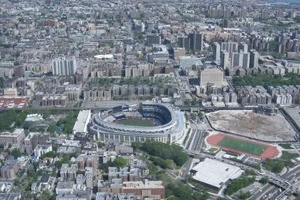
The replacement of Yankee Stadium was finally approved in June 2005 after years of speculation. Construction on the new stadium, which is located next to the old one, began on August 16, 2006, and was funded by the Yankees, who contributed $1.6 billion, and New York City, which contributed $220 million for construction and other renovations.
The main arena at Yankee Stadium has over 52,000 seats spread across four levels from the center to the boundary pole, with approximately 30,000 seats located in the top two. The top deck is divided into two halves, and the third floor has 56 luxury suites. The new Yankee Stadium has the same number of seats as the previous one and includes a food court, so fans who liked sitting in the old stadium will have to keep their seating arrangements the same.
