Legionella Bacteria in
Drinking Water and System
Prepared by:
R & D Department of Olympian Water Testing™
Fact Checked by
Dr. Yasir A. Rehman PhD
Table of Contents
Introduction
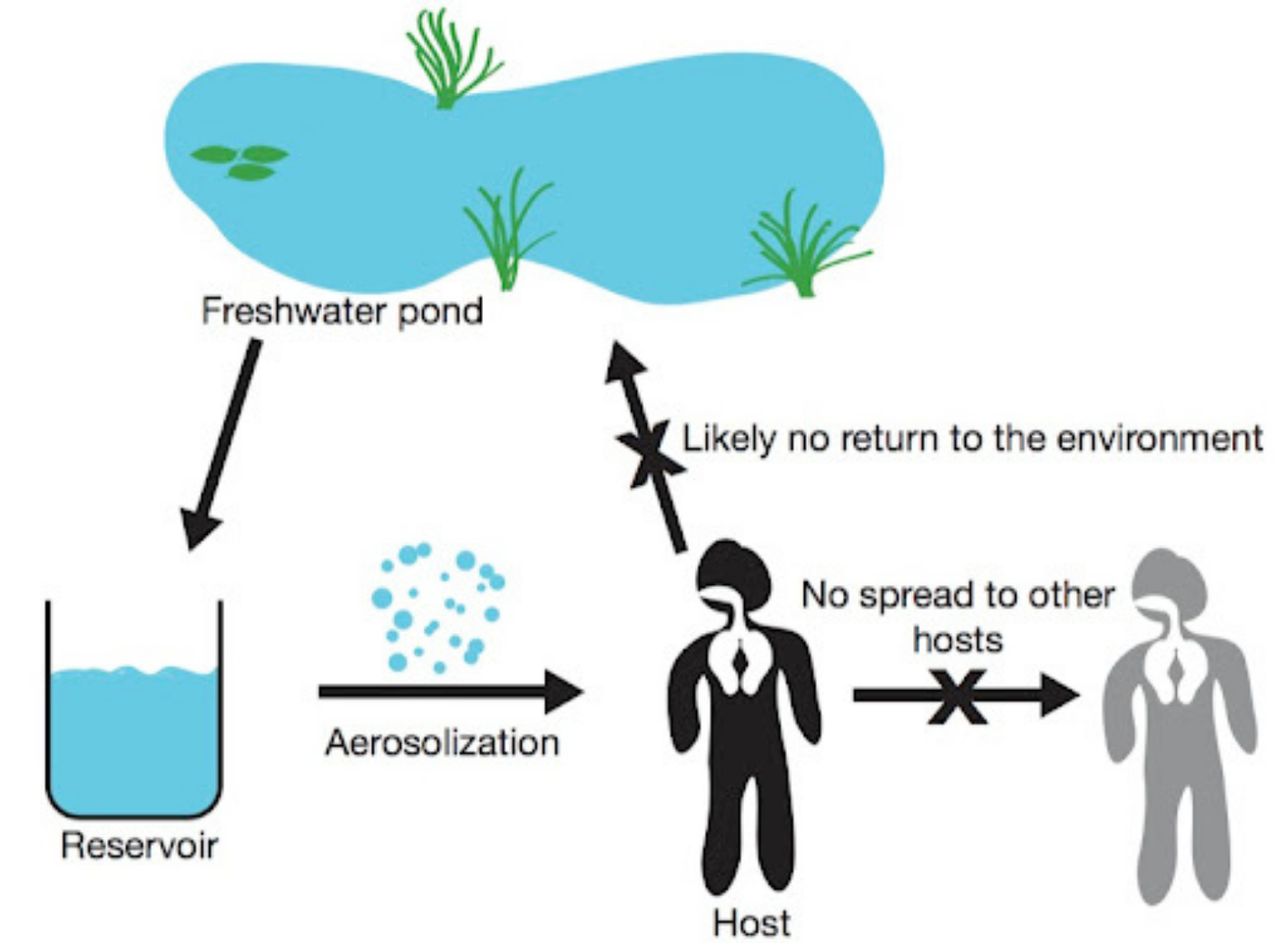
Legionella bacteria are primarily responsible for Legionnaires’ disease, a severe form of pneumonia that can be fatal, especially in individuals with weak immune systems, the elderly, and smokers. Another illness caused by Legionella is Pontiac fever, a milder, flu-like condition. Both diseases are contracted by inhaling aerosolized water droplets containing the bacteria.
The contamination of drinking water with Legionella typically occurs in systems that provide ideal conditions for bacterial growth. Factors such as warm temperatures (25-42°C), stagnant water, and the presence of biofilms contribute to the proliferation of these bacteria in water distribution systems.
Dead legs in plumbing, poor maintenance, and inadequate disinfection practices exacerbate the risk of Legionella contamination.
Preventing Legionella in drinking water requires a comprehensive approach involving proper water system design, regular maintenance, and effective disinfection. Water management programs, as recommended by health authorities like the CDC and WHO, are critical in monitoring and controlling Legionella growth. Strategies include maintaining hot water temperatures above 60°C and cold water below 20°C, implementing routine chlorination, and using advanced filtration and disinfection technologies.
Outbreaks of Legionnaires’ disease have highlighted the importance of water management. Notable incidents, such as the Flint water crisis and outbreaks in healthcare facilities, underscore the need for strict regulations and proactive measures to safeguard public health. Understanding the behavior of Legionella in drinking water systems is crucial for preventing outbreaks and ensuring the safety of water supplies.
Sources of Legionella

Premise Plumbing Systems:
Legionella bacteria thrive in the complex networks of pipes within buildings. These systems include water heaters, faucets, showerheads, and other fixtures where water can stagnate, creating ideal conditions for biofilms that protect the bacteria. Effective temperature control and regular maintenance are essential to prevent bacterial growth in these systems. (1)

Cooling
Towers:
Cooling towers are a significant source of Legionella. These towers are part of HVAC systems and use water to remove heat, creating mist or aerosol that can carry Legionella if the water is contaminated. Proper disinfection and maintenance practices are crucial to prevent bacterial spread. (2)

Hot Water Tanks and Heaters:
Hot water tanks and heaters, which maintain temperatures that are conducive to Legionella growth (20-45°C or 68-113°F), can be sources of contamination if not properly maintained. Keeping water systems above 60°C (140°F) can help minimize the risk. (3)
Transmition of Legionella
Aerosols:
The primary mode of transmission for Legionella is through inhalation of aerosols (tiny water droplets) containing the bacteria. These aerosols can be produced by showers, cooling towers, hot tubs, and decorative fountains. (4)
Biofilms:
Legionella can form biofilms on the interior surfaces of plumbing systems. These biofilms provide a protective environment that makes the bacteria more resistant to disinfectants and other control measures. (5)
Aspiration:
Less commonly, people can contract Legionnaires’ disease by aspirating water containing Legionella. This occurs when water accidentally enters the lungs while drinking. Individuals with swallowing difficulties are at higher risk for this type of transmission. (6)
Types of Legionella
in Drinking Water
Legionella pneumophila is the most common species responsible for Legionnaires’ disease. It includes several serogroups, with serogroup 1 being the most frequently associated with human illness. This species is known for its ability to thrive in various water systems, including potable water. (7)
Legionella longbeachae is less common than L. pneumophila but has been identified in potable water systems. This species is more frequently found in soil and potting mixes, but waterborne transmission has been documented. (8)
Legionella anisa is another species found in potable water systems. While less commonly associated with human disease compared to L. pneumophila, it has been isolated from various water sources and can cause respiratory illness. (9)
Health Risks of Legionella Bacteria

Legionnaires' Disease
Legionnaires' disease is a severe form of pneumonia caused by inhaling water droplets contaminated with Legionella bacteria. Symptoms include cough, shortness of breath, high fever, muscle aches, and headaches. In severe cases, it can lead to respiratory failure, septic shock, or even death. Individuals at higher risk include older adults, smokers, and those with weakened immune systems or chronic lung conditions. (10)

Pontiac Fever
Pontiac fever is a milder infection caused by Legionella bacteria, resembling flu-like symptoms such as fever, chills, headache, and muscle aches. Unlike Legionnaires' disease, Pontiac fever does not cause pneumonia and is not life-threatening. Symptoms typically last for 2-5 days, and most people recover without medical treatment. (11)

Risk Factors for Infection
The risk of infection increases with age, particularly for those over 50. People with chronic lung diseases (like COPD), diabetes, kidney disease, or cancer are more susceptible to Legionella infections. Those with weakened immune systems, including individuals undergoing chemotherapy, organ transplant recipients, or those on immunosuppressive medications, are at higher risk. (12)
Legionella Based Disease
Breakout Sources
The spread of Legionnaires’ disease is influenced by various environmental and maintenance factors across different settings. Hotels and resorts top the list, followed by long-term care facilities and hospitals. Senior living facilities, workplaces, and community settings also contribute to the incidence of the disease. Understanding these sources is crucial for implementing effective prevention and control measures to reduce the risk of Legionella contamination.
Prevention and Control of
Legionella Bacteria

Regular Maintenance and Monitoring
Regular inspection and maintenance of water systems are crucial for preventing Legionella growth. This includes cleaning and disinfecting cooling towers, hot tubs, and plumbing systems. Ensuring that water does not stagnate and that biofilms do not form can significantly reduce the risk of contamination. (13)

Temperature Control
Maintaining water temperatures outside the ideal range for Legionella growth (20-45°C or 68-113°F) is a key control measure. Hot water systems should be kept above 60°C (140°F), and cold water should be stored below 20°C (68°F). Regularly flushing hot water systems can also help prevent stagnation and bacterial growth.(14)

Disinfection
Various disinfection methods can be used to control Legionella in water systems. These include chemical disinfectants like chlorine, chlorine dioxide, monochloramine, and ozone, as well as physical treatments such as ultraviolet (UV) light and thermal inactivation. It's important to monitor and maintain appropriate levels of disinfectants to ensure effective control. (15)
Regulatory Guidelines for
Legionella Control
Environmental Protection Agency (EPA)
Treatment Technique Requirement: Systems must achieve at least 99.99% (4-log) removal/inactivation of viruses and 99.9% (3-log) removal/inactivation of Giardia lamblia. (16)
Treatment Requirements: Requires ground water systems to achieve at least 99.99% (4-log) inactivation/removal of viruses, with the implication that other pathogens like Legionella should also be effectively controlled.
Compliance Statistics: Approximately 90% of the U.S. population receives drinking water that meets all EPA standards. Specific compliance rates for pathogen control, including Legionella, are incorporated into broader microbial compliance statistics. (17)
World Health Organization (WHO)
The WHO’s guidelines on Legionella control are comprehensive and globally applicable, emphasizing risk management through Water Safety Plans (WSPs).
Control Measures: Recommendations include maintaining hot water temperatures above 60°C (140°F) and cold water below 20°C (68°F), regular disinfection, and preventing water stagnation. (18)
Temperature Control: Ensuring water heaters are set to maintain a minimum temperature of 60°C (140°F).
Incidence Rates: Legionnaires’ disease incidence varies widely but is reported to range from 0.5 to 30 cases per 100,000 people annually, depending on the country and surveillance quality. WHO data indicate that up to 10% of reported cases occur in healthcare settings, and outbreaks often have higher attack rates due to the vulnerable populations involved. (19)
Detection Methods for Legionella

1. Culture Method

2. Polymerase Chain Reaction (PCR)

3. Direct Fluorescent Antibody (DFA) Test:

4. Enzyme-Linked Immunosorbent Assay (ELISA)
Treatment of Legionella in Drinking Water

1. Chlorination
Chlorination is a widely used method for disinfecting drinking water and controlling Legionella. It involves adding chlorine to the water system to kill bacteria and other pathogens. This can be done through continuous chlorination, where a constant level of chlorine is maintained, or shock chlorination, where a high dose is applied periodically.
Chlorination is effective in reducing Legionella levels, but maintaining the correct chlorine concentration is crucial. Continuous monitoring is required to ensure effectiveness. (24)

2. Ultraviolet (UV) Light
UV light disinfection involves exposing water to ultraviolet light, which inactivates bacteria by damaging their DNA. This method is chemical-free and can be used as a secondary treatment to complement other disinfection processes.
UV disinfection is effective against Legionella and other microorganisms. However, it does not provide residual disinfection, so it is often used in combination with chlorination or other methods to ensure ongoing protection.(25)

3. Copper-Silver Ionization
Copper-silver ionization involves releasing copper and silver ions into the water, which disrupts the cell walls of bacteria and inhibits their growth. This method is particularly effective for controlling biofilms that harbor Legionella.
Studies have shown that copper-silver ionization is effective in reducing Legionella levels in large water systems, such as hospitals and hotels. It provides a long-term residual effect, making it a viable option for continuous disinfection.(26)

Case Studies and Real-World
Examples of Legionella Outbreaks
Flint Water Crisis
(Michigan, USA)
The outbreak led to at least 12 deaths and over 90 cases of Legionnaires’ disease. The crisis highlighted the importance of proper water treatment and infrastructure maintenance. (27)
Bellevue-Stratford Hotel
(Philadelphia,USA)
The outbreak resulted in 34 deaths and 221 reported cases of illness. This incident led to the identification of Legionella pneumophila and increased awareness and research on Legionnaires’ disease. (28)
Quincy Veterans Home
(Illinois, USA)
The outbreak resulted in 14 deaths and multiple cases of illness among residents and staff. This incident prompted a reevaluation of water management practices in healthcare facilities and highlighted the need for stringent Legionella control measures in such settings. (29)
Future Directions and Research on Legionella

Advanced Detection Methods
Research is focused on developing more rapid, accurate, and cost-effective detection methods for Legionella. Innovations include biosensors, next-generation sequencing, and advanced PCR techniques, which can enhance early detection and improve outbreak response times.
Key Developments:
- Biosensors that provide real-time detection
- Next-generation sequencing for detailed genetic profiling
- Improved PCR methods for higher sensitivity and specificity (30)

Understanding Legionella Ecology and Pathogenesis
Ongoing research aims to better understand the ecology of Legionella in natural and man-made environments, as well as its pathogenesis. This includes studying the bacteria’s interaction with biofilms and amoebae, which can provide insights into how Legionella survives and proliferates in water systems.
Key Developments:
- Studies on biofilm interactions and survival mechanisms
- Research on Legionella’s genetic and molecular pathways
- Investigation into the role of amoebae as hosts for Legionella (31)

Development of New Treatment Strategies
Research is being conducted to develop new treatment strategies, including alternative disinfection methods and antimicrobial agents. This includes studying the efficacy of various biocides, novel antimicrobial peptides, and the potential use of phage therapy to control Legionella in water systems.
Key Developments:
- Exploration of novel biocides and disinfection techniques
- Development of antimicrobial peptides targeting Legionella
- Investigation of bacteriophage therapy as an alternative treatment (32)
References
1- https://www.mdpi.com/2073-4441/12/3/676
2- https://academic.oup.com/lambio/article/70/4/232/6698343
3- https://academic.oup.com/jambio/article-abstract/120/2/509/6726111?redirectedFrom=fulltext
4:https://www.cdc.gov/legionella/causes/index.html#:~:text=Water%20containing%20Legionella%20can%20spread,common%20way%20people%20get%20sick.
5-https://www.who.int/publications-detail-redirect/9241562978
6-https://www.epa.gov/ground-water-and-drinking-water/legionella
7-https://academic.oup.com/jid/article-pdf/186/1/127/18005891/186-1-127.pdf
8-https://www.health.nsw.gov.au/Infectious/factsheets/Pages/legionnaires_disease.aspx
9-https://www.ncbi.nlm.nih.gov/pmc/articles/PMC87733/
10:https://www.cdc.gov/legionella/about/index.html#:~:text=Legionnaires’%20disease%20is%20a%20serious,in%20mist%20containing%20Legionella%20bacteria.
11-https://wwwnc.cdc.gov/travel/yellowbook/2024/infections-diseases/legionnaires-disease-and-pontiac-fever#:~:text=Pontiac%20fever%20is%20milder%20than,within%2072%20hours%20of%20exposure.
12-https://www.lung.org/lung-health-diseases/lung-disease-lookup/legionnaires-disease/learn-about-legionnaires-disease#:~:text=Legionnaires’%20disease%20is%20one%20type,10%20days%20after%20being%20exposed.
13-https://www.who.int/publications-detail-redirect/9241562978
14-https://www.epa.gov/ground-water-and-drinking-water/technologies-legionella-control-premise-plumbing-systems
15-https://www.sciencedirect.com/science/article/pii/S0043135402001884
16-https://www.epa.gov/dwreginfo/surface-water-treatment-rules
17-https://www.epa.gov/dwreginfo/ground-water-rule
18-https://iris.who.int/handle/10665/43233
19-https://www.who.int/publications/i/item/9789241549950
20-https://stacks.cdc.gov/view/cdc/11895
21-https://www.clinicalmicrobiologyandinfection.com/article/S1198-743X(14)63975-6/fulltext
22-https://www.testing.com/tests/legionella-testing/#:~:text=Direct%20fluorescent%20antibody%20(DFA)%20staining,to%204%20hours%20for%20results.
23-https://www.ncbi.nlm.nih.gov/pmc/articles/PMC502655/
24-http://www.ongov.net/health/env/documents/DisinfectionofHotTubswithLegionella-CDC.pdf
25-https://legionellacontrolsystems.com/legionella-control-equipment/legionella-control/ultraviolet-uv-system-for-legionella-waterborne-pathogen-control/#:~:text=Legionella%20Control%20at%20254nm%3A%20Legionella,carbon%20in%20your%20water%20system.
26-https://www.nyc.gov/assets/doh/downloads/pdf/environmental/copper-silver-ionization.pdf
27-https://www.cnn.com/2016/03/04/us/flint-water-crisis-fast-facts/index.html
28:https://www.nytimes.com/2006/08/01/health/01docs.html#:~:text=In%20late%20July%201976%2C%20American,men%20in%20Pennsylvania%20had%20died.
29-https://www.chicagotribune.com/2015/08/27/8-treated-for-legionnaires-disease-at-quincy-veterans-home/
30-https://www.ncbi.nlm.nih.gov/pmc/articles/PMC6758362/
31-https://www.researchgate.net/publication/342688190_Freshwater_Ecology_of_Legionella_pneumophila
32:https://pubmed.ncbi.nlm.nih.gov/8749675/#:~:text=The%20drugs%20of%20choice%20for,fluoroquinolone%20antimicrobials%20rather%20than%20erythromycin.