Connection Between Water Testing and Food Security Throughout History
- Published:
- Updated: December 16, 2024
Listen to this article
Summary
Throughout history, water testing has been crucial for food security, ensuring that water used for production is safe. Early civilizations like the Greeks and Romans recognized its importance. Modern practices involve sophisticated methods and international standards. Challenges include limited access to testing facilities and technical expertise. Future advancements in technology and collaboration will further enhance water testing’s role in ensuring food security.

Water and food are two of the most basic things humans need in order to live. The connection between water quality and food resources goes back as far as ancient man. The human species have always checked whether water was good enough to drink or use for irrigation. It’s been a way to sustain food safety and halt food-borne illness outbreaks.
What is Food Security?
Food security is about food supply availability, accessibility, and stability. It is a messy term that covers all sorts of issues, from food production and distribution to food consumption. Food security aims to give all people sufficient food to cover their food requirements, regardless of where they live, how much money they make, or what their social status.
The Importance of Water Testing in Food Security

The importance of Upper East Side NY water testing for food security is to make sure that the water you use to produce your food isn’t contaminated. This is critical because unclean water can result in many ailments such as food poisoning, and it can also damage crops and animals. Food producers can ensure that their food is safe for consumption and is in the high-quality range necessary for food security, by testing water regularly.
The Process of Water Testing
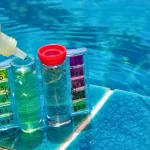
- Collection of water samples: Water samples are collected from various sources, such as wells, rivers, lakes, and groundwater, and they are transported to a laboratory for analysis.
- Analysis of water samples: The water samples are analysed using various methods, such as chemical analysis, biological analysis, and physical analysis, to determine the presence of contaminants and to measure the water quality.
- Interpretation of test results: The test results are interpreted to determine whether the water is safe for food production and consumption. If the water is not safe, it may need to be treated before it can be used.
The History of Water Testing and Food Security
Water testing and food security have been linked for centuries, with evidence of water testing dating back to ancient civilizations. In ancient Greece, for example, water was tested to ensure that it was safe for drinking and cooking. The Romans also tested water, and they built aqueducts and sewage systems to ensure that water was clean and free from contaminants.
In more recent times, water testing has become an integral part of food security and quality control. In the 19th and 20th centuries, advances in technology and science allowed for more accurate and sophisticated water testing methods. This led to the development of international standards for water quality, which helped to ensure that food producers and water suppliers could provide safe and high-quality water for food production.
The Benefits of Water Testing
- Protects public health: Regular Upper East Side NY water testing services helps to protect public health by ensuring that the water used for food production and consumption is safe and free from contaminants.
- Increases food safety: By ensuring that water used for food production is safe, water testing helps to increase the safety of the food produced.
- Supports sustainable agriculture: By ensuring that water used for crop irrigation is safe, water testing supports sustainable agriculture and helps to protect the environment.
- Enhances food security: By ensuring that water is safe for food production, water testing enhances food security by increasing the availability, accessibility, and stability of food supplies.
What are the Current Water Testing Practices?
Today, water testing is a standard practice in food production and is regulated by various international organizations and government agencies. These organizations and agencies set standards for water quality and monitor water sources to ensure that they meet these standards. They also provide guidelines for water testing and treatment, which help to ensure that water is safe and free from contaminants.
In addition to regular water testing, food producers also use various water treatment methods to ensure that the water used for food production is safe. These methods include filtration, disinfection, and reverse osmosis. Food producers also implement various food safety measures, such as Good Agricultural Practices (GAPs) and Good Manufacturing Practices (GMPs), to ensure that the food they produce is safe and of high quality.
What are the Challenges in Water Testing?
- Limited access to testing facilities: In some regions, there may be limited access to water testing facilities, which can make it difficult to ensure that water is safe for food production.
- Inadequate funding: Water testing requires funding, and in some regions, there may be inadequate funding for water testing programs, which can impact the ability to ensure food security.
- Lack of standardization: There may be a lack of standardization in water testing methods and regulations, which can make it difficult to compare test results and ensure consistency in water quality.
- Technical expertise: Water testing requires technical expertise, and in some regions, there may be a shortage of trained professionals, which can impact the ability to ensure food security.
Future Implications of Water Testing and Food Security
As the global population continues to grow, the demand for food will also increase. This means that food security will become even more important in the future. Water testing will play a crucial role in ensuring food security, as it will help to ensure that the water used for food production is safe and free from contaminants.
In addition, advances in technology and science will likely lead to even more sophisticate and accurate water testing methods in the future. This will help to ensure that water is of the highest quality and that food produced with this water is safe for consumption.
The Future of Water Testing and Food Security
- Advancements in technology: Advances in technology are likely to lead to more sophisticated and accurate water testing methods in the future, which will enhance food security.
- Increased global collaboration: Increased global collaboration and cooperation on water testing and food security issues will help to ensure that water is safe for food production and consumption.
- Adoption of new practices: The adoption of new practices, such as smart irrigation and precision agriculture, may help to increase water efficiency and reduce the need for water testing in the future.
- Integration with other systems: Water testing may become integrated with other systems, such as early warning systems for food security, to provide a more comprehensive approach to food security.
Water testing and food security are closely linked and have been throughout history. Water testing helps to ensure that the water used for food production is safe and free from contaminants, which is essential for food security. The history of water testing dates back to ancient civilizations, and it has evolved over time with advances in technology and science.
Share this on social media:
Facebook
Twitter
LinkedIn

Related Posts