

Per- and polyfluoroalkyl substances in Drinking Water
A technical paper by Olympian Water Testing specialists

Per- and polyfluoroalkyl in Water
Per- and polyfluoroalkyl substances (PFAS) – forever chemicals – are chemical compounds with multiple atoms attached to the alkyl chain. They are fluorinated molecules with at least a methyl or methylene carbon atom [1]. There is no hydrogen, chlorine, bromine or iodine atom tacked onto them. These PFAS are applied to heat, oil, stain, grease, water-resistant fluoropolymer coats and items (furniture, adhesives, food wraps, nonstick cooking pans, electrical wire insulation, etc.) [1]. They are abundant in the landscape, wildlife and people because they have applications across industries and their sustainability extends across time. There is no way to research and judge them. Hence, we want to tell you more about PFAS, its effects on water quality, health effects, prevention and elimination from water supply.
How does PFAS contaminate drinking water?

Flecks to the sewer (and sanitary effluent)
If released into water, air or soil industrially, PFAS enter our drinking water. Injection of industrial sewages into public sewer can generate aftertreatment sludge [2]. Furthermore, a dirty sludge can get into a source of water [1, 2]. According to research, the land application of sewage sludge releases chemicals, metals and pathogens that can be harmful to groundwater [3].
Leaching from Landfills
The PFAS source comes from landfill leaching, too. The contaminant that remains in landfills is supposed to shield groundwater from contaminants. And sometimes landfills send leachate to a wastewater treatment plant for treatment. Even if the wastewater treatment plant doesn’t treat for PFAS, it could still have PFAS in the water. The groundwater concentrations of PFAS in an urban redevelopment neighbourhood with lots of legacy dumps and history of industrial use ranged from 26 to 5,200 ng/L [4], according to an Australian study.
Firefighting Equipment
Firefighting foam machines pollute water because the foam contains PFAS. Firewater can clog wells and other subsurface waters. Fighting AFFF composed of fluorinated surfactants is based on PFAS (active ingredient) [5]. In light of contamination risks of water and the risks of PFAS-contaminated water, in September 2020 California banned the use of PFAS-containing AFFF [6].
Surface Water Run-Offs
When an environment has several items of PFAS waste, rain can wash it down rivers, lakes and ponds. PFAS are in the water, although it is filtered before reaching these water sources, because they are difficult to remove from the living space.
Health Effects of PFAS

Most alarming is perfluorooctane sulfonic acid (PFOS) and perfluorooctanoic acid (PFOA) since they don’t degrade, diffuse in soils and water, and end up in fish and wildlife [1]. PFAS are also liver toxicity markers (high liver enzymes). Some studies related PFAS to decreased breast milk, premature termination of lactation, and showed they influenced development of mammary glands [7–9]. The case-control, cohort and cross-sectional studies have shown evidence of PFAS carcinogenesis in kidney and testicular cancers [9].
Other PFAS health impacts in a general population that had not been directly contacted by PFAS but were drinking polluted water include [10, 11]:
PFAS raises serum cholesterol and blood uric acid.
Lowers immunity and in particular antibody responses and is exposed to diseases.
Disrupts normal liver enzymes.
Higher cholesterol levels
Thyroid issues
Cancers (Kidney, prostate, testicle)
Bluthochdruck, especially during pregnancy.
Effects of PFAS on Infants and Children

Exposure to PFAS in childhood makes children very disease-prone because it promotes the immune failure of the child exposed to PFAS via placental transfer and their subsequent breastfeeding and hand-to-mouth exposure to PFAS post-natally [9, 12]. The babies subsequently ingest more per person than the elderly, and they are more susceptible to exposure when their water supply is polluted [12, 13].
Exposure of a child or foetus to PFAS can lead to birth weight loss, insufficient immune response to immunisation and disease risk with diminished immunity, asthma and allergies [12–14]. The second prevailing problem is that children get delayed in development [14], as both PFAS effects are directly associated and PFAS-related chronic disease.
Which waters contain PFAS and which ones don’t?
PFAS is odourless, colorless and tasteless, and you can’t even smell it or taste it unless you analyse the water using certain techniques. EPA: You should be testing your water every time you change your water source [15]. The vast majority of people who are in the vicinity of landfills and industrial sites where all PFAS-containing products are produced are vulnerable to drinking PFAS-contaminated water and exposure is greater if they are drawing water from subsurface sources [4, 15].
Water testing’s function is to be sure there are little or no PFAS. A water analysis of good quality is important too, as it also informs the water technicians of other elements or disease-causing organisms. PFAS home testing is non-conductor since you could only test for one ingredient. You would be better off having some professional water testing to analyse the data. And if there are other contaminants in the water that can be harmful to you, make sure to have your water professionally tested for PFAS and other impurities. You will do best to get professional water service technician to assist you through all the water testing.
What Level of PFAS should be in drinking water?

EPA recommends Limitations on Contaminant Levels of PFAS in Drinking Water no higher than 20 ng per liter [16]. You need to test your drinking water for these chemicals regularly and get a sample of your water whenever you come into your home.
If you have bootle-feeding babies, then make their food, formula, and juices from bottled water. It is difficult for breastfeeding infants because PFAS can be found in mother’s milk and hence passed to infant if mother consumes PFAS-contaminated water. Although the risk is never ever low in this case, you must continue to breastfeed the baby as the advantages of breastmilk are more valuable than the risks of PFAS [17]. Some studies say that there are other chemicals that could be harmful to the baby, which is difficult to shield [18]. Moreover, the baby is at greater risk of drinking polluted water even if they don’t breastfeed.
The best ways to minimise the PFAS risk for pregnant and nursing women are water filters in your home or bottled water. PFAS can be slowly eliminated from the body, so it is never immediate risk reduction as PFAS effect on the baby or foetus depends also on your exposure to PFAS.
For older children and adults: Use public water with caution as drinking water. Drink water with the labeled PFAS content and compare that to the EPA recommended PFAS content [19]. Report PFAS levels in drinking water higher than population estimates and get the water removed.
What can I do if my water is very PFAS rich?
If your water is PFAS tainted, use another source if you’re using the water for drinking, flossing, bubbling or even swimming, because you may swallow the water. But with advances in water technologies you can clean your water and get rid of all Forever Chemicals.
How to Remove PFAS from your Drinking Water
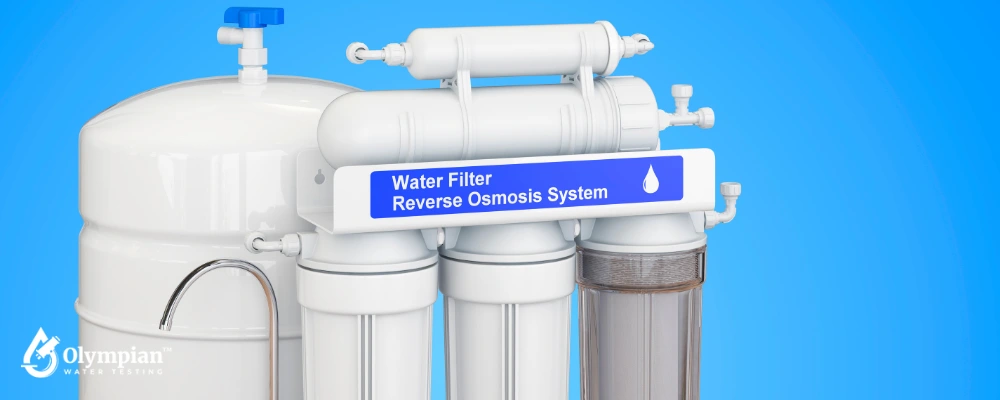
PFAS are known as Forever Chemicals since they are highly resistant to thermal, biological, and chemical destruction. These chemicals are readily used in several items that people use daily. After doing a comprehensive water test, you can choose different ways of decontaminating your water. To effectively tackle the presence of PFAS in your water supply, it is essential to understand the various pfas testing methods and equipment available. Accurate testing will help identify the specific types and concentrations of these harmful chemicals present in your water. Once the contamination is confirmed, you can explore advanced filtration systems and other treatment options designed to remove PFAS, ensuring safer drinking water for you and your family.
Reverse Osmosis
Reverse osmosis removes minerals from the water using the semi-permeable membrane. The technique allows only water molecules to pass through the semi-permeable membrane and block chemicals, metals and pathogens from passing through [20]. Reverse osmosis uses a pressure pump that increases pressure on one side and forces water to the other, removing about 90-99% of the PFAS [4]. A full-house reverse osmosis system should have carbon filtration, pre-filtration, UV disinfection, pressure boosting, and scaling injection to prevent scales from forming on the membrane and storage tank.
Activated Carbon Treatment
Activated carbon is the simplest way of removing PFAS from water. Activated carbon has a high surface area used to which contaminants adsorb [21]. Granular activated carbon filters have been shown to be 100% effective and efficient. One should use them for a particular duration, depending on the flow rate of the water, the depth of the bed carbon, and the type of organic material in the water. If the carbon is high quality and used quickly, it effectively removes all the contaminants [22].
Ion exchange Filters
The system works by binding PFAS to resins and removing them from the water [21]. Ion exchange resins, especially positively charged with an affinity for PFAS, attract and hold contaminant compounds from passing through the water system [21]. You can place your water filters at the point-of-use systems at the sink. You can also install the system near the house’s entrance. However, after some time, the filters get clogged; therefore, you need to replace them, and plan for the replacement costs in the future.
What should you consider before purchasing a water purification technology?

You should know that every water treatment cost has various pros and cons. Therefore, given your need, you should carefully evaluate all techniques and choose the one that suits you. Before selecting your water purification method, you should consider the following:
Water Quality
Forever Chemicals are carcinogenic substances. Therefore, you should be careful if you live near an industrial or landfill area. Living near such places means you could be at risk of contaminated drinking water.
We advise you to test your water.
Your Water Use
When looking for a technology, you need to consider your water use. For example, if you are looking for water for a daycare, school or office, you must consider a highly effective filtration technology. You need to invest in a large-scale system enabling everyone to get clean drinking water when needed to avoid lawsuits after students or workers drink contaminated water from your business.
Maintenance Costs
Some water purification technologies have high initial costs but require low maintenance, and others are cheap but accrue high maintenance costs in the long run. You need to know the one that will suit your needs and budget.
Point of Installation
Depending on your water needs, you need to install the machine anywhere in the home. However, some people prefer installing it at the point of use to ensure that it is highly convenient for all family members. In addition, you should also consider if the technology is compatible with the space where you intend to install it.
If it is incompatible with that space, you may need to select another option. Again, it is advisable to seek advice from professionals.
PFAS- Frequently Asked Questions

What is PFAS?
A large group of artificial chemicals has been used in consumer and industry products for several decades [16, 21]. They are found in people, animals, and fish and can stay in a person’s body for a long time. These chemicals are everywhere, and they are also known as Forever Chemicals.
How can one be exposed to PFAS?
PFAS contamination can be found in food, including consumer products or water. You can also be exposed to PFAs if you have indoor dust at home or the workplace [1].
How can I reduce my PFAS exposure from drinking water?
You can filter your drinking water using reverse osmosis technologies, lime, or ion exchange systems. Another important method is using Granular Activated Carbon to filter the water [21].
How can PFAS affect my health?
High levels of PFAS can lead to increased cholesterol levels, decreased vaccine response, high blood pressure risk, low birth weight, and risk of kidney and testicular cancer [9].
What steps can I take if PFAS chemical levels in my tap water exceed the state standard?
You need to stop drinking the water until it is retested and cleared.
Why are PFAS known as Forever Chemicals?
These chemicals are resistant to thermal, biological, and chemical breakdowns. Their stubborn nature makes them easily accumulate in the environment and contaminate water sources. In addition, they can build up in your body and harm your health.
Are PFAS chemicals linked to high blood pressure?
Yes. PFAS have a far-fetched role that increases pregnant women’s vulnerability to high blood pressure and raises the odds of pre-eclampsia [7–9].
References
- CDC National Biomonitoring Program: Per- and Polyfluorinated Substances (PFAS) Factsheet,
- NJHealth: Per- and Polyfluoroalkyl Substances (PFAS) in Drinking Water. (2022).
- Reilly, M.: The case against land application of sewage sludge pathogens. Can J Infect Dis. 12, 205–207 (2001).
- Hepburn, E., Madden, C., Szabo, D., Coggan, T.L., Clarke, B., Currell, M.: Contamination of groundwater with per- and polyfluoroalkyl substances (PFAS) from legacy landfills in an urban re-development precinct. Environmental Pollution. 248, 101–113 (2019).
- Michigan Health: Michigan PFAS Action Response Team.
- Clean Water Action: PFAS-Containing Firefighting Foams, https://cleanwater.org/pfas-containing-firefighting-foams, last accessed 2022/12/08.
- Post, G.B., Gleason, J.A., Cooper, K.R.: Key scientific issues in developing drinking water guidelines for perfluoroalkyl acids: Contaminants of emerging concern. PLoS Biol. 15, e2002855 (2017).
- Lamichhane, S., Siljander, H., Duberg, D., Honkanen, J., Virtanen, S.M., Orešič, M., Knip, M., Hyötyläinen, T.: Exposure to per- and polyfluoroalkyl substances associates with an altered lipid composition of breast milk. Environment International. 157, 106855 (2021).
- Ducatman, A., LaPier, J., Fuoco, R., DeWitt, J.C.: Official health communications are failing PFAS-contaminated communities. Environ Health. 21, 51 (2022).
- ATSDR: What are the health effects of PFAS?
- Health risks of widely used chemicals may be underestimated. Havard School of Publuc Health.
- Blake, B.E., Fenton, S.E.: Early life exposure to per- and polyfluoroalkyl substances (PFAS) and latent health outcomes: A review including the placenta as a target tissue and possible driver of peri- and postnatal effects. Toxicology. 443, 152565 (2020).
- Goeden, H.: Focus on Chronic Exposure for Deriving Drinking Water Guidance Underestimates Potential Risk to Infants. Int J Environ Res Public Health. 15, 512 (2018).
- von Holst, H., Nayak, P., Dembek, Z., Buehler, S., Echeverria, D., Fallacara, D., John, L.: Perfluoroalkyl substances exposure and immunity, allergic response, infection, and asthma in children: review of epidemiologic studies. Heliyon. 7, e08160 (2021).
- US EPA: EPA PFAS Drinking Water Laboratory Methods.
- Department of Environmental Conservation: Per and polyfluoroalkyl substances (pfas) & drinking water. Vermont State.
- ATSDR: PFAS and Breastfeeding.
- LaKind, J.S., Lehmann, G.M., Davis, M.H., Hines, E.P., Marchitti, S.A., Alcala, C., Lorber, M.: Infant Dietary Exposures to Environmental Chemicals and Infant/Child Health: A Critical Assessment of the Literature. Environ Health Perspect. 126, 096002 (2018).
- Cheryl Hogue: EPA sets health advisory levels for 6 PFAS. C&EN Global Enterp. 100, 13–13 (2022).
- Altmann, T., Das, R.: Process improvement of sea water reverse osmosis (SWRO) and subsequent decarbonization. Desalination. 499, 114791 (2021).
- EPA: Reducing PFAS in Drinking Water with Treatment Technologies.
- Cantoni, B., Turolla, A., Wellmitz, J., Ruhl, A.S., Antonelli, M.: Perfluoroalkyl substances (PFAS) adsorption in drinking water by granular activated carbon: Influence of activated carbon and PFAS characteristics. Science of The Total Environment. 795, 148821 (2021).
Share this research on social media
Facebook
Twitter
LinkedIn
See all Research on PFAS