
...

The complete guide to water filtration vs reverse osmosis

Summary

Water quality concerns are on the rise in the United States. Households are seeking ways to ensure safer drinking water. This guide delves into the differences between water filtration and reverse osmosis, focusing on their effectiveness in removing germs, chemicals, and heavy metals.

The Environmental Protection Agency (EPA) advises regular water testing to detect contaminants. Filtration and reverse osmosis systems target specific contaminants through varying pore sizes and treatment steps. Our goal is to help readers choose the best home water treatment for their needs.

  • Filtration methods vary in how they capture different particles.
  • Reverse osmosis systems can address a wide range of impurities.
  • Testing water supports early detection of harmful contaminants.
  • Proper home water treatment improves taste and safety.
  • Trusted certifications verify product reliability and performance.

Understanding Water Filtration Basics

Filters are a practical solution for improving home drinking water. Many designs aim to enhance taste and eliminate odors, targeting impurities like chlorine and sediment. Basic water filtration methods employ cartridge filters to remove specific elements from the water flow. Carbon units capture certain chemicals. More advanced systems may tackle persistent contaminants causing unpleasant smells.

Filtration pore size is critical in choosing the right system. Some filters, measured at 1 micron absolute, block smaller particles than nominal filters of the same rating. Microfiltration units remove visible debris, while ultrafiltration goes beyond that. Nanofiltration captures even finer elements that escape less dense membranes. Homeowners who select the appropriate filter based on their local conditions enjoy better taste and clarity.

Results can vary depending on the water source. Homeowners often compare filter options based on brand reputation, local testing data, overall costs, and maintenance ease.

Breaking Down Reverse Osmosis

This advanced method pushes water through a specialized membrane with minute pores. It helps eliminate certain microbes, chemical contaminants, and other unwanted materials. Many homeowners value this RO process for its hygienic benefits and crisp taste.

How Reverse Osmosis Works

Pressure forces water against the membrane, trapping a wide range of particles on one side. Pathogens and dissolved solids are dramatically minimized, leaving behind a form of purified drinking water that may be more appealing for daily use. Some devices feature a pre-filter that snags larger debris before the main barrier does its job.

Stages of Reverse Osmosis Filtrationreverse osmosis

A multi-stage filtration sequence typically includes a sediment filter, a carbon filter, the central membrane, and a polishing filter. The intention is to capture rust, sand, chemicals, and residual odors. Each phase refines clarity even further, transforming tap liquid into a reliable option for drinking or cooking.

Common Uses in Households

Under-sink systems and fridge units often rely on this approach. Many people pair RO units with water softeners if they encounter problems with stubborn scaling in pipes. An informative reference from Culligan highlights these practical benefits in day-to-day living.

Common Contaminants in Home Water Supply

Many homes face invisible threats in their taps. Bacteria and parasites lurk in under-treated supplies. Germs such as Cryptosporidium and E. coli can upset digestion and raise safety concerns. Substances like lead or arsenic sometimes migrate from dated plumbing materials, prompting questions about health risks.

Nitrates may appear in private wells, posing dangers to infants. Some heavy metals find their way into groundwater through industrial runoff. Local treatment plants control many common water contaminants, though annual testing can uncover surprises. The EPA advises households to assess water quality at regular intervals, reducing the chance of chemical exposure and disease. Trusted labs or health departments often provide clear guidance for these critical evaluations.Understanding Water Filtration Basics Filters are a practical solution for improving home drinking water. Many designs aim to enhance taste and eliminate odors, targeting impurities like chlorine and sediment. Basic water filtration methods employ cartridge filters to remove specific elements from the water flow. Carbon units capture certain chemicals. More advanced systems may tackle persistent contaminants causing unpleasant smells. Filtration pore size is critical in choosing the right system. Some filters, measured at 1 micron absolute, block smaller particles than nominal filters of the same rating. Microfiltration units remove visible debris, while ultrafiltration goes beyond that. Nanofiltration captures even finer elements that escape less dense membranes. Homeowners who select the appropriate filter based on their local conditions enjoy better taste and clarity. Results can vary depending on the water source. Homeowners often compare filter options based on brand reputation, local testing data, overall costs, and maintenance ease. Breaking Down Reverse Osmosis This advanced method pushes water through a specialized membrane with minute pores. It helps eliminate certain microbes, chemical contaminants, and other unwanted materials. Many homeowners value this RO process for its hygienic benefits and crisp taste. How Reverse Osmosis Works Pressure forces water against the membrane, trapping a wide range of particles on one side. Pathogens and dissolved solids are dramatically minimized, leaving behind a form of purified drinking water that may be more appealing for daily use. Some devices feature a pre-filter that snags larger debris before the main barrier does its job. Stages of Reverse Osmosis Filtration A multi-stage filtration sequence typically includes a sediment filter, a carbon filter, the central membrane, and a polishing filter. The intention is to capture rust, sand, chemicals, and residual odors. Each phase refines clarity even further, transforming tap liquid into a reliable option for drinking or cooking. Common Uses in Households Under-sink systems and fridge units often rely on this approach. Many people pair RO units with water softeners if they encounter problems with stubborn scaling in pipes. An informative reference from Culligan highlights these practical benefits in day-to-day living. Common Contaminants in Home Water Supply Many homes face invisible threats in their taps. Bacteria and parasites lurk in under-treated supplies. Germs such as Cryptosporidium and E. coli can upset digestion and raise safety concerns. Substances like lead or arsenic sometimes migrate from dated plumbing materials, prompting questions about health risks. Nitrates may appear in private wells, posing dangers to infants. Some heavy metals find their way into groundwater through industrial runoff. Local treatment plants control many common water contaminants, though annual testing can uncover surprises. The EPA advises households to assess water quality at regular intervals, reducing the chance of chemical exposure and disease. Trusted labs or health departments often provide clear guidance for these critical evaluations. Below is a quick reference table Contaminant Potential Health Concern Lead Neurological damage in children Arsenic Organ damage over long exposure Cryptosporidium Severe gastrointestinal issues Nitrates Risk of infant methemoglobinemia Advantages and Drawbacks of Water Filtration Systems Many households rely on specialized products to remove contaminants and boost overall taste. They often experience water filter benefits that curb odors and reduce chemicals in daily drinking supplies. Effective Removal of Impurities Some devices, including carbon filters, excel at trapping chlorine and sediments. They can transform unpleasant flavors into cleaner-tasting water. Yet, filtration alone might not eliminate every microbe. This pushes some families toward added disinfection measures when bacteria or viruses pose a concern. Cost and Maintenance Considerations Routine filter replacements help prevent buildup and prevent bacterial growth. Brands like Brita or Culligan require scheduled cartridge swaps, which can add up over the years. Owners should weigh the price of ongoing maintenance against bottled alternatives before deciding on a specific system. Eco-Friendly Factors Longevity and sustainability matter when evaluating the environmental impact of filtration methods. Disposal of used cartridges tends to generate plastic waste, while production of certain filters demands considerable resources. Cutting back on single-use bottles helps offset the drawbacks, but proper planning is vital for greener practices. Filter Type Main Advantage Key Drawback Carbon Filters Enhance taste and reduce chlorine Limited removal of bacteria Reverse Osmosis High-level impurity elimination Slower flow and water waste UV Purifiers Neutralize microorganisms Requires electricity to operate Comparing Water Filtration vs Reverse Osmosis Key Differences Homeowners often look for clean water without the hassle or expense of complex systems. Some prefer simple pitcher filters using activated carbon. Others choose advanced membranes for better contaminant removal. Each option has its own benefits, depending on personal needs and preferences. Taste and Quality Traditional filters can remove odors and chlorine, making water taste better by capturing certain impurities. Reverse osmosis goes further, targeting dissolved solids and aggressive contaminants. This can result in water with less mineral content, prompting some to add minerals back for a fresher taste. Expense Over Time Regular cartridge replacements keep simple filtration systems running well. These changes are needed every few months and are relatively affordable. On the other hand, RO systems require more expensive filter and membrane replacements over longer periods. While the initial cost is higher, they offer broader purification for tackling tough pollutants. Installation Complexity Pitcher filters and faucet-mounted units are easy to set up, requiring little to no plumbing knowledge. Under-sink models, while more common, need basic plumbing skills. Reverse osmosis units often require more complex installation. Many opt for professional installation to ensure correct setup and longevity of the system. Budget Considerations for Home Water Treatment Many households carefully consider the costs of home water treatment before making a decision. Prices can vary significantly, from simple carbon filters to complex reverse osmosis systems. Brands like Culligan or Pentair often include additional features that impact the final cost. Under-sink models typically range from $170 to $580, while whole-house filtration systems can cost between $850 and $5,400. A well-water system might reach up to $4,000 due to its unique design. It's important to consider both the initial investment and ongoing expenses. This includes replacement filters, membrane maintenance, and electricity costs. System Type Approx. Installation Cost Maintenance Range Notes Basic Carbon Filter $50 – $500 $15 – $65 per filter Low energy needs Reverse Osmosis (RO) $1,000 – $4,800 (whole-house) $20 – $250 per filter Intensive membrane upkeep UV Light System $500 – $1,500 $50 – $300 yearly Requires power to operate Water Softener + RO Combo $500 – $6,000 $50 – $300 yearly Higher upfront investment Health Benefits of Drinking Filtered Water Clean water is essential for our daily well-being. It not only tastes fresh but also has a balanced composition. This encourages more drinking, which aids in stable digestion and a strong immune system. Many seek out advanced solutions for chemical-free water to reduce contaminants and enhance comfort. Reduction in Chemical Exposure Some filtration methods effectively remove harmful substances like lead or arsenic. This reduces irritants that can strain our bodies' defenses. Families benefit from the health advantages of filtered water, thanks to reliable systems with proven testing records. This boosts peace of mind for households aiming for better purity. Improving Hydration and Overall Wellness Digestive function and nutrient absorption improve with consistent water quality. Better hydration keeps skin looking vibrant and supports energy levels all day. A pleasant taste often motivates both children and adults to drink more, keeping them active and refreshed. Contaminant Potential Health Risk Filtration Benefit Lead Developmental issues Reduces metal levels Arsenic Organ damage Filters out harmful elements Some Bacteria Digestive problems Limits microbial presence Maintenance Tips for Long-Term Performance Maintaining a filtration system requires consistent efforts. This ensures longevity for household units from brands like Brita or Culligan. Filter maintenance is essential. Neglecting it can lead to subpar water quality and increased costs. For RO systems, RO membrane care involves thorough cleaning and timely replacement of parts. Water filter replacement is also critical to prevent clogs and bacterial growth. Always wear gloves when servicing to avoid contamination. Experts recommend annual inspections to catch issues early. Routine Inspections Regular Filter Changes System Flushing Proper Sanitization Careful Component Handling Those with water softeners should regularly check salt levels and replenish as necessary. Multi-stage filters require clear paths and sanitized stages. Following this maintenance routine protects your drinking water and extends the life of your products. Maintenance Task Suggested Frequency Filter Replacement Every 6 – 12 months Membrane Cleaning As recommended by brand System Flushing Twice per year Salt Refill (Water Softener) Monthly or as needed Annual Inspection Once a year Checking Certifications and Standards Consumers seeking reliable performance often look for seals from organizations that evaluate filtration products. Many opt for certified water filters to ensure their systems meet critical benchmarks in contaminant reduction and quality. NSF and ANSI Guidelines NSF International tests filters for taste, odor, and chemical reduction. Products meeting NSF Standard 42 can address unwanted flavors or scents in tap water. The ANSI rating shows a product’s claims have been reviewed by an independent authority. These marks offer peace of mind for households seeking valid proof of effectiveness. Identifying Trusted Brands Many recognized brands display official certifications on packaging to highlight their adherence to high standards. Labels noting verified claims simplify comparison without guesswork. Shoppers can read product listings or visit brand websites to find detailed information about test results and endorsements. This guides them toward dependable models for home use. Addressing Common Misconceptions Water filtration myths often lead to misconceptions. Many believe every filter perfectly removes harmful particles, neglecting the need for mineral removal. Others think all systems are the same, ignoring the unique approaches to purification. Filters vary in construction and purpose. Many designs aim to eliminate specific contaminants while retaining beneficial components. Understanding these differences helps homeowners choose the right solution for their needs. Myth Pure Water Means Zero Minerals Some believe pure water must have zero minerals. This overlooks the fact that certain filters target pollutants while keeping calcium or magnesium intact. Drinking water with balanced elements can improve taste and support hydration. Myth All Filters Operate the Same Different media and pore sizes mean one product may specialize in chlorine reduction, while another excels at microbial defense. Choosing filters based on actual problems ensures safe, fresh-tasting results. Misconception Reality Pure water excludes all minerals Filters can preserve helpful minerals while removing contaminants Every filter works identically Systems differ in design, filtration stages, and performance Environmental Impact of Filtration and RO Systems Modern filtration systems have a significant environmental footprint. They can remove contaminants but consume resources. For instance, systems from Brita or Culligan use replaceable cartridges that become waste. Those who prioritize sustainable water filtration often opt for refillable or recyclable parts. RO membranes discard a portion of the water they process. Eco-aware users might reuse this water for cleaning or gardening. They seek out eco-friendly RO solutions that minimize water loss. This approach conserves local water resources and reduces the load on septic systems. How we dispose of these systems matters. Recycling or repurposing filters can reduce landfill waste. Regular maintenance ensures efficient operation and minimizes wastewater. These actions support sustainable water filtration and promote better resource management. Some households also adopt eco-friendly RO solutions by optimizing membrane efficiency or recycling components. This balance between clean drinking water, safe plumbing, and conservation is achievable. System Type Waste Level Potential Reuse Whole-Home Filters Low cartridge disposal Recycling spent filters RO Systems Moderate water discard Water plants with reject flow Strategies for Improving Water Taste at Home Many households seek crisp, refreshing water without odors or aftertastes. A solution lies in combining filter stages that remove impurities while keeping desirable minerals. Multi-stage systems address concerns about chlorine aromas or metallic flavors. This leads to water taste improvement, increasing enjoyment and satisfaction, vital for frequent drinkers. Combining Pre-Filters and Post-Filters A pre-filter captures sediment and chlorine at the start. Then, a post-filter refines remaining elements before the water reaches the faucet. Brands like Culligan or Brita offer setups that balance efficiency with flavor preservation. Sediment cartridges reduce cloudiness Carbon blocks lessen chlorine odor Mineral-rich layers restore taste profiles Innovative Flavor-Enhancing Methods Some homeowners add mineral cartridges for extra calcium or magnesium. This enhances texture and encourages hydration. Others use natural additives, like lemon slices, to revitalize each sip. Filtration Stage Main Function Key Benefit Pre-Filter Removes sediment and chlorine Protects subsequent filters Post-Filter Fine-tunes flavor Reduces any lingering taste Remineralization Reintroduces beneficial minerals Improves mouthfeel Troubleshooting Common Water Filter Issues Unexpected drops in flow or strange tastes often signal a need for closer inspection. If flow slows to a trickle, there may be a blocked component inside the cartridge. Poor flavor can point to lingering sediment or an overdue replacement. Regular checks help prevent bigger headaches with water filter troubleshooting. Filters that remain past their service life might cause low water pressure and let contaminants slip through. Seasonal shifts in municipal supplies also alter performance. A steady schedule of inspections and quick fixes keeps water refreshing and odor-free. Possible Issue Suspected Cause Recommended Action Reduced Flow Clogged carbon filter Swap with fresh cartridge from Brita or a similar brand Off Taste Filter nearing end of life Replace promptly per manufacturer guidelines Visible Sediment Build-up in housing Clean canister and ensure proper seal Finding the Right Professional Installation Service Many homeowners seek expert assistance for larger filtration setups. A reliable water filter contractor can manage complex projects, ensuring families have access to the safest water. Systems combining reverse osmosis and softening require advanced plumbing knowledge. This reverse osmosis vs whole-house filtration approach highlights the importance of skilled professionals in simplifying these tasks. Experience is key when installing advanced purification units. Trustworthy teams can spot leaks early and offer peace of mind. They ensure all work meets industry standards. Questions to Ask Potencial Contractors Homeowners can find the right partner by asking Do they specialize in professional water treatment installation or simpler tasks Are they familiar with maintenance programs and recognized certifications Is there a warranty for parts and labor Signs of Quality Workmanship Clean, organized plumbing lines indicate attention to detail. Honest upfront cost estimates prevent surprises. A dedicated water filter contractor tests each step before leaving. This ensures the household remains protected from future disruptions. Question Why It Matters Are you certified by any reputable agency Verifies professional background and skill level Do you offer routine inspections and follow-ups Provides long-term confidence in system performance Whether to Choose a DIY or Professional Solution Some households choose a DIY water filter for basic needs. A faucet-mounted model or a pitcher from brands like Brita can make a quick difference. These options require little in terms of tools and can be set up quickly. For larger systems, professional installation might be necessary. This is true when pipes or multiple fixtures need adjustments. It ensures qualified expertise and adherence to local building codes. It also offers peace of mind, ideal for those tackling various contaminants. When deciding, buyers consider cost versus convenience. DIY solutions are often cheaper upfront, but professional services cover the whole home thoroughly. The choice depends on plumbing complexity, personal skills, and water quality concerns. Both paths offer benefits for safer, cleaner tap water. Final Insights for Selecting Your Ideal System Water quality can change even in the same home, as a study by Purdue University, the University of Memphis, and Michigan State University found. They discovered that disinfectant levels may disappear 10% of the time. pH and organic carbon readings can also vary by season. When looking for the best home water system, consider your budget, safety, and daily needs. Some prefer a simple carbon filter for taste, while others opt for a water softener and reverse osmosis. This combination reduces scale buildup and blocks heavy metals or pathogens. Before buying any equipment, check lab results or local water reports. This ensures the device tackles real risks, from mineral imbalances to bacterial growth. Such a balanced approach provides cleaner drinking water and considers long-term needs. FAQ Do standard carbon filter pitchers effectively remove heavy metals and germs While popular brands like Brita or PUR excel at reducing chlorine odor and improving taste, typical carbon filters may not reliably remove heavier contaminants like lead or pathogens such as E. coli and Cryptosporidium. For complete protection against these contaminants, homeowners often turn to a membrane-based filtration system like reverse osmosis or add a specialized filter certified to remove heavy metals. How does pore size affect a water filter’s performance Pore size determines which contaminants can pass through or get trapped. Smaller pores can remove finer particles, including certain viruses and microscopic organisms, while larger pores let more substances through. Microfiltration, ultrafiltration, and nanofiltration each have distinct pore sizes and are chosen based on the specific contaminants in a household water supply. What makes reverse osmosis different from a regular filtration system Reverse osmosis uses a semipermeable membrane to remove dissolved solids like arsenic, nitrates, and lead. Most standard filters use carbon or sediment cartridges but cannot capture as many dissolved substances. Combining an RO system with a water softener also helps address scale buildup in plumbing, extending appliance life while ensuring higher water purity. Will reverse osmosis eliminate chlorine and its taste from my tap water Yes, most RO setups include a carbon pre-filter that can reduce chlorine before water passes through the membrane. This step significantly improves taste and odor. It's vital to maintain and replace these filters on the recommended schedule so that any residual chlorine or chemical byproducts are consistently removed. Is yearly water testing necessary, even for well water Regular testing is strongly encouraged by the Environmental Protection Agency (EPA), even for private wells. Annual checks help spot issues like bacteria, heavy metals, or chemicals that might fluctuate seasonally or due to local changes. Certified labs or local health departments can identify hazards so households can take appropriate filtration measures. Are all water filtration systems NSF or ANSI certified Not all products carry NSF or ANSI certifications. These seals (e.g., NSFANSI Standard 42 or 53) verify performance for specific claims, like taste improvement or cyst reduction. Choosing a filter labeled with these official certifications can give homeowners peace of mind that the product meets recognized safety and quality standards. How often should filters, membranes, or cartridges be replaced Replacement frequency varies by filter type, usage levels, and water quality. Carbon filters might need changing every two to six months, while RO membranes often last one to three years. Manufacturers provide guidelines based on average usage; following these helps ensure continued performance and reduces microbial growth in the system. Do water filtration systems harm the environment Some systems, like reverse osmosis, can waste a portion of incoming water. Many disposable filter cartridges also end up in landfills. Yet, choosing high-efficiency RO units or recycling used cartridges helps minimize environmental impact. Some homeowners even repurpose RO “reject water” for watering plants or cleaning tasks. Can filtered water lose healthy minerals Many filters and even RO systems remove both harmful contaminants and some naturally occurring minerals. Yet, certain filtration setups include remineralization stages or mineral-release cartridges to restore a balanced taste and preserve some beneficial elements. This keeps water safer without sacrificing flavor or natural minerals entirely. Should a homeowner attempt a DIY installation or hire a professional It depends on their comfort with plumbing tasks and the system’s complexity. Simple pitcher filters or faucet-mounted devices are often straightforward to install without help. Larger, whole-house systems or under-sink RO units with multiple connections may benefit from professional installation. Qualified contractors also ensure proper water pressure and flow rates for consistent results. contaminants
Below is a quick reference table:

Contaminant

Potential Health Concern

Lead

Neurological damage in children

Arsenic

Organ damage over long exposure

Cryptosporidium

Severe gastrointestinal issues

Nitrates

Risk of infant methemoglobinemia

Advantages and Drawbacks of Water Filtration Systems

Many households rely on specialized products to remove contaminants and boost overall taste. They often experience water filter benefits that curb odors and reduce chemicals in daily drinking supplies.

Effective Removal of Impurities

Some devices, including carbon filters, excel at trapping chlorine and sediments. They can transform unpleasant flavors into cleaner-tasting water. Yet, filtration alone might not eliminate every microbe. This pushes some families toward added disinfection measures when bacteria or viruses pose a concern.

Cost and Maintenance Considerations

Routine filter replacements help prevent buildup and prevent bacterial growth. Brands like Brita or Culligan require scheduled cartridge swaps, which can add up over the years. Owners should weigh the price of ongoing maintenance against bottled alternatives before deciding on a specific system.

Eco-Friendly Factors

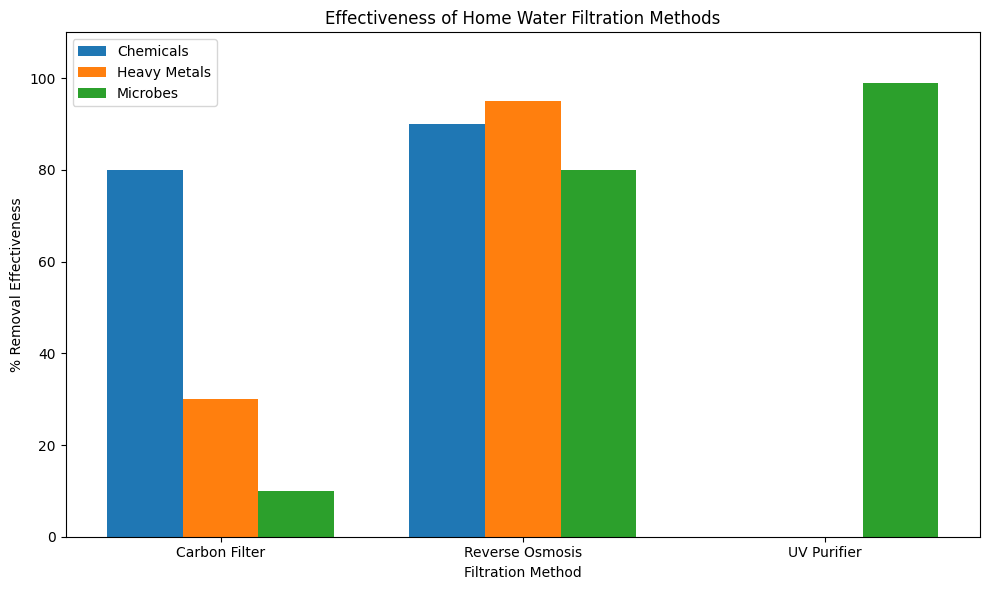
Longevity and sustainability matter when evaluating the environmental impact of filtration methods. Disposal of used cartridges tends to generate plastic waste, while production of certain filters demands considerable resources. Cutting back on single-use bottles helps offset the drawbacks, but proper planning is vital for greener practices.Effectiveness of Home Water Filtration Methods

Filter Type

Main Advantage

Key Drawback

Carbon Filters

Enhance taste and reduce chlorine

Limited removal of bacteria

Reverse Osmosis

High-level impurity elimination

Slower flow and water waste

UV Purifiers

Neutralize microorganisms

Requires electricity to operate

Comparing Water Filtration vs Reverse Osmosis: Key Differences

Homeowners often look for clean water without the hassle or expense of complex systems. Some prefer simple pitcher filters using activated carbon. Others choose advanced membranes for better contaminant removal. Each option has its own benefits, depending on personal needs and preferences.

Taste and Quality

Traditional filters can remove odors and chlorine, making water taste better by capturing certain impurities. Reverse osmosis goes further, targeting dissolved solids and aggressive contaminants. This can result in water with less mineral content, prompting some to add minerals back for a fresher taste.

Expense Over Time

Regular cartridge replacements keep simple filtration systems running well. These changes are needed every few months and are relatively affordable. On the other hand, RO systems require more expensive filter and membrane replacements over longer periods. While the initial cost is higher, they offer broader purification for tackling tough pollutants.

Installation Complexity

Pitcher filters and faucet-mounted units are easy to set up, requiring little to no plumbing knowledge. Under-sink models, while more common, need basic plumbing skills. Reverse osmosis units often require more complex installation. Many opt for professional installation to ensure correct setup and longevity of the system.

Budget Considerations for Home Water Treatmentreverse osmosis

Many households carefully consider the costs of home water treatment before making a decision. Prices can vary significantly, from simple carbon filters to complex reverse osmosis systems. Brands like Culligan or Pentair often include additional features that impact the final cost.

Under-sink models typically range from $170 to $580, while whole-house filtration systems can cost between $850 and $5,400. A well-water system might reach up to $4,000 due to its unique design. It’s important to consider both the initial investment and ongoing expenses. This includes replacement filters, membrane maintenance, and electricity costs.

System Type

Approx. Installation Cost

Maintenance Range

Notes

Basic Carbon Filter

$50 – $500

$15 – $65 per filter

Low energy needs

Reverse Osmosis (RO)

$1,000 – $4,800 (whole-house)

$20 – $250 per filter

Intensive membrane upkeep

UV Light System

$500 – $1,500

$50 – $300 yearly

Requires power to operate

Water Softener + RO Combo

$500 – $6,000

$50 – $300 yearly

Higher upfront investment

Health Benefits of Drinking Filtered Water

Clean water is essential for our daily well-being. It not only tastes fresh but also has a balanced composition. This encourages more drinking, which aids in stable digestion and a strong immune system. Many seek out advanced solutions for chemical-free water to reduce contaminants and enhance comfort.

Reduction in Chemical Exposure

Some filtration methods effectively remove harmful substances like lead or arsenic. This reduces irritants that can strain our bodies’ defenses. Families benefit from the health advantages of filtered water, thanks to reliable systems with proven testing records. This boosts peace of mind for households aiming for better purity.

Improving Hydration and Overall Wellness

Digestive function and nutrient absorption improve with consistent water quality. Better hydration keeps skin looking vibrant and supports energy levels all day. A pleasant taste often motivates both children and adults to drink more, keeping them active and refreshed.

Contaminant

Potential Health Risk

Filtration Benefit

Lead

Developmental issues

Reduces metal levels

Arsenic

Organ damage

Filters out harmful elements

Some Bacteria

Digestive problems

Limits microbial presence

Maintenance Tips for Long-Term PerformanceRight Filtration System

Maintaining a filtration system requires consistent efforts. This ensures longevity for household units from brands like Brita or Culligan. Filter maintenance is essential. Neglecting it can lead to subpar water quality and increased costs.

For RO systems, RO membrane care involves thorough cleaning and timely replacement of parts. Water filter replacement is also critical to prevent clogs and bacterial growth. Always wear gloves when servicing to avoid contamination. Experts recommend annual inspections to catch issues early.

  • Routine Inspections
  • Regular Filter Changes
  • System Flushing
  • Proper Sanitization
  • Careful Component Handling

Those with water softeners should regularly check salt levels and replenish as necessary. Multi-stage filters require clear paths and sanitized stages. Following this maintenance routine protects your drinking water and extends the life of your products.

Maintenance Task

Suggested Frequency

Filter Replacement

Every 6 – 12 months

Membrane Cleaning

As recommended by brand

System Flushing

Twice per year

Salt Refill (Water Softener)

Monthly or as needed

Annual Inspection

Once a year

Checking Certifications and Standards

Consumers seeking reliable performance often look for seals from organizations that evaluate filtration products. Many opt for certified water filters to ensure their systems meet critical benchmarks in contaminant reduction and quality.

NSF and ANSI Guidelines

NSF International tests filters for taste, odor, and chemical reduction. Products meeting NSF Standard 42 can address unwanted flavors or scents in tap water. The ANSI rating shows a product’s claims have been reviewed by an independent authority. These marks offer peace of mind for households seeking valid proof of effectiveness.

Identifying Trusted Brands

Many recognized brands display official certifications on packaging to highlight their adherence to high standards. Labels noting verified claims simplify comparison without guesswork. Shoppers can read product listings or visit brand websites to find detailed information about test results and endorsements. This guides them toward dependable models for home use.

Addressing Common Misconceptions

Water filtration myths often lead to misconceptions. Many believe every filter perfectly removes harmful particles, neglecting the need for mineral removal. Others think all systems are the same, ignoring the unique approaches to purification.

Filters vary in construction and purpose. Many designs aim to eliminate specific contaminants while retaining beneficial components. Understanding these differences helps homeowners choose the right solution for their needs.

Myth: Pure Water Means Zero Minerals

Some believe pure water must have zero minerals. This overlooks the fact that certain filters target pollutants while keeping calcium or magnesium intact. Drinking water with balanced elements can improve taste and support hydration.

Myth: All Filters Operate the Same

Different media and pore sizes mean one product may specialize in chlorine reduction, while another excels at microbial defense. Choosing filters based on actual problems ensures safe, fresh-tasting results.

Misconception

Reality

Pure water excludes all minerals

Filters can preserve helpful minerals while removing contaminants

Every filter works identically

Systems differ in design, filtration stages, and performance

Environmental Impact of Filtration and RO Systems

Modern filtration systems have a significant environmental footprint. They can remove contaminants but consume resources. For instance, systems from Brita or Culligan use replaceable cartridges that become waste. Those who prioritize sustainable water filtration often opt for refillable or recyclable parts.

RO membranes discard a portion of the water they process. Eco-aware users might reuse this water for cleaning or gardening. They seek out eco-friendly RO solutions that minimize water loss. This approach conserves local water resources and reduces the load on septic systems.

How we dispose of these systems matters. Recycling or repurposing filters can reduce landfill waste. Regular maintenance ensures efficient operation and minimizes wastewater. These actions support sustainable water filtration and promote better resource management. Some households also adopt eco-friendly RO solutions by optimizing membrane efficiency or recycling components. This balance between clean drinking water, safe plumbing, and conservation is achievable.

System Type

Waste Level

Potential Reuse

Whole-Home Filters

Low cartridge disposal

Recycling spent filters

RO Systems

Moderate water discard

Water plants with reject flow

Strategies for Improving Water Taste at Homestrategy

Many households seek crisp, refreshing water without odors or aftertastes. A solution lies in combining filter stages that remove impurities while keeping desirable minerals.

Multi-stage systems address concerns about chlorine aromas or metallic flavors. This leads to water taste improvement, increasing enjoyment and satisfaction, vital for frequent drinkers.

Combining Pre-Filters and Post-Filters

A pre-filter captures sediment and chlorine at the start. Then, a post-filter refines remaining elements before the water reaches the faucet. Brands like Culligan or Brita offer setups that balance efficiency with flavor preservation.

  • Sediment cartridges reduce cloudiness
  • Carbon blocks lessen chlorine odor
  • Mineral-rich layers restore taste profiles

Innovative Flavor-Enhancing Methods

Some homeowners add mineral cartridges for extra calcium or magnesium. This enhances texture and encourages hydration. Others use natural additives, like lemon slices, to revitalize each sip.

Filtration Stage

Main Function

Key Benefit

Pre-Filter

Removes sediment and chlorine

Protects subsequent filters

Post-Filter

Fine-tunes flavor

Reduces any lingering taste

Remineralization

Reintroduces beneficial minerals

Improves mouthfeel

Troubleshooting Common Water Filter Issues

Unexpected drops in flow or strange tastes often signal a need for closer inspection. If flow slows to a trickle, there may be a blocked component inside the cartridge. Poor flavor can point to lingering sediment or an overdue replacement.

Regular checks help prevent bigger headaches with water filter troubleshooting. Filters that remain past their service life might cause low water pressure and let contaminants slip through. Seasonal shifts in municipal supplies also alter performance. A steady schedule of inspections and quick fixes keeps water refreshing and odor-free.

Possible Issue

Suspected Cause

Recommended Action

Reduced Flow

Clogged carbon filter

Swap with fresh cartridge from Brita or a similar brand

Off Taste

Filter nearing end of life

Replace promptly per manufacturer guidelines

Visible Sediment

Build-up in housing

Clean canister and ensure proper seal

Finding the Right Professional Installation Service

Many homeowners seek expert assistance for larger filtration setups. A reliable water filter contractor can manage complex projects, ensuring families have access to the safest water. Systems combining reverse osmosis and softening require advanced plumbing knowledge. This reverse osmosis vs whole-house filtration approach highlights the importance of skilled professionals in simplifying these tasks.

Experience is key when installing advanced purification units. Trustworthy teams can spot leaks early and offer peace of mind. They ensure all work meets industry standards.

Questions to Ask Potencial ContractorsFiltration Options

Homeowners can find the right partner by asking:

  • Do they specialize in professional water treatment installation or simpler tasks?
  • Are they familiar with maintenance programs and recognized certifications?
  • Is there a warranty for parts and labor?

Signs of Quality Workmanship

Clean, organized plumbing lines indicate attention to detail. Honest upfront cost estimates prevent surprises. A dedicated water filter contractor tests each step before leaving. This ensures the household remains protected from future disruptions.

Question

Why It Matters

Are you certified by any reputable agency?

Verifies professional background and skill level

Do you offer routine inspections and follow-ups?

Provides long-term confidence in system performance

Whether to Choose a DIY or Professional Solution

Some households choose a DIY water filter for basic needs. A faucet-mounted model or a pitcher from brands like Brita can make a quick difference. These options require little in terms of tools and can be set up quickly.

For larger systems, professional installation might be necessary. This is true when pipes or multiple fixtures need adjustments. It ensures qualified expertise and adherence to local building codes. It also offers peace of mind, ideal for those tackling various contaminants.

When deciding, buyers consider cost versus convenience. DIY solutions are often cheaper upfront, but professional services cover the whole home thoroughly. The choice depends on plumbing complexity, personal skills, and water quality concerns. Both paths offer benefits for safer, cleaner tap water.

Final Insights for Selecting Your Ideal System

Water quality can change even in the same home, as a study by Purdue University, the University of Memphis, and Michigan State University found. They discovered that disinfectant levels may disappear 10% of the time. pH and organic carbon readings can also vary by season.

When looking for the best home water system, consider your budget, safety, and daily needs. Some prefer a simple carbon filter for taste, while others opt for a water softener and reverse osmosis. This combination reduces scale buildup and blocks heavy metals or pathogens.

Before buying any equipment, check lab results or local water reports. This ensures the device tackles real risks, from mineral imbalances to bacterial growth. Such a balanced approach provides cleaner drinking water and considers long-term needs.


FAQ

Do standard carbon filter pitchers effectively remove heavy metals and germs?

While popular brands like Brita or PUR excel at reducing chlorine odor and improving taste, typical carbon filters may not reliably remove heavier contaminants like lead or pathogens such as E. coli and Cryptosporidium. For complete protection against these contaminants, homeowners often turn to a membrane-based filtration system like reverse osmosis or add a specialized filter certified to remove heavy metals.

Pore size determines which contaminants can pass through or get trapped. Smaller pores can remove finer particles, including certain viruses and microscopic organisms, while larger pores let more substances through. Microfiltration, ultrafiltration, and nanofiltration each have distinct pore sizes and are chosen based on the specific contaminants in a household water supply.

Reverse osmosis uses a semipermeable membrane to remove dissolved solids like arsenic, nitrates, and lead. Most standard filters use carbon or sediment cartridges but cannot capture as many dissolved substances. Combining an RO system with a water softener also helps address scale buildup in plumbing, extending appliance life while ensuring higher water purity.

Yes, most RO setups include a carbon pre-filter that can reduce chlorine before water passes through the membrane. This step significantly improves taste and odor. It’s vital to maintain and replace these filters on the recommended schedule so that any residual chlorine or chemical byproducts are consistently removed.

Regular testing is strongly encouraged by the Environmental Protection Agency (EPA), even for private wells. Annual checks help spot issues like bacteria, heavy metals, or chemicals that might fluctuate seasonally or due to local changes. Certified labs or local health departments can identify hazards so households can take appropriate filtration measures.

Not all products carry NSF or ANSI certifications. These seals (e.g., NSF/ANSI Standard 42 or 53) verify performance for specific claims, like taste improvement or cyst reduction. Choosing a filter labeled with these official certifications can give homeowners peace of mind that the product meets recognized safety and quality standards.

Replacement frequency varies by filter type, usage levels, and water quality. Carbon filters might need changing every two to six months, while RO membranes often last one to three years. Manufacturers provide guidelines based on average usage; following these helps ensure continued performance and reduces microbial growth in the system.

Some systems, like reverse osmosis, can waste a portion of incoming water. Many disposable filter cartridges also end up in landfills. Yet, choosing high-efficiency RO units or recycling used cartridges helps minimize environmental impact. Some homeowners even repurpose RO “reject water” for watering plants or cleaning tasks.

Many filters and even RO systems remove both harmful contaminants and some naturally occurring minerals. Yet, certain filtration setups include remineralization stages or mineral-release cartridges to restore a balanced taste and preserve some beneficial elements. This keeps water safer without sacrificing flavor or natural minerals entirely.

It depends on their comfort with plumbing tasks and the system’s complexity. Simple pitcher filters or faucet-mounted devices are often straightforward to install without help. Larger, whole-house systems or under-sink RO units with multiple connections may benefit from professional installation. Qualified contractors also ensure proper water pressure and flow rates for consistent results.

Share this on social media:

Facebook
Twitter
LinkedIn