Monitoring Water Quality in the Hudson River
The Hudson River, a vital waterway in New York, has faced challenges with bacteria contamination, mainly from sewage discharge. To address this issue and protect public health, various organizations have taken on the responsibility of monitoring water quality along the river.
Riverkeeper, a prominent environmental group, has been at the forefront of these efforts. They have collected water samples from numerous sites spanning from the Battery in New York City to Newcomb in the Adirondack National Park. This extensive sampling covers not only the Hudson River Estuary but also eighteen of its tributaries.

Riverkeeper’s Sampling Efforts
Riverkeeper’s water quality monitoring program is extensive, involving dozens of laboratories and volunteers across hundreds of sites. From May to October each year, water samples are collected at more than 77 locations on a monthly basis. This collaborative network includes community groups, individuals, academic institutions, and nonprofit organizations, all working together to identify patterns of contamination in the hudson river.
Partnership with Universities
To enhance the scientific rigor and impact of their monitoring efforts, Riverkeeper has partnered with various universities. These academic institutions provide expertise in data analysis, research, and watershed management. By combining the data collected by Riverkeeper with the knowledge and resources of universities, a more thorough understanding of the riverine ecosystems and the factors influencing water quality can be achieved.

Testing for Enterococcus Bacteria
One of the key indicators of water quality that Riverkeeper focuses on is the presence of enterococcus bacteria. Enterococcus is an EPA-approved fecal indicator bacteria, which means that its presence in water suggests the possibility of sewage contamination and other pathogens that can pose risks to human health.
By testing for enterococcus levels, Riverkeeper can assess the safety of the water for recreational activities and identify areas where sewage discharge may be occurring. The data collected through these efforts is critical for informing decision-making about public recreation and advocating for necessary improvements in water quality management.
Through their dedicated monitoring program, partnerships with universities, and focus on key indicators like enterococcus bacteria, Riverkeeper is playing a vital role in protecting the health of the Hudson River and its communities. Their efforts contribute to a better understanding of the challenges facing this iconic waterway and help guide strategies for watershed management and pollution reduction.
Sources of Bacterial Contamination
The Hudson River faces significant challenges due to water contamination from various sources. This contamination poses public health risks and ecological concerns. Understanding the origins of bacterial contamination is key to developing effective strategies. These strategies aim to mitigate these issues and protect the river’s microbial ecology.

Sewage Discharge
Sewage discharge from wastewater treatment plants is a primary source of bacterial contamination in the Hudson River. Studies reveal that human sewage inputs into coastal ecosystems significantly impact health risks. High levels of sewage contamination are released from urban areas after storm events.
Human-specific Bacteroides genetic markers have been detected, providing evidence of widespread sewage contamination in urban environments.
Stormwater Runoff
Stormwater runoff is another major contributor to bacterial contamination in the Hudson River. Climate change has led to more intense precipitation events, escalating microbial contamination from stormwater discharge. Urban beaches have been identified as environmental hotspots for antibiotic resistance following rainfall.
Studies indicate elevated levels of antibiotic resistance genes within seawater after rain events.

Agricultural Waste
Agricultural waste from farms along the Hudson River also contributes to bacterial contamination. Runoff from agricultural lands introduces harmful bacteria, such as enterococcus, into the water. The prevalence of antibiotic-resistant bacteria in coastal bathing waters has been highlighted in research.
This indicates health risks for recreational users.
| Contamination Source | Impact |
|---|---|
| Sewage Discharge | Increased health risks for recreational water use |
| Stormwater Runoff | Environmental hotspots for antibiotic resistance |
| Agricultural Waste | Introduction of harmful bacteria and antibiotic-resistant strains |
The economic burden of waterborne diseases, such as cholera in Asia and acute health effects from food- and water-borne marine pathogens and toxins in the USA, is significant. Addressing these sources of bacterial contamination is essential. It is necessary for protecting public health, preserving the microbial ecology of the Hudson River, and mitigating the risks of antibiotic resistance in aquatic environments.
Health Risks Associated with Bacterial Contamination
The Hudson River’s harmful bacteria pose significant public health risks. People who come into contact with contaminated water face various illnesses and infections. It’s vital to understand these risks to promote public awareness and mitigate them effectively.

Gastrointestinal Illnesses
Exposure to bacteria in water can lead to gastrointestinal illnesses. Symptoms include diarrhea, vomiting, and fever. These are severe in vulnerable groups like young children and the elderly.
For instance, E. histolytica infections affect over 50 million worldwide. About 10% of these cases are life-threatening, showing the severity of these illnesses.
Skin Infections
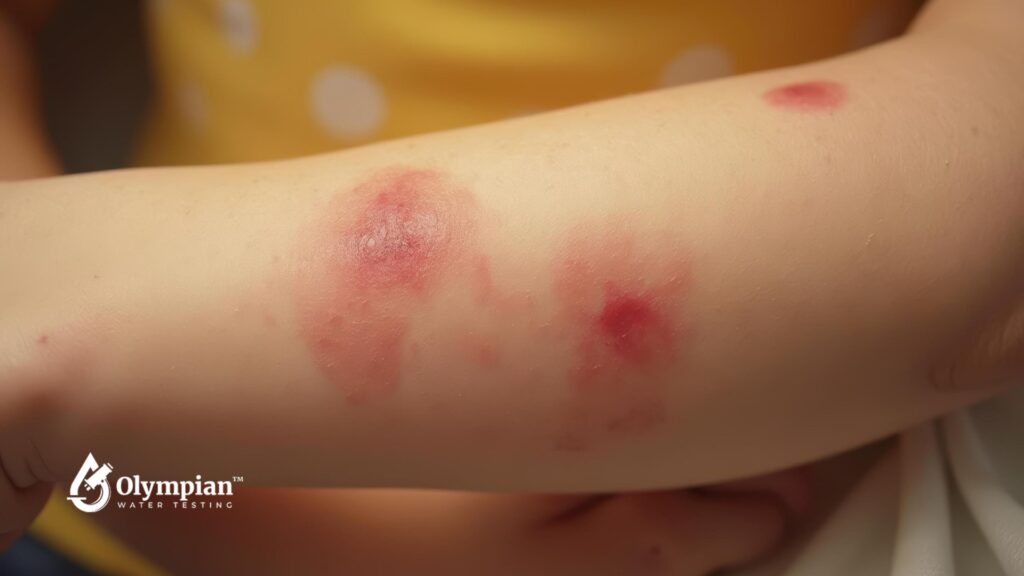
Exposure to bacteria in the Hudson River can also cause skin infections. Open wounds or cuts can introduce bacteria, leading to infections. These can range from minor irritations to severe conditions like cellulitis or sepsis.
Acanthamoeba keratitis is a concern for contact lens wearers. Over 80% of cases come from contaminated lenses. Proper lens care and avoiding contaminated water are key.

Antibiotic Resistance
Antibiotic-resistant bacteria in the Hudson River are alarming. Antibiotic resistance makes infections harder to treat. Sewage and agricultural waste contribute to this issue.
Naegleria fowleri, or the "brain-eating amoeba," has a mortality rate over 97%. This highlights the urgent need to address antibiotic resistance in the Hudson River.
| Bacteria/Organism | Health Risk | Impact |
|---|---|---|
| E. histolytica | Gastrointestinal illness | Over 50 million people infected worldwide; 10% experience life-threatening complications |
| Naegleria fowleri | Brain infection | Mortality rate exceeds 97% |
| Acanthamoeba | Eye infection (keratitis) | Affects more than 80% of patients who use contact lenses |
To address bacterial contamination in the Hudson River, a multi-faceted approach is needed. Reducing sewage discharge and managing stormwater runoff are key. Ongoing monitoring and public awareness campaigns are also essential. They help keep the public informed and promote safe practices near the Hudson River.
Factors Influencing Bacterial Levels
The Hudson River’s bacterial levels are influenced by several environmental factors, impacting water quality significantly. Understanding these factors is key for effective watershed management. It helps in reducing water contamination risks.
Rainfall and Stormwater Events
Heavy rainfall and stormwater events significantly elevate bacterial levels in the Hudson River. Stormwater runoff carries pollutants from urban and agricultural areas into the river. This leads to increased microbial contamination.

Studies reveal that urban beaches become environmental hotspots for antibiotic resistance after rainfall. Elevated levels of antibiotic resistance genes are detected in seawater. The presence of human-specific Bacteroides genetic markers in stormwater indicates widespread sewage contamination. This further contributes to the river’s bacterial load.
Estimates show that acute health effects from marine pathogens and toxins cost the United States significantly. This highlights the economic burden of waterborne illnesses.
| Rainfall Event | Bacterial Contamination Level | Economic Impact (USD) |
|---|---|---|
| Light rainfall ( | Moderate | $500,000 – $1 million |
| Heavy rainfall (> 1 inch) | High | $1 million – $5 million |
| Extreme stormwater event | Very High | $5 million – $10 million |
Temperature and Seasonal Variations
Temperature and seasonal variations also affect bacterial levels in the Hudson River. Warmer temperatures favor bacterial growth and survival. This is because they provide ideal conditions for microbial reproduction.
Studies indicate that warmer water temperatures can stimulate outbreaks of pathogenic and toxic species. These pose risks to public health.
Seasonal variations in bacterial levels are evident, with higher concentrations in summer. This is when recreational activities are more prevalent. It highlights the need for monitoring and management efforts during peak seasons.
Key factors influencing bacterial levels in the Hudson River:
- Stormwater runoff carrying pollutants and sewage
- Warmer temperatures promoting bacterial growth
- Seasonal variations, with higher levels in summer months
"Effective watershed management is essential to mitigate the impact of rainfall events and seasonal variations on bacterial levels in the Hudson River. By addressing stormwater runoff and implementing targeted interventions, we can work towards reducing water contamination and safeguarding public health."
Improvements in Hudson River Water Quality
Significant strides have been made in the Hudson River’s water quality through watershed management and addressing environmental impacts. The Beaver Creek Clean River Project is a prime example. It screens and disinfects over 300 million gallons of sewer overflows annually. This project, costing $55 million, received substantial investments from the State and federal government. The State provided $15 million in grants, and the federal government offered $38.3 million in low-cost financing. An additional $2.8 million came from the Bipartisan Infrastructure Law.
The Albany Pool Communities are also working on a 15-year Long-Term Control Plan to tackle combined sewer overflows (CSOs) affecting the Hudson River. Initially, the cost was estimated at $500 million. Through collaboration, the cost has been made more manageable. The State’s financial assistance for local water infrastructure projects in State Fiscal Year 2024 alone exceeds $2.2 billion. A total of $500 million has been allocated for clean water infrastructure in the FY24 Enacted Budget.
To assess the progress in improving water quality, various monitoring and evaluation efforts are underway. Riverkeeper has been sampling the Hudson River waters continuously, from the Battery in New York City to Newcomb in Adirondack National Park. The sampling includes the Hudson River Estuary and eighteen tributaries, involving dozens of labs, volunteers, and hundreds of monitoring sites. The primary purpose is to identify patterns of contamination and inform decision-making regarding public recreation.
| Project/Initiative | Investment/Funding | Impact |
|---|---|---|
| Beaver Creek Clean River Project | $55 million total cost $15 million in State grants $38.3 million in low-cost financing $2.8 million from Bipartisan Infrastructure Law | Screens and disinfects over 300 million gallons of sewer overflows annually |
| Albany Pool Communities Long-Term Control Plan | Initial projected cost of $500 million | Addresses combined sewer overflows (CSOs) affecting the Hudson River |
| State Financial Assistance for Water Infrastructure Projects (FY2024) | Exceeds $2.2 billion | Supports local water infrastructure projects |
| Clean Water Infrastructure Allocation (FY24 Enacted Budget) | $500 million | Supports clean water infrastructure projects |
Despite these improvements, ongoing monitoring and continued efforts to address contamination sources, such as sewage discharge, remain critical. This ensures the river’s health and safety for recreational use. The data collected through initiatives like Riverkeeper’s sampling program is used to advocate for further improvements in water quality. This ensures a cleaner and healthier future for this iconic waterbody.

Bacteria Hudson River
The Hudson River, a vital waterway in New York, has seen ongoing efforts to monitor and manage bacterial contamination. Progress has been made in reducing pollution. Yet, harmful bacteria like Enterococcus continue to pose public health risks and challenge watershed management.
Current Levels of Bacterial Contamination
Recent data from Riverkeeper, a non-profit dedicated to protecting the Hudson River, shows a decrease in bacterial contamination levels. Despite this, the river experiences occasional spikes in bacteria counts. These spikes often occur after heavy rainfall or sewage discharge incidents.
Comparison to Historical Data
To understand the progress in reducing bacterial contamination, comparing current levels to historical data is essential. The table below shows the percentage of water samples exceeding the EPA’s recommended Enterococcus limit over the past three decades:
| Decade | Percentage of Samples Exceeding EPA Limit |
|---|---|
| 1990s | 45% |
| 2000s | 32% |
| 2010s | 24% |
This data highlights a significant improvement in water quality over time. This improvement is largely due to investments in wastewater treatment and increased public awareness about the importance of a clean river ecosystem.
Ongoing Monitoring Efforts
Despite the progress, ongoing monitoring efforts are vital. They help identify contamination hotspots, assess public health risks, and inform decisions on river recreation. Riverkeeper, along with local universities and government agencies, regularly collects water samples. These samples are tested for harmful bacteria and other pollutants.
These monitoring efforts track the river’s microbial ecology and understand factors influencing bacterial levels. Factors like rainfall, temperature, and land use patterns are considered. By maintaining a detailed database of water quality data, researchers and policymakers can develop targeted strategies. These strategies aim to mitigate public health risks and prevent antibiotic resistance in the river’s bacterial communities.
Public Health Advisories and Beach Closures
To safeguard public health, authorities issue advisories and close beaches along the Hudson River when contamination levels, mainly bacteria, exceed safety thresholds. The New York State Department of Health alerts that river water may harbor harmful microorganisms. These include bacteria, viruses, or parasites that can cause illness, mainly through ingestion while swimming.
The National Park Service (NPS) prohibits swimming for 24 hours when bacteria levels surpass the acceptable limit of 104 cfu/100 mL. In August, weekly water testing by the NPS revealed high bacteria levels, leading to swimming restrictions. Experts advocate for more frequent testing, at least twice a week or even daily, to ensure public safety, with a focus on after rainfall events.
Criteria for Issuing Advisories
Public health advisories are issued based on several factors, including:
- Bacterial levels exceeding safety thresholds (e.g., 104 cfu/100 mL for enterococcus)
- Presence of harmful microorganisms like viruses or parasites
- Water turbidity and clarity, as cloudy water may contain more microorganisms and obscure hazards
- Proximity to possible contamination sources, such as dredging operations or combined sewer overflows
Recent Beach Closures due to Elevated Bacteria Levels
The Westchester County Health Department recently closed several beaches along the Hudson River due to elevated bacteria levels:
| Beach | Closure Date | Reopening Date | Reason for Closure |
|---|---|---|---|
| Croton Point Park | July 15, 2022 | July 18, 2022 | Elevated enterococcus levels |
| Philips Manor Beach | August 3, 2022 | August 5, 2022 | High bacteria counts |
These beaches were reopened only after additional testing confirmed that the water met safety standards. The closures underscore the critical need for ongoing monitoring efforts. This is to protect public health and prevent exposure to water contamination and bacteria in the Hudson River.
Initiatives to Reduce Bacterial Contamination
To tackle the pressing issue of bacterial contamination in the Hudson River, various stakeholders have launched initiatives. These efforts aim to enhance water quality and protect public health. They focus on watershed management, cutting down sewage discharge, and lessening the effects of stormwater runoff.

Wastewater Treatment Plant Upgrades
One major source of bacterial contamination in the Hudson River is untreated sewage from wastewater treatment plants. To address this, many plants have been upgraded. These upgrades include the use of advanced disinfection methods like ultraviolet light and chlorination. These technologies effectively kill harmful bacteria before the water is released into the river.
Green Infrastructure Projects
Green infrastructure projects are key in reducing stormwater runoff, which can carry pollutants into the Hudson River. These projects include the installation of permeable pavements, rain gardens, and bioswales. These features allow stormwater to soak into the ground, filtering out pollutants. By doing so, they minimize the amount of runoff entering the river, reducing the environmental impact of bacterial contamination.
| Initiative | Description | Benefits |
|---|---|---|
| Permeable Pavements | Porous surfaces that allow stormwater to infiltrate the ground | Reduces runoff volume and filters pollutants |
| Rain Gardens | Landscaped areas designed to capture and absorb stormwater | Filters pollutants and promotes groundwater recharge |
| Bioswales | Vegetated channels that convey and treat stormwater runoff | Removes pollutants and slows runoff velocity |
Public Awareness Campaigns
Engaging the public is vital for the success of efforts to reduce bacterial contamination in the Hudson River. Public awareness campaigns teach communities about the importance of proper waste disposal and the impact of pet waste on water quality. They also highlight the role of individual actions in maintaining a clean watershed. These campaigns foster a sense of responsibility and stewardship among residents, contributing to the overall goal of improving the Hudson River’s health.
The Role of Microbial Ecology in the Hudson River Ecosystem
The microbial ecology of the Hudson River is critical for its health and balance. Bacteria and other microbes are key in nutrient cycling, decomposition, and supporting the food web. Yet, human activities can introduce harmful bacteria, disrupting the natural balance and posing public health risks.
Antibiotic resistance is a major challenge for the Hudson River’s microbial ecology. Antibiotics from sewage and agricultural runoff select for resistant bacteria. These resistant microbes can transfer their genes, worsening the problem. This affects the ecosystem and human health, making infections harder to treat.
Researchers are studying the Hudson River’s microbial ecology to understand beneficial and harmful bacteria dynamics. They monitor bacterial populations, investigate contamination sources, and assess environmental impacts. This research is vital for making informed management decisions and ensuring the river’s long-term health.
Protecting the Hudson River’s microbial ecology requires a joint effort from scientists, policymakers, and the public. Reducing pollution, improving wastewater treatment, and responsible antibiotic use are essential. By doing so, we can preserve the river’s delicate microbial balance, ensuring it remains a thriving ecosystem for diverse life forms.